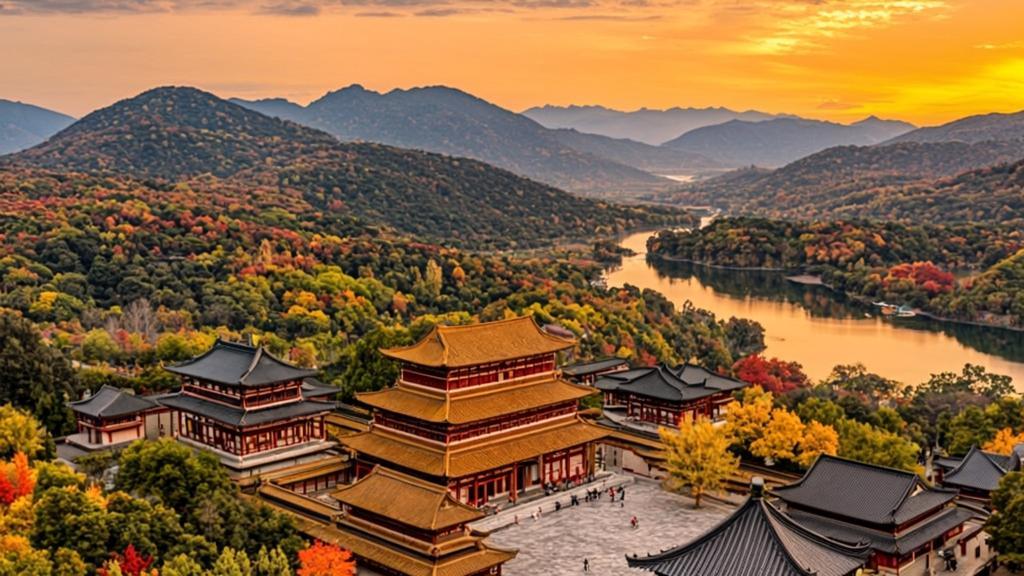
Everyone talks about summer in Chengde. The emperors built it as a heat escape. That is the story most travel guides repeat. But October? Almost nobody mentions October. That is exactly why you should pay attention.
Chengde Mountain Resort sits about 230 kilometers northeast of Beijing in Hebei Province. It is China’s largest surviving imperial garden and a UNESCO World Heritage Site. In October, something quietly extraordinary happens here. The summer tour buses are gone. The lotus flowers have faded. And the mountains turn into fire.
Why Autumn Is Chengde Mountain Resort’s Best-Kept Secret
Search “Chengde Mountain Resort” in English. You will find page after page of summer itineraries. That makes sense historically — the Qing emperors built this place to escape Beijing’s summer heat. Generations of travel content repeated that angle.
But here is the thing. September and October bring far more comfortable temperatures, cleaner skies, and dramatically fewer crowds. According to China Discovery, early and mid-autumn offer “comfortably cool” daytime conditions, little rain, and vivid color changes across the resort’s mountain zones (China Discovery, 2024). Compared to peak summer, you move through the park with space to breathe. That alone changes the experience completely.
When the Forests Ignite: Autumn Color at Chengde Mountain Resort
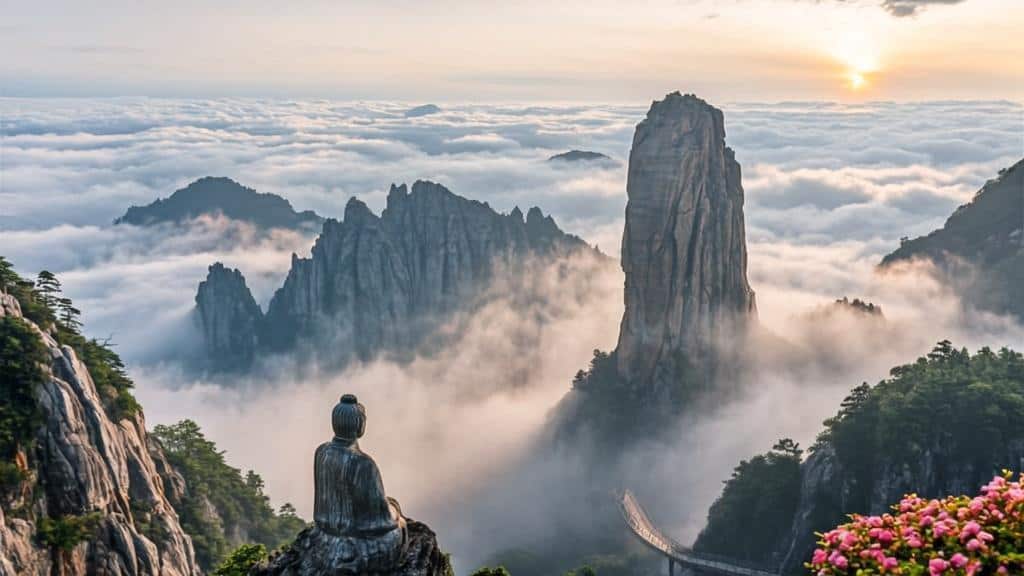
The resort covers 5.64 square kilometers. Around 80% of that area is mountains and forests. In October, those forests do what forests do in northern China — they burn red, orange, and gold.
The mountain zone (苑景区) is where the drama unfolds. Layers of birch, oak, and maple climb the ridgelines. When color peaks in mid-October, the effect is visible from a distance. The UNESCO World Heritage listing describes the resort as blending “lakes, pastureland and forests” into a harmonious landscape — and in autumn, that landscape hits differently (UNESCO World Heritage Centre, 1994).
Unlike many famous foliage destinations, there is no single designated “viewing platform” here. The color surrounds you entirely. Walk any trail in the mountain zone and you are inside the scene, not watching from outside.
The Emperor’s Autumn: Understanding Mulan Qiuxian (木兰秋狝)
Here is what makes autumn at Chengde Mountain Resort genuinely different from any other foliage destination in the world. Autumn was never just decorative here. It was political and military.
Every year from 1683 onward, the Qing emperors left the resort in autumn and traveled north to the Mulan Hunting Ground (木兰围场). They called this ritual Mulan Qiuxian — the Autumn Hunt. According to Wikipedia’s entry on the imperial hunt, the event lasted up to a month and involved thousands of soldiers, imperial family members, and officials (Wikipedia, 2025). The Kangxi, Qianlong, and Jiaqing emperors together participated in 91 hunts over their reigns.
This was not a hobby. It was a calculated performance of power. The Manchu emperors used the hunt to train troops, build alliances with Mongolian nobles, and receive foreign envoys — away from Beijing’s formalities. As China.org.cn notes, Chengde Mountain Resort was built midway between Beijing and Mulan “as a place to stop and rest” on the imperial journey north (China.org.cn, 2017).
Today, the former Mulan grounds are part of Saihanba National Forest Park, northeast of Chengde. In late September and October, its birch forests turn gold. Many visitors combine both destinations in a single trip. That pairing — imperial garden plus ancient hunting ground — has no equivalent anywhere else in Asia.
The Eight Outer Temples Under Golden Leaves
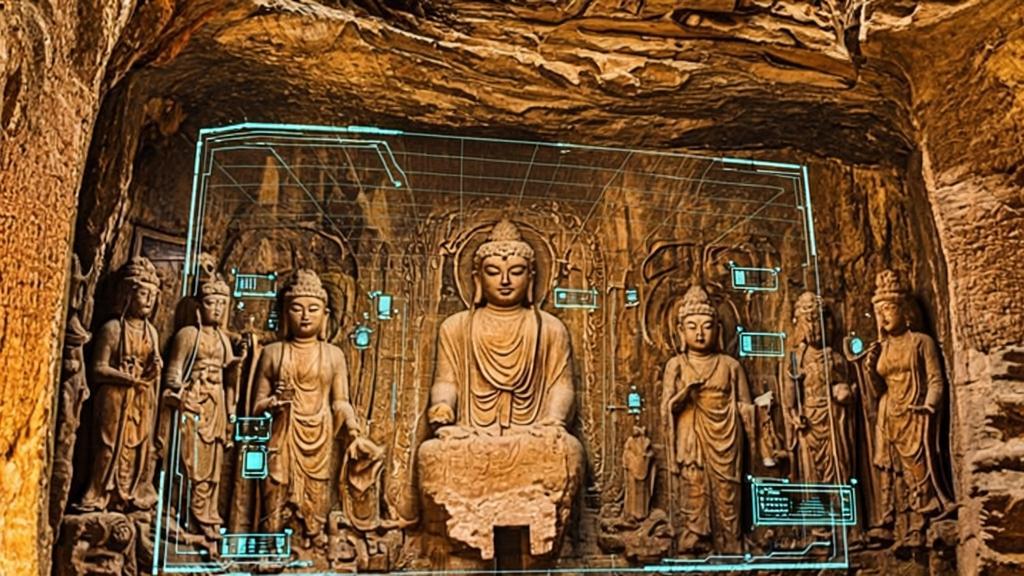
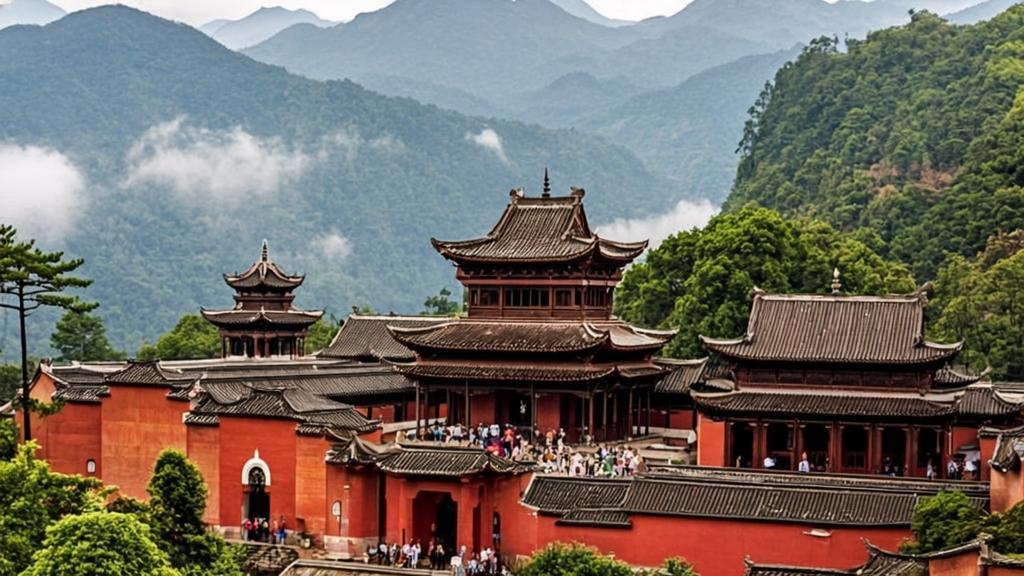
Surrounding the resort are twelve Buddhist temples, collectively known as the Eight Outer Temples (外八庙). The Qing emperors built them to reflect the architectural styles of Tibet, Mongolia, and other border regions — a strategic act of cultural diplomacy, not mere decoration.
In October, these temples acquire a different kind of atmosphere. Golden leaves drift across stone courtyards. The massive Putuo Zongcheng Temple, modeled on Tibet’s Potala Palace, rises above a carpet of red maples. Puning Temple, home to one of the world’s tallest wooden Buddha statues, sits at the edge of a forested hillside blazing with color.
There are no light shows here. No reservation queues stretching around the block. Just large, ancient structures set against Chinese mountain autumn. That combination is rare, even within China.
Chengde Mountain Resort vs. Kyoto: Two Autumn Philosophies
If you follow foliage tourism, you know Kyoto. Japan’s ancient capital has built an entire autumn ecosystem — light-up events at temples, reserved time slots, matcha-flavored everything, and crowds arriving by the busload. The Kyoto City Tourism Association even publishes a real-time “Autumn Leaves Calendar” to track color progress day by day (Kyoto City Tourism Association, 2025). It is organized, beautiful, and exhaustingly popular.
Chengde Mountain Resort offers something fundamentally different.
The Japanese concept of Momijigari (紅葉狩り) translates roughly as “hunting for red leaves.” It is an aesthetic pursuit — a refined appreciation of transience, tied to the Buddhist concept of mono no aware (the bittersweet beauty of impermanence). Kyoto’s autumn experience builds on this philosophy with precision and careful packaging.
Chinese shǎng qiū (赏秋) — autumn appreciation — carries a different weight at Chengde. The autumn here was never about refined contemplation. It was about an emperor riding north with an army, consolidating an empire, and then returning through mountains turning gold. The grandeur is wild, not curated. The scale is imperial, not domestic. You feel that difference when you walk the mountain trails in October. Nobody has laid out the optimal camera angle for you.
In Kyoto, autumn is a perfectly preserved art form. At Chengde Mountain Resort, autumn is something older and stranger — a season that once moved empires.
Getting There: Beijing to Chengde Mountain Resort in Under Two Hours
This is the practical detail that surprises most travelers. Chengde is not remote. It is not a multi-day journey from Beijing.
According to Travel China Guide, over 50 pairs of high-speed trains run daily between Beijing and Chengde. The fastest services complete the journey in as little as 52 minutes. A standard second-class ticket costs CNY 42–124 (roughly USD 6–17). Trains depart from Beijing Chaoyang Railway Station and arrive at Chengde South Station (Travel China Guide, n.d.).
From Chengde South Station, a taxi to the resort entrance takes about 40 minutes and costs around CNY 45–50. Alternatively, city bus No.69/K2 connects the station directly to the resort area.
A day trip from Beijing is possible. However, one or two nights in Chengde is a far better choice. October evenings cool quickly in the mountains. Staying overnight lets you reach the resort at opening time, before any tour groups arrive.
Practical Tips for an October Visit to Chengde Mountain Resort
Keep these points in mind before you go:
- Timing: Avoid Golden Week (October 1–7) if possible — domestic crowds peak sharply. Mid to late October offers the best balance of color and quiet.
- Opening hours: The resort typically opens at 7:00 AM. Arrive early for the mountain zone trails, especially for photography.
- Layers are non-negotiable: Morning temperatures in October can drop close to single digits Celsius. Afternoons warm up considerably.
- Food: Options inside the resort are limited and expensive. Bring snacks. The Shuangqiao District nearby has excellent Manchu cuisine worth exploring.
- Combined tickets: The resort offers combined tickets covering the main garden and select Outer Temples — better value than buying separately.
- Visa note: Citizens of over 54 countries currently qualify for China’s 240-hour visa-free transit policy, with some nationalities eligible for 30-day visa-free stays through 2026. Check current policies before booking.
October at Chengde Mountain Resort does not come with a marketing campaign. No app tracks the foliage forecast in real time. No branded souvenir shops line the approach. What it does offer is something harder to manufacture: a UNESCO World Heritage landscape turning gold, almost entirely to itself, carrying the echo of a ritual that once shaped the borders of an empire.
That is worth a 52-minute train ride.
References
China Discovery. (2024). Chengde weather & temperature: Best time to visit Chengde. https://www.chinadiscovery.com/hebei/chengde/weather-and-seasons.html
China.org.cn. (2017, July 17). Imperial summer resort. http://www.china.org.cn/travel/2017-07/17/content_41230222.htm
Kyoto City Tourism Association. (2025). Autumn leaves calendar. https://kyoto.travel/en/seasonal-info/autumnleaves/
Travel China Guide. (n.d.). Beijing–Chengde trains: Bullet train schedule & tickets. https://www.travelchinaguide.com/china-trains/beijing-chengde.htm
UNESCO World Heritage Centre. (1994). Mountain resort and its outlying temples, Chengde. https://whc.unesco.org/en/list/703/
Wikipedia. (2025, January 26). Imperial hunt of the Qing dynasty. https://en.wikipedia.org/wiki/Imperial_hunt_of_the_Qing_dynasty