The China market has a peculiar gift. It can take a box — sealed, opaque, unremarkable — and turn it into an $8 billion industry. You pay. You don’t know what’s inside. Open it. And somehow, you immediately want another one.
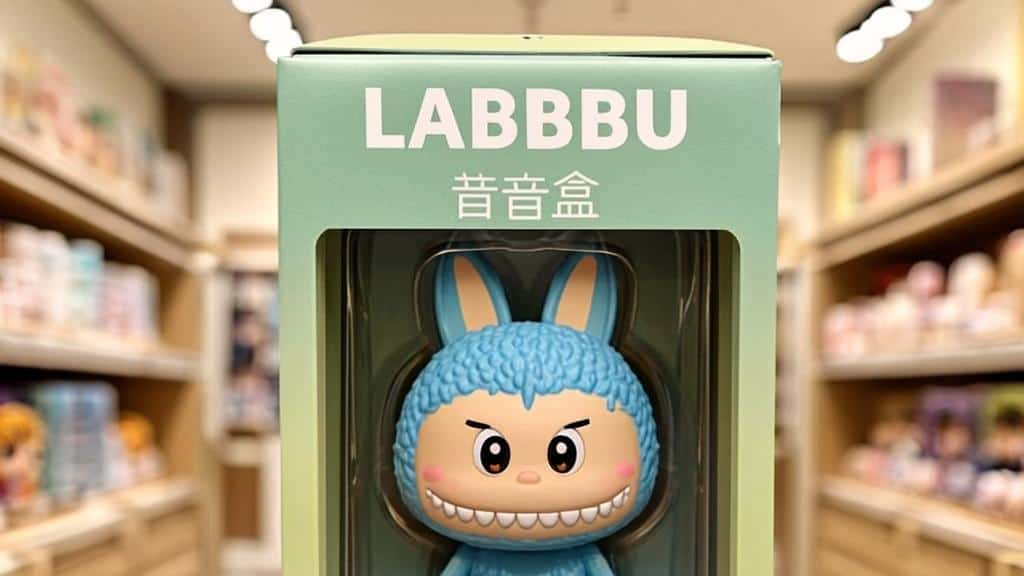
That’s the blind box economy. You may not have heard the term. But you’ve likely seen a Labubu doll dangling from someone’s bag — in Seoul, in Paris, in Los Angeles. Increasingly, everywhere.
This isn’t just a toy trend. It’s a business model. And understanding it may be one of the most useful things a foreign entrepreneur can do right now.
What Is a Blind Box — And Why Does the China Market Do It So Well?
A blind box is simple. You buy a sealed package. Inside is a collectible figurine. You don’t know which one until you open it. The character is randomized. That’s the whole mechanic.
It sounds absurd. Yet in the China market, this “absurd” format has produced one of the most compelling consumer stories of the decade.
The concept traces back to Japan — to fukubukuro (lucky bags) and gacha capsule machines (Wang et al., 2025). But China took that template and scaled it into something new. Pop Mart, a Beijing-based company founded in 2010, became the face of the movement. By 2024, its annual revenue hit RMB 13.04 billion — a 106.9% year-on-year increase (CKGSB Knowledge, 2025).
The key shift: the blind box format made toy-buying feel like an experience, not just a purchase. That reframe changed everything.
The Numbers Behind China Market’s Blind Box Boom
Let’s talk scale. The China market for blind boxes is expected to surpass ¥58 billion (approximately $8 billion) by 2025 — making China the largest regional market globally (SourcingGuides, 2025). That’s not a niche hobby. That’s a major consumer category.
Pop Mart alone tells much of the story:
- Total 2024 revenue: RMB 13.04 billion (~$1.8 billion) (Pop Mart Annual Report, via TIME, 2025)
- Labubu IP revenue: RMB 3 billion in 2024 — up 726.6% year-on-year (TIME, 2025)
- International reach: Non-China revenues surged 375% in 2024, now accounting for nearly 40% of total revenue (S&P Global, 2025)
- Secondary market peak: A life-sized Labubu doll auctioned for over $170,000 in Beijing, June 2024 (DemandSage, 2026)
Wait. \$170,000. For a figure from a toy company.
That signals something deeper. Standard blind boxes cost ¥59–99 — roughly \$8–\$14. Genuinely affordable. Yet the secondary market turns rare pieces into luxury assets. Some Labubu dolls originally priced at ¥99 resold for up to ¥2,000 in 2025 (Daxue Consulting, 2025). This “affordable entry, aspirational ceiling” structure is deliberate — and it’s brilliant.
Why This Works: The Psychology Foreigners Miss
Here’s where it gets interesting. Blind boxes succeed not because of the toys themselves. They succeed because of psychology.
A peer-reviewed study published in BMC Psychology (2025) analyzed 434 Chinese blind box consumers. It found that perceived uncertainty drives instant gratification and gambler’s fallacy, and that scarcity perceptions make those biases stronger. In plain terms: not knowing what’s inside makes people want it more. Once they’ve bought several, they feel “due” for the rare one (Wang et al., 2025).
But it’s not just gambling instinct. Research in Current Psychology (2025) highlights social and community dimensions. Consumers share unboxing videos on Xiaohongshu and Douyin. They compare collections. They build identities around their figurines. The box becomes a social object, not just a product (Zhang et al., 2025).
Also worth noting: roughly 60% of blind box buyers are female (DemandSage, 2026). This separates it clearly from traditional gambling contexts, which skew male. The China market created a feminized, aestheticized, community-embedded form of probabilistic consumption. That’s a meaningful innovation.
There’s also an economic logic here. In uncertain financial times, affordable small luxuries tend to thrive. When consumers pull back from big-ticket luxury goods, they still seek emotional rewards. A ¥99 blind box delivers surprise, community belonging, and aesthetic pleasure. That’s strong value per yuan — and it’s resilient to downturns (CKGSB Knowledge, 2025).
China Market vs. The West: Blind Boxes, Funko, and Gashapon
Western readers might ask: “Don’t we already have Funko Pop?” Fair question. But the comparison reveals the difference.
Funko Pop relies on licensed IPs. You buy one because you love Batman or The Office. The appeal is recognition. You know exactly what you’re getting before you buy.
Blind box culture in the China market works differently. You buy for the artist behind the character, the community around the series, and — critically — the uncertainty. The “who will I get?” becomes the product itself.
Japan’s gacha machines come closer in mechanics. But even there, the format stayed largely inside gaming. China took gacha logic, applied it to designer art toys, layered celebrity endorsements and social media virality on top, and built a global cultural brand.
Pop Mart now has flagship stores at the Louvre in Paris, on Oxford Street in London, and in over 100 countries (CKGSB Knowledge, 2025). This is no longer an Asian niche — it’s a cultural export engine.
What This Means for Foreign Businesses Eyeing the China Market
So why should a foreign business care? Several reasons.
First, the model extends beyond toys. In the China market, blind box mechanics have already moved into food, stationery, cosmetics, and travel. The “mystery purchase” format is a transferable template. Any product category with variety and emotional value could adopt it.
Second, Pop Mart is now your competitor globally. By 2025, its overseas revenue is projected at CNY 13.1 billion — more than double its 2024 international figure (S&P Global, 2025). Toy brands, collectibles companies, and lifestyle brands should treat this as a signal.
Third, blind box consumers reveal how China’s Gen Z spends. Over 60% of collectible toy buyers fall in the 18–30 age range (Daxue Consulting, 2025). These consumers value emotional meaning over functional utility. They want the story, the artist, the community. Any brand entering the China market needs to design for that.
Fourth, secondary market behavior suggests investment-grade consumer psychology. When buyers trade figurines as assets, brand loyalty operates differently. It’s driven by speculation, community status, and scarcity engineering — not habit. That’s a playbook worth studying.
Can This Model Work Outside the China Market?
Possibly. But probably not identically.
Western regulatory environments are trickier. The UK, Belgium, and the Netherlands have scrutinized or restricted loot box mechanics in gaming — citing their resemblance to gambling (CKGSB Knowledge, 2025). Physical blind boxes haven’t faced the same pressure yet, but the risk is real.
There’s also an IP challenge. Western collectors often want licensed characters — Disney, Marvel, Star Wars. They want certainty. Blind box mechanics work best when the character universe is broad and curated. Building that from scratch is expensive.
Still, global appetite exists. The worldwide trendy blind box market was valued at \$2.37 billion in 2024 and is projected to reach \$4.05 billion by 2034 (Global Growth Insights, 2025). Asia-Pacific holds 45% of that market. North America holds 25%. Europe, 20%. There’s room to grow.
The question for anyone watching the China market isn’t whether this idea is viral — it clearly is. The real question is: which parts of the formula travel, and which parts stay rooted in Chinese consumer culture?
That answer is honestly still being written. But the China market, as usual, wrote the first chapter.
References
Chen, X. (2021). Research on blind boxes consumers — Taking Pop Mart as an example. In 2021 International Conference on Economic Development and Business Culture (ICEDBC 2021). Springer. https://link.springer.com/chapter/10.1007/978-981-19-7826-5_18
CKGSB Knowledge. (2025). How Pop Mart redefined China’s toy economy. Cheung Kong Graduate School of Business. https://english.ckgsb.edu.cn/knowledge/article/how-pop-mart-redefined-china-toy-economy/
Daxue Consulting. (2025). Decoding the rise of China’s collectible toys market. https://daxueconsulting.com/china-collectible-toys-market/
DemandSage. (2026). Labubu statistics (2026) — Global sales data. https://www.demandsage.com/labubu-statistics/
Duan, L., et al. (2022). Blind box over-engagement and suicide risk among adolescents and young adults. eClinicalMedicine, 51. https://www.sciencedirect.com/science/article/pii/S2589537022003054
Global Growth Insights. (2025). Trendy blind box market size & growth insights 2034. https://www.globalgrowthinsights.com/market-reports/trendy-blind-box-market-105816
S&P Global Market Intelligence. (2025). Pop Mart’s viral collectibles to fuel overseas revenue surge. https://www.spglobal.com/market-intelligence/en/news-insights/research/pop-mart-s-viral-collectibles-to-fuel-overseas-revenue-surge
SourcingGuides. (2025). The next evolution of China’s toy blind box market: Trends and opportunities. https://sourcingguides.com/2025/07/08/the-next-evolution-of-chinas-toy-blind-box-market-trends-and-opportunities/
TIME Magazine. (2025). Inside Pop Mart’s global toy takeover. https://time.com/7271656/popmart-china-blindbox-labubu-designer-toys-genz-luxury-industry-revenue/
Wang, H., Liu, Y., et al. (2025). The effect of doll blind box uncertainty on consumers’ irrational consumption behavior. BMC Psychology, 13, Article 352. https://link.springer.com/article/10.1186/s40359-025-02644-w
Zhang, Y., Chen, R., et al. (2025). Why do you engage in blind box consumption? Exploring group interactions and psychological motivations. Current Psychology. https://link.springer.com/article/10.1007/s12144-025-08150-x