China’s Baijiu culture can not be summed up in the words of “high level liquor”. It is like an invisible canal, connecting farmland, stoves, people, and business on the same ship.China’s Baijiu culture can not be summed up in the words of “high level liquor”. It is like an invisible canal, connecting farmland, stoves, people, and business on the same ship.
1. What is Baijiu? Remember three numbers first
- 12: There are twelve mainstream aroma types, with sauce aroma, strong aroma, and light aroma accounting for 80% of the production.
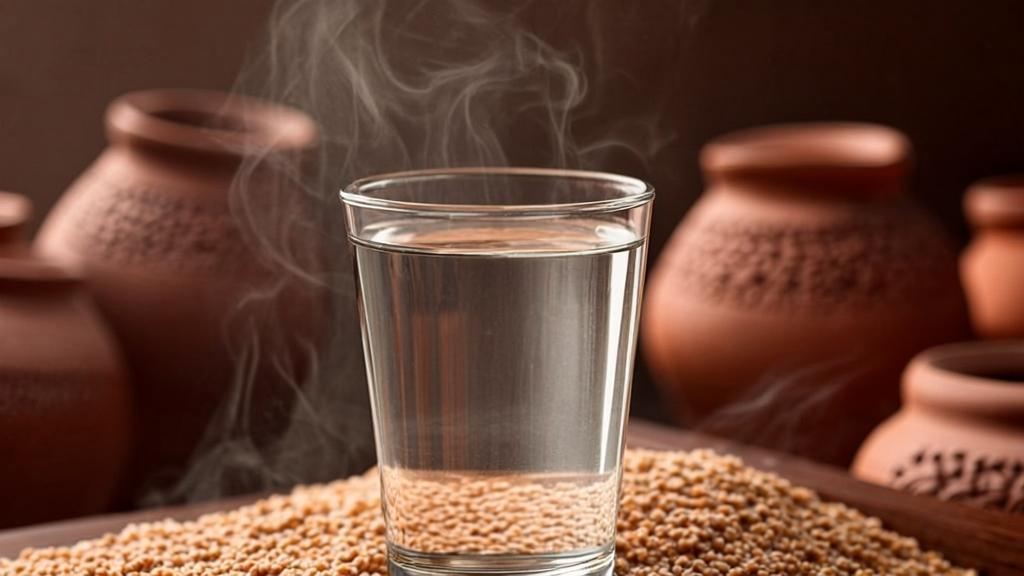
- 3: There are only three basic raw materials – sorghum, koji, and water.
- 60: After distillation, the highest alcohol content of the original liquor can reach over 60 degrees, with 52 and 53 degrees commonly found in the market.
In other words, China’s Baijiu culture , uses the simplest formula to make the most complex flavor spectrum.
2. The production process of a glass of wine is slower than you think
- Lower the sand → moisten and steam the grain, causing cracks in the sorghum.
- Cool down → Cool down to 30 ℃ and mix in Daqu.
- Stacking → Stacking into small mountains, naturally warming up, and enriching wild yeast.
- Cellar entry → fermentation for 30-60 days to generate aroma precursors.
- Distillation → “Slow steaming liquor”, where steam carries out alcohol and esters.
- Storage → Ceramic jar ≥ 3 years, allowing irritants to evaporate. “12987” pithy formula (1 year cycle, 2 grain feeding, 9 cooking, 8 fermentation, 7 liquor taking) only appears in Maotai Town Maotai Maotai Town Maotai Town Maotai flavor technology, and should not be used as a general formula for all Baijiu.
3. Fragrant Map: Administrative Divisions of China on the Tongue
- Sauce Fragrance (Northern Guizhou): A burnt soy sauce like aroma that can still be smelled overnight in an empty cup.
- Strong Aroma , (Southern Sichuan): Pineapple and apple like ester aroma, with a market share of 70%.
- Fragrant .(Jinzhong): Green apples, banana peels, refreshing but with a hint of bitter almonds.
Want to quickly identify? Drop the wine on the back of your hand and rub it. The sauce aroma is soy sauce+sesame ,sme flavor, with a strong aroma like ripe pineapple and a fragrance similar to peeled cucumber.
4. How is Baijiu different from whisky and vodka?
- Raw materials: barley and other grains are used for whisky, and sorghum is almost used for Baijiu.
- Saccharifying agent: Whisky depends on maltase, and Baijiu depends on “qu” – a moldy brick.
- Distiller: whisky is of pot type or tower type, and Baijiu is of “steamer barrel”, with only 1-2 tons of materials being fed at a time, more like “steamed dumplings”.
The result is flavor complexity: there are more than 1200 volatile substances in Baijiu and about 400 Scotch whiskies (Kung et al, 2022).
Data source: Kung, H. F., Liu, Y., & Xu, Y. (2022). Comparison of aroma compounds in Chinese Baijiu and Scotch whisky. -Journal of Institute of Brewing , 128(3), 215-223. https://doi.org/10.1002/jib.672
5. How Chinese Baijiu Culture Is “Drinked”
- Sacrifice: During the Tang and Song dynasties, distilled wine was used to offer sacrifices to the god of fire, believing that “burning fire entering the throat” could connect heaven and earth.
- Loyalty: In the Ming Dynasty’s “Water Margin,” the phrase “eating wine in a large bowl” refers to the act of submitting one’s name.
- Business: After the reform and opening up, we first “walked one” before the contract, putting verbal promises into our stomachs.
The key is not in the alcohol, but in the shared experience of “bitterness before sweetness” – a mouthful of spicy food instantly synchronizes the hearts of strangers, and the topic naturally opens up.
6. Foreigners socializing in China, three tips to reduce throat irritation
- Choose low degree: Below 42 degrees, the inlet pressure drops by half.
- Smell before drinking: Shake the rim of the cup twice to allow high volatile esters to dissipate first.
- High protein: Tofu and cheese can form a “protein film” on the tongue, relieving burning.
7. Baijiu Sailing: Start with “Blending Syrup”
- Figures: The export volume of Baijiu in 2003 was 860 million US dollars, accounting for only 13% of the total export volume of national liquor (General Administration of Customs, 2024).
- Case: London bar “Zhang Bar” mixed 15ml of Maotai, 30ml of cold extracted oolong, and honey to make “East Old Fashioned”, priced at £ 16 and selling 900 cups per month.
Logic: reduce Baijiu to “flavor concentrate” and let the bartender decide the proportion, which is more acceptable than direct marketing of 52 degrees.
Data source: General Administration of Customs. (2024). ‘China alcohol export statistics 2023 http://www.customs.gov.cn
8. Future Trends: Low alcohol, Low carbon, Low context
- Low alcohol: In 2025, Sichuan will introduce the “25 degree Sauce Fragrance Industry Standard” targeting Generation Z.
- Low carbon: Yanghe Group will switch to biomass boilers in 2024, reducing carbon emissions by 0.34 tons per thousand liters of alcohol.
- Low context: The live broadcast room directly translates “Kunsha” and “Shatian” as “whole grain sorghum” and “Shatian sorghum” to reduce slang.
In a word, only when Baijiu is no longer “carried” can it really “go to sea”.
Baijiu as the entrance, not the end
China’s Baijiu culture is a coin with two sides: “flavor” on the A side and “human feelings” on the B side.
It’s okay if you don’t understand, first understand how food becomes language, and then see how language facilitates contracts, travel, and friendship.
When you can taste the humidity of Chishui River and smell the harvest month of sorghum from a glass of transparent liquid, Baijiu will no longer be “hot”, but a brief history of China that can be turned over at any time.
References
General Administration of Customs. (2024). ‘China alcohol export statistics 2023 http://www.customs.gov.cn
Kung, H. F., Liu, Y., & Xu, Y. (2022). Comparison of aroma compounds in Chinese Baijiu and Scotch whisky. -Journal of Institute of Brewing , 128(3), 215-223. https://doi.org/10.1002/jib.672