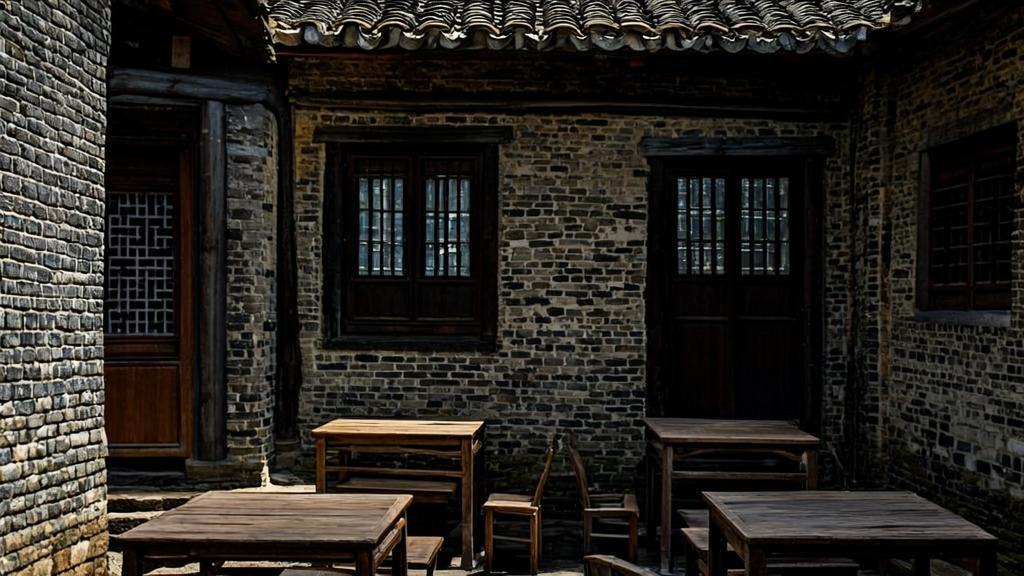
When it comes to “China’s imperial examination”, many people first think of the eight part essay and the Fan Jin middle examination. But in fact, this set of open recruitment systems, which lasted for 1,300 years, was the most effective and equal talent filter in a way. It has written the three-point line of “reading, examination and being an official” into the social DNA, and has also accidentally shaped the concept of civil servants in East Asia and even Europe and America.
Why Was China’s Imperial Examination Born? Breaking the “College Entrance Examination” of the Plutocrats
At the end of the Southern and Northern dynasties, the rising channel was blocked by the hereditary gate. Yang Jian, the emperor of the Sui Dynasty, simply took the written exam to win the talents with unified standards. The Tang Dynasty inherited and enlarged, set up the Presented Scholar, Mingjing and other branches, only admitting two or three people in Chang’an every year, the difficulty is comparable to today’s Jienuo Award (Ebrey, 1,996). In other words, China’s imperial examination was initially an “anti-father competition” movement.
What Is It? Poetry, Stratagem and Three Steps of Eight Part
The examination level is divided into children’s examination, Provincial Examination, Metropolitan Examination and Palace Examination. The content changed with the Dynasty: the Tang Dynasty stressed poetry and Fu, the Song Dynasty added strategies, and the Ming and Qing Dynasties pushed the eight-part essay to the extreme. Candidates should write three hundred words in one day: “break the topic, carry on the topic and start to speak”. Logic, antithesis and allusion can’t be wrong in one step. After watching in 1847, the British missionary Madus lamented that the civil servant examination in Europe “almost copied the Chinese template” (Meadows, 1,847).
Fair to “Paste the Name”: The Technical Anti-Corruption of China’s Imperial Examination
In order to ensure that you can only read articles without looking at people, the Song Dynasty invented the “paste name method”, which sealed the names of candidates and transcribed them in red pen to prevent handwriting cheating. In the Ming and Qing Dynasties, there were even more “number houses”, tens of thousands of small squares like today’s standardized parking spaces. These practices also give remote farmers a chance to “be a farmer in the morning, and ascend Son of the Heavenly King hall in the evening.” According to He Bingdi’s statistics, 47% of the Presented Scholars in the Ming Dynasty came from Hanmen (Ho, 1,962). It can be seen that “procedural justice” was written into the code in the imperial examination of China.
Failed Students: Cultural Spillover Effect
Most people are doomed to fail, but this “preparatory civil servant training” unexpectedly improved the overall literacy rate. In order to let children practice calligraphy, Jiangnan Town set up social schools and printed books, and Kindle popularized classics. Li Zehou believes that the imperial examination is like a “cultural Wi-Fi”, spreading Confucian signals to the countryside (Li, 2,003). Even South Korea and Vietnam also moved the Chinese character volume back to China, forming the East Asian “Chinese character cultural circle”.
Why Was China’s Imperial Examination Suspended in 1905? G-Series High-Speed Train for Carriage
At the end of the nineteenth Century, the ship and cannon woke up the Qing Dynasty. It is impossible to make guns and guns by reading only the classics and history, and the public opinion turned to “industry to save the country”. On September 2, 1905, the emperor Guangxu issued an edict that “all Township Metropolitan Examination should be stopped”, and the imperial examination of China came to an end in an instant. Yan Fu’s evaluation: the sudden abolition of the imperial examination is like “G-Series High-Speed Train for carriage”, the old track is broken, but the new track is not paved, leading to the collective “unemployment” of the gentry, indirectly promoting the new school and the tide of studying abroad (Spence, 1,990).
Today’s Shadow: College Entrance Examination, National Examination and Silicon Valley Interview
If you think that China’s imperial examination has entered the museum, you might as well take a look at the Beijing civil servant “national examination” – millions of candidates competing for 20,000 positions, with an enrollment rate of 2%, lower than that of the Presented Scholar in the Qing Dynasty. The algorithm question on LeetCode Code of Silicon Valley technical interview is also known as the “new version of eight part essay”. It can be said that the gene of written examination + ranking is still active in the modern workplace, but the examination program has changed from four books and five dreams to Python and a line test.
Clocking in China: 4 “China’s Imperial Examination Sites” You Can Still Experience
- Nanjing Jiangnan Gongyuan: The largest Provincial Examination hall in China, now you can wear ancient clothes and number houses to answer questions.
- Directorate of Education of Beijing Confucian Temple: There are many inscribed steles in the Present Scholar of the Yuan Dynasty, and the signature of Lin Zexu and Zeng Guofan can be seen.
- Chen Clan Academy in Guangzhou: The place of Provincial Graduate celebration in the south of the Five Ridges.
- Chengjun Museum in Seoul: The site of the Palace Examination of the Korean imperial examination, feeling the transnational influence of the Chinese character test paper.
The End: The Inspiration of the Millennium Examination Paper to the World
The reason why China’s imperial examination was listed as “human oral and intangible heritage” by UNESCO is not only ancient, but also because it used a set of papers to answer “how to give everyone a way up”. When today’s discussion about education internal volume and algorithm recruitment, looking back at the examination hall in 1300, we can probably remind ourselves that the balance between fairness and efficiency will always need a more intelligent “examination paper.”
References
Ebrey, P. B. (1996). ‘The Cambridge Illustrated History of China Cambridge University Press.
Ho, P. T. (1962). ‘The Ladder of Success in Imperial China: Aspects of Social Mobility, 1368-1911 Columbia University Press.
Li, Z. (2003). ‘The Path of Beauty: A Study of Chinese Aesthetics Oxford University Press.
Meadows, T. T. (1847). ‘Desultory Notes on the Government and People of China, W. H. Allen.
Spence, J. D. (1990). -‘ The Search for Modern China W. W. Norton & Company.