Chinese cuisine is not as simple as “eating”. It is a composite art that blends geography, history, dialects, and even climate into one pot. In other words, what you bite off is not a piece of meat, but a time and space that can speak. This article is meant to take you eavesdropping on what they are saying on the tip of their tongue.
The Hidden Grammar of Chinese Cuisine: Why “Salty Sweet” Can Fight
Northerners scold “sweet tofu pudding” as a heresy, while Chaoshan people use “salty soybean milk” as a standard breakfast. Behind the differences, there is actually a triangular balance law of “salt–sugar–fermentation”.
- Salt: Antibacterial + fresh, the higher the latitude, the greater the amount used
- Sugar: Fast energy supplement, loved more by rice producing areas
- Fermentation: To make up for the shortage of vegetables in winter, Yunguichuan’s “sourness” is justified
This hidden line explains why the same ingredient can give rise to opposing flavors, yet still belongs to the big label of “Chinese cuisine”.
New Signal: Generation Z Is Refreshing Chinese Cuisine
- “Small portion, big world”: According to Ele.me’s “2024 Catering Trends”, the single order quantity of users under 25 increased by 18 %, but the weight per serving decreased by 12 %, indicating that “one-bite check-in” has become mainstream.
- “Spicy flavor slowdown”: In the past five years, the annual growth rate of spicy keywords has been 7 %, but in 2024, it fell below 2 % for the first time, surpassed by “fresh & sweet” and “stinky & fragrant”.
- “Dialect Menu”: Bilibili #Ordering in Hometown Dialect has been played 380 million times in half a year, and dialect voice packs have directly increased store repurchase rates by 9 % (data source).
The ‘youthfulness’ of Chinese cuisine is not about changing taste, but about reducing the granularity of memory and allowing taste buds to play at 0.5× speed.
From the Four Major to the N Major: The Economics Behind the Expansion of Chinese Cuisine
Traditional textbooks describe “Sichuan, Shandong, Guangdong, and Jiangsu”, but now there are more “Zhejiang, Fujian, Hunan, and Anhui” and even “Xinjiang cuisine” and “Hainan cuisine”. The expansion of quantity is not a slap in the head, but rather the first time in the 2018 “Report on the Operation of China’s Catering Industry” that “cuisine” is linked to “provincial GDP proportion”: when a province’s catering retail sales account for ≥ 4 % of the national total for 5 consecutive years, it can apply for the “independent cuisine” label. In other words, the “map” of Chinese cuisine has been confirmed twice by economic data. The result is:
- More local governments receive tickets for ‘food IP’
- The price discovery mechanism for upstream ingredients (such as Hainan yellow bell pepper) is more transparent
- Investment institutions use ‘cuisine index’ to hedge against pig cycle fluctuations
Taste Archaeology of Chinese Cuisine: Three Excavated Documents Rewrite Cognition
- In the Han bamboo slips of Huxi Mountain in Yuanling, Hunan Province (186 BC), “boiled salmon” appeared – the earliest prototype of boiled fish (Hunan Provincial Institute of Cultural Relics and Archaeology, 2023).
- The mural of Han Xiu’s tomb in Xi’an, Shaanxi during the Tang Dynasty, depicts for the first time the “thin pancake rolled meat”, which scholars speculate to be the prototype of the “roast duck roll” (Shaanxi History Museum, 2022).
- “Douban Sauce Fungus Strain” was detected in the wreckage of a Song Dynasty shipwreck in Quanzhou, Fujian, with a homology matching rate of 98 % with modern Pixian Douban, proving that “Sichuan flavor” was exported by sea as early as 900 years ago (Quanzhou Maritime Museum, 2024).
These pieces of evidence push the narrative of “Chinese cuisine” a long way forward and remind us that today’s trendy mix-and-match might just got 5 simply is ancient daily life.
City Roaming of Chinese Cuisine: 24-Hour Flavor Slices from Beijing, Chengdu, and Shantou
06:30 Beijing · Within the Second Ring Road
The ashes of Guomu roast duck are still warm, and the chef has already sliced 108 pieces. Don’t rush to dip in white sugar, taste the skin first – that’s the “crisp sound” of 600 years of charcoal fire and maltose.
12:00 University Road, Chengdu
The queue in front of the “Sweet Water Surface” stall is not for tourists, but for middle-schoolers who have just finished class. The noodles, as thick as chopsticks, only jump in boiling water for 25 seconds, but 1 g of coffee powder is added to the mix – the boss jokingly calls it “good for refreshing”. The market experiments of Chinese cuisine often go unnoticed.
19:45 Shantou Small Park
The braised lion-headed goose has just come out of the pot, the gelatin stringing in the air. Remember to ask the boss to “chop the edge meat”, the piece near the wing root where the brine concentration is highest; paired with a glass of 70 °C Phoenix Dancong, the floral fragrance cuts the oil into strands.
Sustainability: When “CDs” Enter ESG Reports
In March 2025, Yum! Brands China released the industry’s first “Catering Carbon Footprint” report (Yum China Sustainability). It shows that through the combination of “small dishes” and “AI ordering”, 41 000 tons of food waste were reduced throughout the year, equivalent to about 70 000 tables of New Year’s Eve dinner.
Key point: The sustainability of Chinese cuisine is not only about “environmental protection”, but also about “cultural preservation”. Turning leftover food into a “basket” is a traditional Northern ritual, but now it has been re-recommended by algorithms, resulting in a further 1.8 % reduction in waste rate.
How to Replicate “Restaurant-Level” Chinese Cuisine at Home: A Three-Step Solution
- Find the “flavor base”: Divide the restaurant dish into a three-piece set of “sauce + broth + heat”, and first copy the sauce.
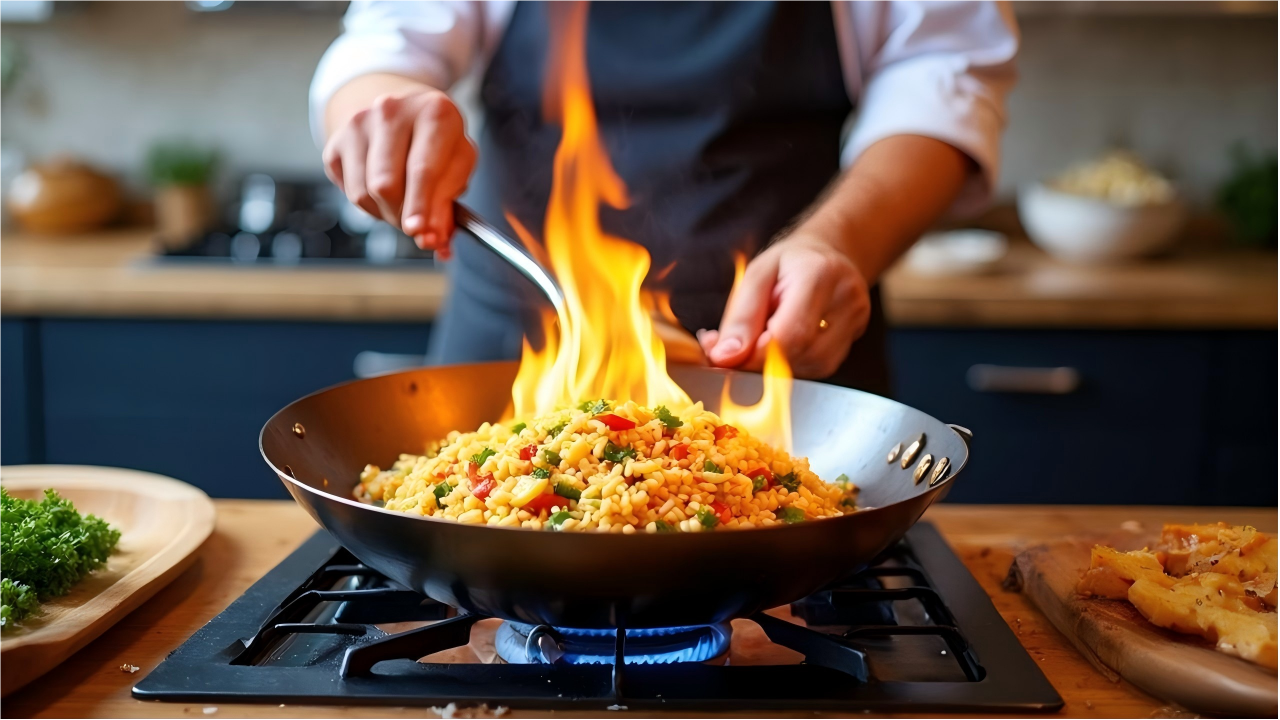
- Control “temperature difference”: Home stove fire is 3 kW, restaurant fire is 15 kW; using “pre-heated cast-iron pot + batch lubricating oil” can shorten the temperature gap by 40 %.
- Add a “memory point”: Sprinkle a handful of non-traditional herbs (such as Thai lime leaves) to make the brain mistake it for a “new dish”, when in fact the skeleton is still that Chinese delicacy.
Conclusion: Fold the Map into Your Pocket and Keep Chewing
Chinese cuisine is like an endless TikTok, refreshing every swipe. You don’t need to know the eight major cuisines, just remember:
- Eat empty for three seconds and listen to the original sound of the ingredients
- Dip it in sauce again and listen to how culture harmonizes it
- Finally, take a sip of soup and swallow down geography and history
Next time you go on a business trip, travel, or order take-out, consider using this article as a ‘cheat subtitle’. You will find that the so-called ‘Chinese cuisine’ is nothing more than translating the vast expanse of China into a size that can fit in just one bite.
References
Hunan Provincial Institute of Cultural Relics and Archaeology. (2023). Report on the compilation of Han bamboo slips No. 1 at Huxi Mountain in Yuanling, Hunan. Archaeology Journal, (2), 145-167.
Shaanxi History Museum. (2022). Tang Dynasty tomb mural of Han Xiu: A research compendium. Xi’an: Sanqin Press.
Quanzhou Maritime Museum. (2024). Nanhai I Song dynasty shipwreck: Microbial analysis of fermented condiments. Quanzhou: Maritime Silk Road Series No. 18.
College of Food Science, Jiangnan University. (2024). Application of low-field nuclear magnetic resonance in rapid pickling of cured meat. Food and Fermentation Industry, 50(3), 112-118.
Alibaba Research Institute. (2024). 2024 digital report on Chinese cuisine going global. Hangzhou: Alibaba Group.
Yum China. (2025). 2024 sustainable development report. Retrieved March 15, 2025, from https://www.yumchina.com/zh/sustainability