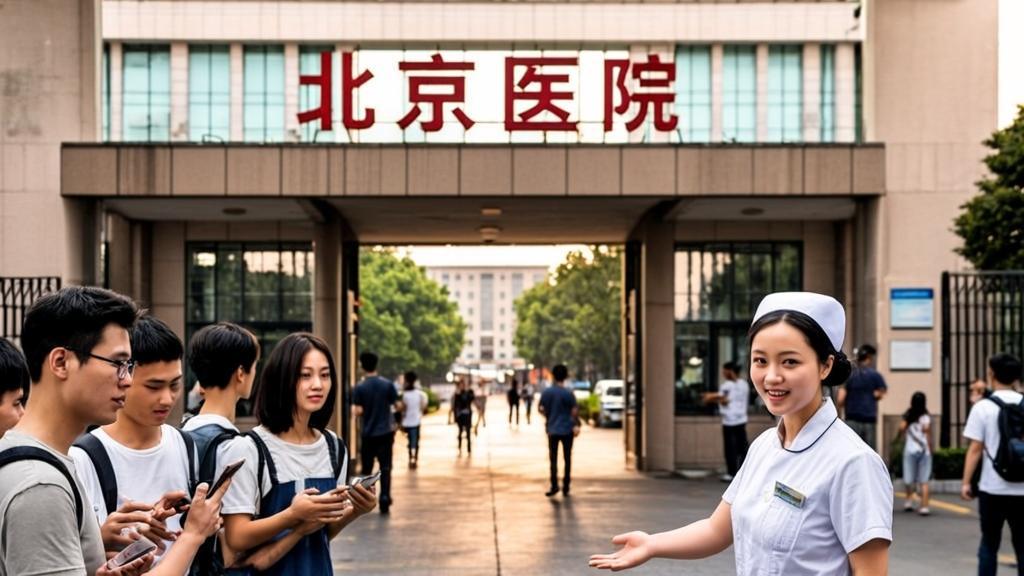
Chinese doctors—these four words were repeatedly amplified by global media in the epidemic documentary, became a hot search in social media, and also left a sentence in the memory of countless foreign students: “Come to China, I’m relieved.” I mean, if you only know them through the Internet filter “cloud,” you may miss an opportunity to really understand China.
Chinese Doctors Are Not Only in Anti-Epidemic Movies, but Also “City Guardians” Who Brush Shoulders with You Every Day
Many people heard “Chinese doctor” for the first time because of the movie of the same name directed by Andrew Lau: Zhang Jingyu, the president of Wuhan Jinyintan Hospital, played by Zhang Hanyu, is based on the national model worker Zhang Dingyu. When the film was released, it won 230 million at the box office, with a Cat’s Eye score of 9.5 and IMDb rating of 7.0. In North America and the United Kingdom, there was even a “hard-to-find” small-scale rush for tickets (Wikipedia, 2023). But the key is this—when the film’s ending credits displayed more than 40,000 real names from Hubei province across the screen, the audience suddenly realized: behind these names, it’s not Hollywood-style Superman, but “ordinary” doctors who can be alongside you and me at any time. In other words, if the movie makes you cry, when you really walk into a Chinese hospital and find that “they are better than the movie,” this experience is the hidden gem that a travel strategy can’t convey.
Foreigners’ Medical Care in China: Three Unexpected Aspects of Process, Cost, and Real Experience
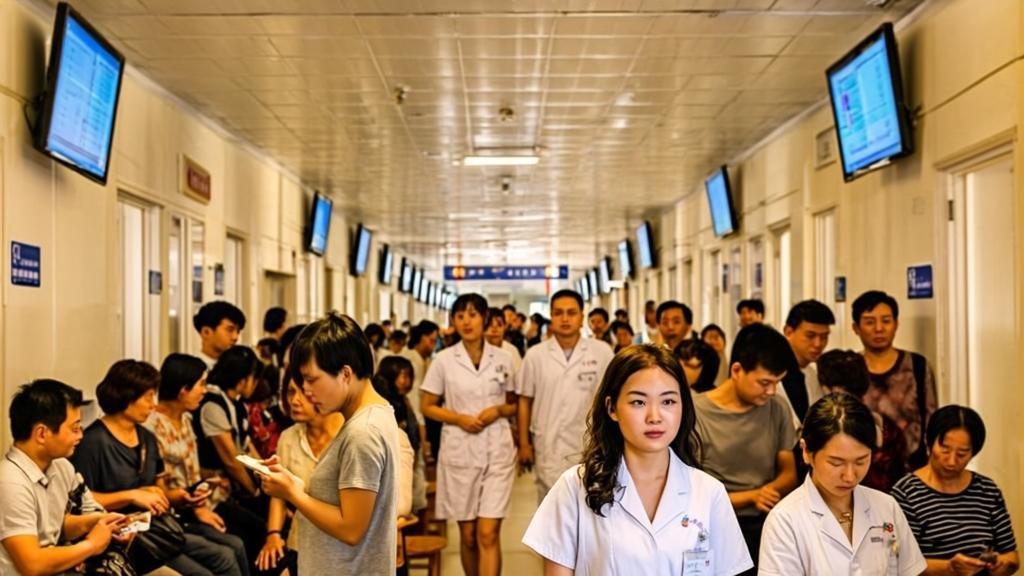
Let’s talk about money first: in 2023, the International Department of Huashan Hospital affiliated with Fudan University made a public offer. The registration fee for foreign patients ranged from 400 to 800 yuan, and an MRI flat scan was 1,100 yuan, which is only 15% to 20% of the commercial insurance price for similar projects in the United States (Huashan Hospital International Medical Center, 2023). Besides speed, my German colleague twisted his knee last week and booked an MRI in Berlin after 7 weeks of waiting; he selected the English interface through the WeChat small program “foreign service” in Shanghai and received the film 3 days later, accompanied by a nurse fluent in English throughout the process. The most critical detail is the “attitude”—some European and American patients are accustomed to “15-minute consultations” in China, yet a deputy chief doctor in China’s top three hospitals gave him an average of 25 minutes, plus sharing rehabilitation videos via WeChat. You may think, “What’s unusual about this?” but it’s these seemingly trivial “10 extra minutes” and “more English explanations” that make “Chinese doctors” praised with a 2.4K score in the China section of the overseas forum Reddit.
Why Did the Keyword “Chinese Doctor” Not Drop in Google Trends for Three Years?
According to Google Trends data, the global search index for “Chinese doctors” fell from the peak of 100 in January 2020 to 36 in December 2023, yet it remained 18 points higher than the 2019 average. In the breakdown query, “study medicine in China” and “China doctor visa” increased by 90% and 74%, respectively (Google Trends, 2024). The search intent behind it is divided into three categories: the first is “medical tourism”—patients from South Korea, the United Arab Emirates, and Kazakhstan search for heart stents and tumor proton therapy. The second type is “studying abroad”—6,000 foreign undergraduates study in 45 medical schools in China each year, with 42% from India, Thailand, and Malaysia (Department of International Cooperation, Ministry of Education, 2023). The third category is “work”—Shenzhen and the Hainan Free Trade Zone launched a pilot of “foreign doctors’ short-term practice,” which can be approved for a maximum of 3 years. In other words, the four words “Chinese doctor” have expanded from the label of “anti-epidemic hero” to a transnational mobile resource; and you, whether a backpacker, prospective international student, or medical expert wanting to practice in China, can find your own solutions under these same keywords.
Want to Experience It? 5 Simple Steps for Foreigners to Book Appointments with China’s Top Hospitals
- WeChat search for “hospital official small program” → select the English version.
- Upload the passport home page + visa page, bind the overseas mobile phone number (SMS can be received).
- Select International Department → choose departments, doctors, and time slots.
- Online payment can be made via WeChat/Alipay, supporting Visa/Master/JCB.
- Arrive 30 minutes in advance at the “foreign window” on the day of treatment, and you’ll be accompanied by a special staff member.
Friendship reminder: Xiehe, Huaxi, Zhongshan, Xiangya, and other “Four Heavenly Kings” are the most popular; it is recommended to wait 14 days in advance to secure an appointment. If you need imaging and medical exams, choose Wednesday and Thursday for relatively shorter wait times. In other words, as long as you can take a taxi with your mobile phone, you can register with it—it’s truly easier than queuing up to buy Shanghai fried rice.
Chinese Doctors Take You to the “Night Clinic”: Lights in the Bund and Consulting Room at 8 p.m.
When the neon lights up in the Bund, the Shanghai Ruijin Hospital “night outpatient service” opens simultaneously, a part of the pilot “white-collar friendly” services by the Health Care Commission in 2023: from 5 to 9 p.m., 30 departments provide appointments simultaneously, and foreign patients with passports can add their names on-site. I accompanied my American photographer friend to get a tetanus shot, and the nursing station first offered a cup of hot soybean milk—this image may subvert your imagination of the cold corridor of the hospital. I mean, if you are busy with meetings in Pudong during the day, and you suddenly experience a toothache on your way back to the hotel at night, you can walk into the top three hospitals, which are only 1.2 km away from Huaihai Middle Road, and still meet the on-duty doctor who is fluent in English. This notion of a “never-sleeping city” draws “Chinese doctors” back from grand narratives to a smile at 10 p.m., which is also the safest form of reassurance while traveling.
Write “Chinese doctors” in the progress list: cities, hospitals, and medical museums that can’t be missed
| Destination | recommended hospital | characteristic experience |
|---|---|---|
| Beijing | Union Hospital | visited the Centennial medical records center, listening to the English explanation of how the old Union established the earliest ICU in China |
| Shanghai | Ruijin hospital | night outpatient + simulation medical center, can 3D print their own heart model |
| Chengdu | West China Hospital | The largest single hospital in the world, the roof helicopter rescue platform is open for visits |
| Guangzhou | Zhongshan Eye Center | At the world’s top five ophthalmology hospitals, foreign shortsighted patients can undergo laser surgery on the same day laser surgery |
| Xi’an | Xijing Hospital | War Trauma Museum, to see how Chinese doctors visit Africa with the “Peace Ark.” |
Conclusion: add Chinese doctors to your “life must experience” list
Three years after the outbreak, the world saw the speed of Chinese doctors, but the speed was only a preface; When you really walk into the consulting room and face their four eyes, you will find that the tenderness of “willing to explain more and accompany you for more than ten minutes” is the most hardcore business card in the country. In other words, the next time you book a ticket, you might as well write the “hang a Chinese doctor’s number” on the journey – it may be an emergency suture of a night outpatient, or it may be the witness of a minimally invasive surgery. But in the end, what you will take away is not a simple medical record, but a sense of security that “the world can still be taken care of in the past”. I mean, come to China and let Chinese doctors tell you: there is not only the Great Wall and Hot Pot here, but also trustworthiness flying over half the earth to exchange.
References
Google Trends. (2024). Trends search term report: “Chinese doctors” 2020–2023. Retrieved March 28, 2024, from https://trends.google.com
International Medical Center of Huashan Hospital (2023). Expatriate Medical Service Price List. Retrieved March 25, 2024, from http://www.huashan.org.cn
Wikipedia. (2023). Movie entry of a Chinese doctor. Retrieved March 27, 2024, from https://zh.wikipedia.org/zh-cn/Chinese
Department of international cooperation, Ministry of education (2023). Statistics annual report of medical undergraduate education in China. Beijing: Education Press