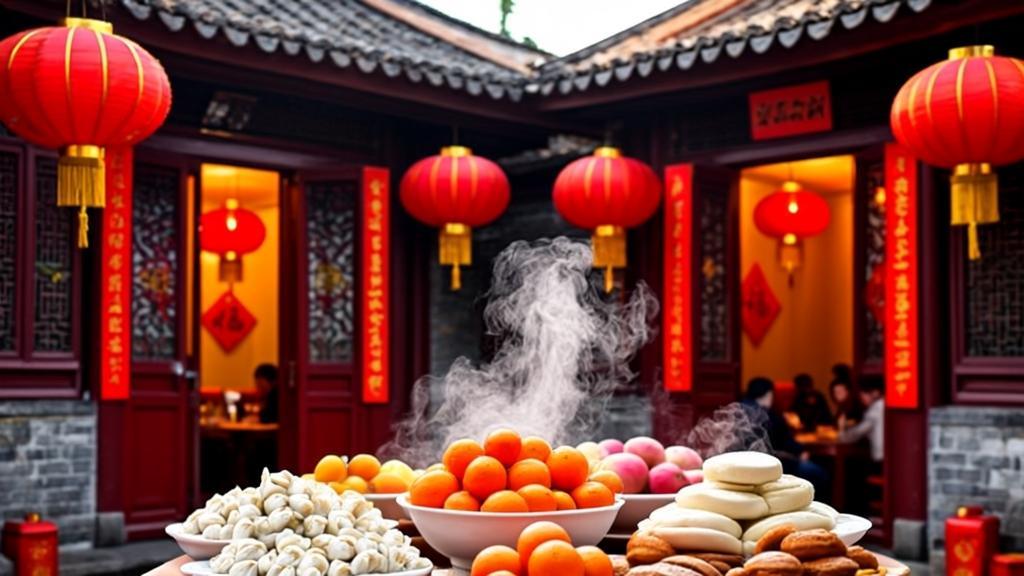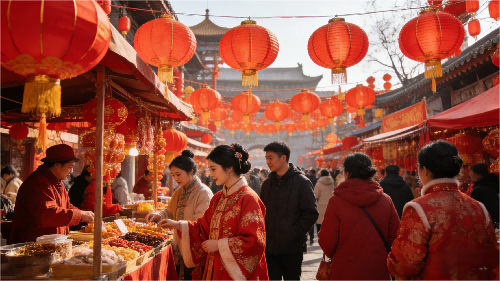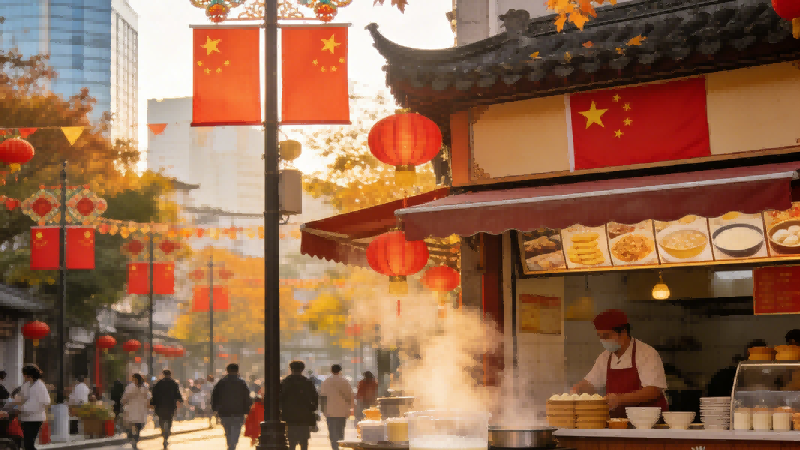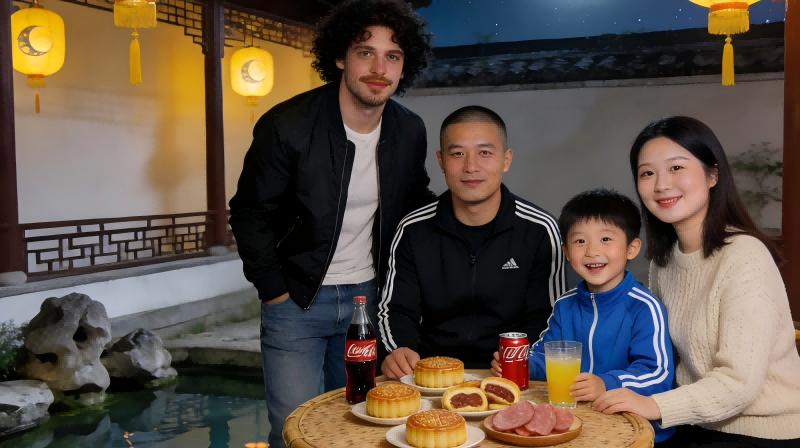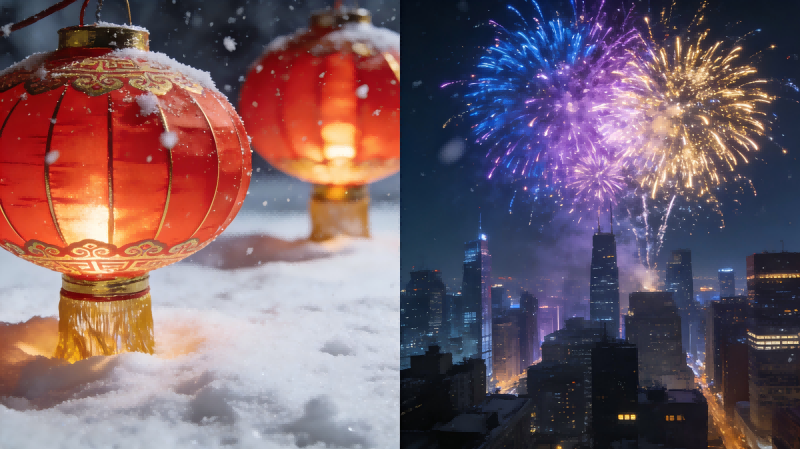
Chinese Lunar New Year vs the Western New Year, as the celebration nodes of the two main time systems of human beings, carry a totally different cosmology, social structure, and cultural memory. From the perspective of calendar philosophy, ritual symbols, and social functions, this paper systematically analyzes the big differences between the two kinds of New Year’s cultures, and especially discusses how contemporary China “localizes” the New Year’s Day of the Gregorian calendar to form a unique “double track” New Year’s culture.
Catalog
- Philosophy of time: the difference between the lunar phase cycle and the solar return year
- January 1st in modern China: legal festivals and youth subculture consultation
- Comparison of cultural characteristics: a list of structural differences
- FAQs: deep doubts about two New Year cultures
Philosophy of time: the difference between the lunar phase period and the solar return year
The Chinese Lunar New Year (Spring Festival) is based on the second full moon after the winter solstice, which corresponds to between January 21st and February 20th of the Gregorian calendar. Its calendar essence is a combination of yin and Yang. The month is determined by the phase of the moon, and the four hours are corrected by the solar return year. This reflects the reverence of farming civilization for “Tianshi”: the moon is in charge of tides and agricultural time marks, and the sun determines the cycle of seasons. The Western New Year (January 1) originates from the ancient Roman solar calendar, which is purely based on the Earth’s revolution cycle, reflecting the linear and quantifiable time of modernity. The former is the ritualization of the cyclic cosmology, and the latter is the calendar of the progressive historical view (National Bureau of Statistics of China, 2,023).
January 1st in modern China: legal festivals and youth subculture negotiation
Officially, China has designated January 1st as “New Year’s Day” since 1,949, which is a legal holiday but not a traditional festival. Different from the order of “going home” in the Spring Festival, the subtext of New Year’s Day is “looking forward” – emphasizing the modernization process and time efficiency, which is exactly the supplement of the national time concept to the traditional cycle time.
In urban practice, the young generation has transformed New Year’s Day into a “friend’s day.” The New Year’s Eve parties in Sanlitun, Beijing, the Bund, Shanghai, and Taiguli, Chengdu, although drawing on the Western countdown model, developed a local form. This unique form is neither purely western nor divorced from the traditional farming rhythm.
At the level of symbolic negotiation, New Year’s Day is a testing ground for cultural mixing. It is precisely the creative adaptation of young people to the dual time system in the era of Globalization that New Year’s Day has become a safety valve to vent individualism, and the Spring Festival is a fortress of family responsibility.
Chinese Lunar New Year vs Western New Year: Cultural characteristics comparison
| Dimensions | Chinese Lunar New Year | Western New Year | contemporary Chinese New Year’s Day |
| The time philosophy | Cycle universe view, the Yinyang calendar | Linear progress theory, the solar calendar | National modernity time, eclectic |
| Social unit | Family / clan-based | Individual / city community-based | Friend circle/company team |
| Core space | Private family space | Public urban space | Commercial complex / online studio |
| Economic ceremony | Red envelopes (relationship reproduction) | Gifts (self-expression) | Lightweight social networking |
| Cultural function | Strengthens the order of consanguinity and cultural identity | Confirms citizenship and public identity | Releases personality, buffering modernity anxiety |
| Body experience | Sitting around, vigil, cohesive flow | Carnival, outdoor party | Mobile phone brush, collage experience |
| Modern media | TV Spring Festival Gala (national ceremony synchronization) | Municipal Fireworks (city brand exhibition) | Cross-year concert live broadcast (platform) |
FAQs: deep doubts about Chinese Lunar New Year vs Western New Year cultures
Q: Why is the Chinese New Year’s Day not fixed?
A: The Yinyang calendar needs to coordinate the lunar phase cycle (29.5 days/month) and the solar year (365.24 days), so it needs to set a leap month every year, reflecting the time wisdom of “harmony” rather than “discipline”.
Q: How do modern Chinese young people see the difference between New Year’s Day and the Spring Festival?
A: For many post-90s and 00 post-90s, New Year’s Day is “an autonomous social time”, and the Spring Festival is “a regulated family responsibility.” The former is used for friend gatherings and personal relaxation, and the latter must fulfill the duty of visiting relatives. The two form a complementary structure of “pressure release”.
Q: What unique culture can you experience when traveling in China on New Year’s Day?
A: It can be observed that “official modernity” and “youth subculture” coexist: there are both serious annual meetings of enterprises and cross-year rock of LiveHouse. This is the scene of China’s unique “double track time culture”.
Chinese Lunar New Year vs Western New Year Conclusion
Chinese Lunar New Year, Western Lunar New Year, and contemporary Chinese New Year’s Day together constitute a cultural spectrum: at one end is the cycle time of agricultural civilization, at the other end is the linear time of modernity, and in the middle is the “third time” negotiated by Chinese youth in practice. To understand the three is to understand how human beings can take advantage of the universal demand of “Spring Festival” to walk out of the diversified and creative time path in the globalized and local traditional Zhang Lizhong.
Reference
National Bureau of Statistics of China. (2023). Spring Festival travel trends report. http://www.stats.gov.cn