Cut in at the Beginning
When foreign travelers first hear a Chinese self-introduction, they are often surprised, “Why is there 1 surname Li for every 10 Chinese people?” The answer lies in “Chinese surnames.” It is not only an identity tag but also a living brief history of China. It serves as a secret entrance to attract you to this land.
What is a “Chinese Surname”?
“Chinese surname” is usually composed of 1-2 Chinese characters, while the transliteration of ethnic minorities can reach 4 characters. The core function is to distinguish blood and family (China’s State Council, 2021). Different from the logic of “name + surname” in the West, in China, the surname comes first. The surname determines “where I come from,” while the name represents “who I am.”
A Brief History of the Family Name System for 5,000 Years
Maternal to Paternal
The word “surname” itself is composed of “female” and “Sheng,” suggesting that the earliest surnames were born with a matriarchal tribe (Fudan University, 2018).
The Era of Fengguo and Zhishi
In the Zhou Dynasty (1046 – 256 BC), the principle of “fiefdom = surname” was established. The ancestors of Confucius received this surname because they were granted the place of “Kong,” and noblemen generally had “surnames and surnames.”
The Popularization of the Empire
After the Qin and Han Dynasties, the patriarchal clan system collapsed, and common people began to use “surname + name.” The number of surnames increased from 504 in Hundred Family Surnames to about 7,300 today (National Bureau of Statistics, 2011).
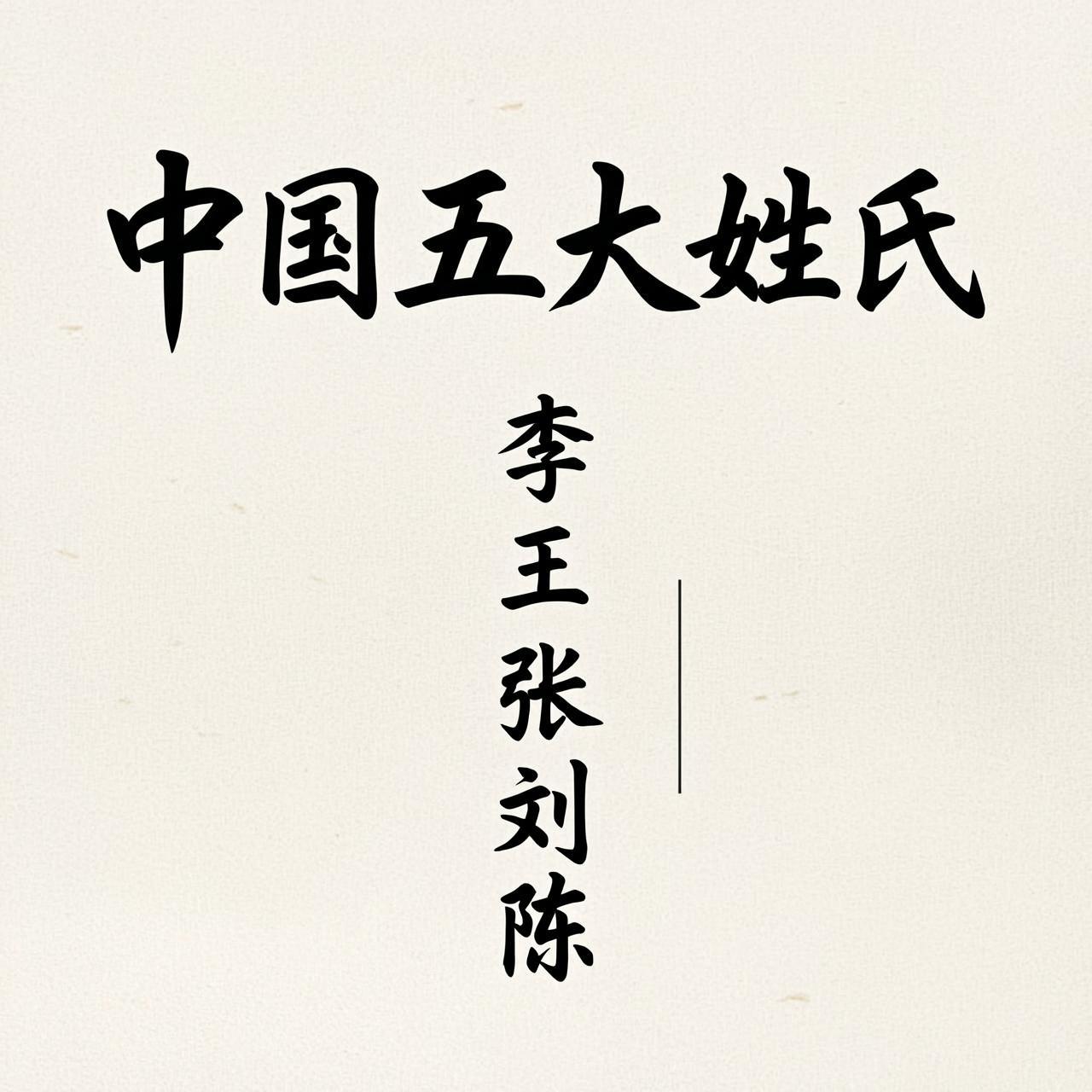
Decoding the Meaning of the Top 5 Chinese Surnames
- Li: originally referred to “Li Guan” (judicial officer) and later changed to “Li,” meaning “after the judge.”
- Wang: The “axe Yue” in oracle bone inscriptions is a symbol of power, meaning “royal blood.”
- Zhang: the character represents “the person who draws a bow” and was responsible for bow and arrow manufacturing in ancient times.
- Liu: The original meaning of “axe of killing and cutting,” common in families of military generals.
- Chen: the descendant of the Chen state in the Zhou Dynasty, which literally means “old state and new life,” embodying deep family and national sentiments.
Family Name Culture: Three Keys to Understanding Chinese Culture
Ancestor Worship: In the tomb-sweeping ceremonies of the Qing Dynasty, tombstones were always engraved with “surname + generation” to remind future generations of their “roots.”
The Same Structure of Family and Country: Historical records say, “the Li family in the world came out of Longxi,” and the genealogy of the same surname maintains a vast mutual assistance network across provinces and countries.
Moral Metaphor: The idiom “Zhang Guan Li Dai” borrows two surnames, which is both ironic and confusing; without a surname, Chinese jokes cannot be explained.
3 Things Foreign Friends Want to Know Most about Chinese Surnames
Q1: Can I have a Chinese surname? It’s not prohibited by law, but it’s recommended to choose a surname with a story. For example, “Ai,” derived from the name of the Shang Dynasty, is simple and easy to write, and the foreign pronunciation poses zero difficulty.
Q2: Can two Chinese characters also be surnames? Yes, “Ouyang” and “Sima” are both single names, not middle names. These types of surnames are often mistaken for nobility and are especially eye-catching when you take a photo.
Q3: Will you change your family name after marriage? Chinese law retains the original name; wives do not change their surnames, and children can follow either the father or the mother, representing a new perspective on gender topics in China.
The Territory of Chinese Surnames in Modern Data
The 2011 census showed that the top 5 surnames accounted for 30.28% of the total population, forming a “Pyramid” structure (Beijing Language Office, 2016). [data source] https://jw.beijing.gov.cn/language/ywsh/201606/t20160623_1056378.html
Travel Experience: A Niche Route to Find “Chinese Surnames”
| Place | Family Name IP | Play Highlights |
|---|---|---|
| Gansu Longxi | Li | Li’s Dragon Palace; wear Hanfu to record a short video |
| Shanxi Taiyuan | Wang | Wang’s ancestral temple + Shanxi business courtyard script kill |
| Zhejiang Shaoxing | Ouyang | Lanting Pavilion calligraphy experience; write your own transliteration |
Conclusion of Chinese Surnames
“Chinese surname” is not just a Latin letter on a passport; it carries 5,000 years of migration routes, professional memory, and feelings for one’s home country. Next time you order a pot of “Liji” Pu’er in China, don’t forget that you’re already conversing with a judge from 1,000 years ago—this is the most friendly way to welcome visitors in China.
References
Beijing Municipal Office of Language and Script. (2016). Population-based Chinese surname ranking. https://jw.beijing.gov.cn/language/ywsh/201606/t20160623_1056378.html
Fudan University, School of Life Sciences. (2018). Matrilineal origins of Chinese surnames. https://www.fudan.edu.cn
National Bureau of Statistics of China. (2011). Tabulation of the sixth national census. https://www.stats.gov.cn