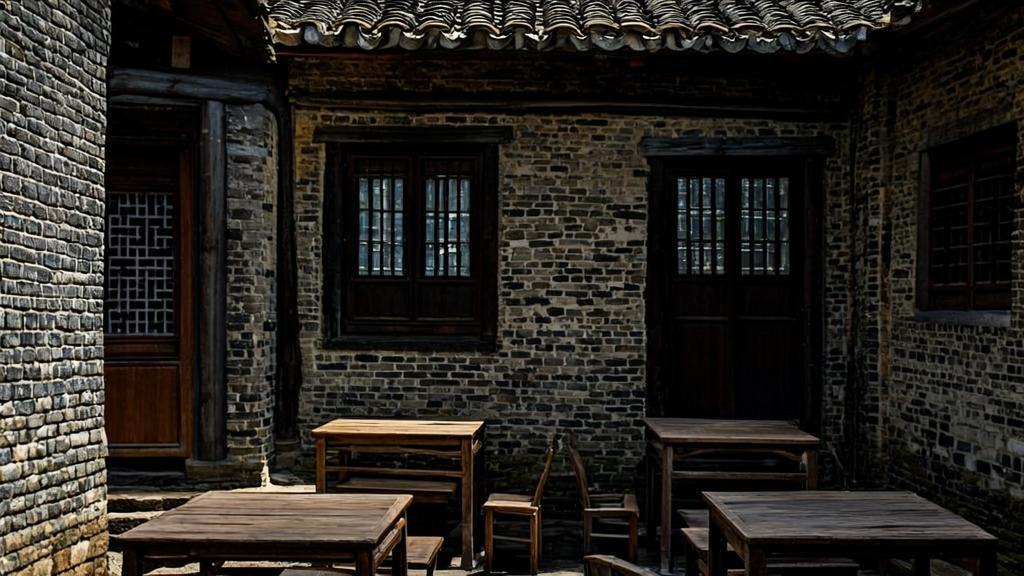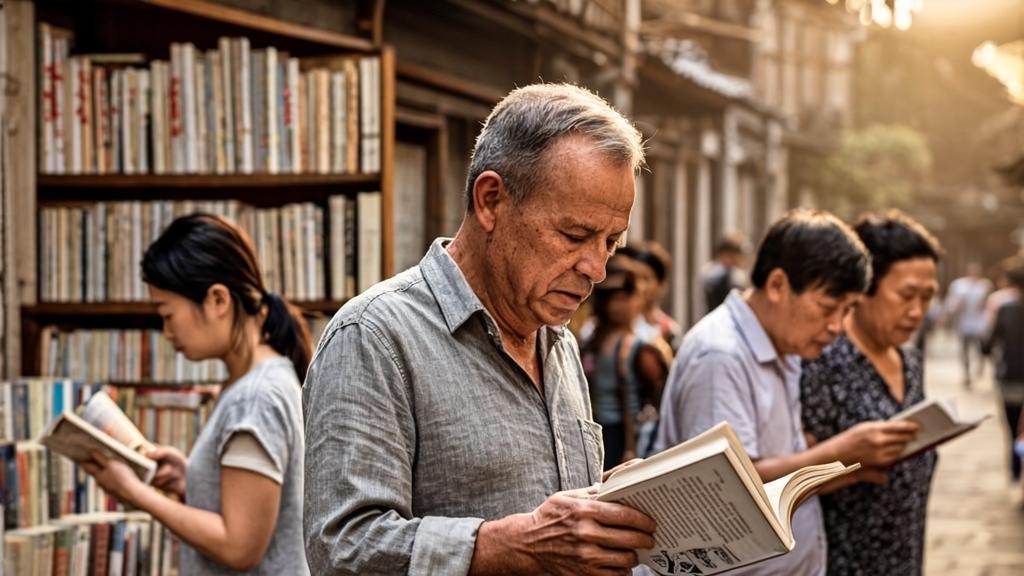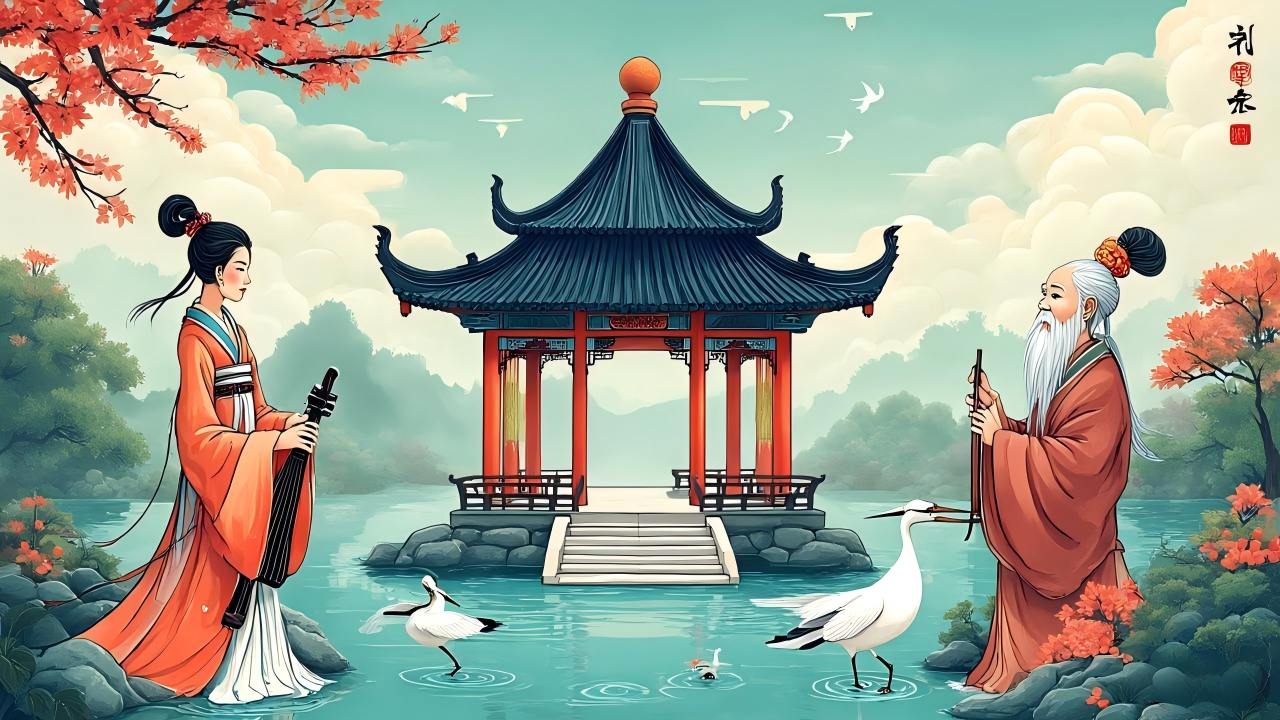
At the beginning of listening to such words as “Chinese tradition”, there was always a sense of alienation from the museum, as if it should only be displayed behind the glass cabinet. But in fact, they never solidify – they flow constantly, collide and blend with modern life, and reappear in those subtle habits that you can hardly detect: how to greet the older people, the specific food that will appear on the table when others are frustrated, and why some days “in the dark” are suitable for making major decisions. If you grow up in such an environment, you will understand a wonderful truth: tradition doesn’t always come out with grand ceremonies. More often, it’s a subtle expectation – “eat more”, “don’t point at others,” and “call your aunt back”.
I will write in a way that is closer to real life: not regular classification, but interwoven segments. There will be jumps and maybe backtracking. Wait, it’s not completely accurate to say that – what I really want to express is that these jumps are the core, because the tradition in reality is just like this, and there is little linear context.
A simple definition of always slipping away
If someone asks, “What is Chinese tradition?” it’s easy to list a variety of answers: Spring Festival, dragon boat races, tea, calligraphy, ancestor worship ceremonies, weddings, funerals, etiquette, and proverbs. This list is not wrong, it’s just that… It’s missing some human integrity.
Because Chinese tradition is not only an event, but also a mode of interpersonal relationship, which is often silent.
Take the often discussed “filial piety” as an example. The Encyclopedia Britannica defines filial piety in Confucianism as the attitude of respect and care for parents and elders, which is closely related to moral conduct and social harmony. It even points out that it is not blind, but also contains the meaning of “respectful advice” (source: [britannica.com] https://britannica.com/)。 This detail is crucial – it means that tradition can not only carry authority, but also leave room for moderate dissent. To be honest, it’s a modern tension.
Talk about the etiquette again. It not only refers to the ceremony, but also covers the “way of doing things”: a toast, a greeting, and a gift delivery. The key is how we practice it. People rarely say, “I’m keeping the ceremony now.” They just practice it naturally, or refuse to practice, or half push, with an embarrassed smile.
In addition, due to regional, linguistic, religious, and migration history, and intergenerational differences, the forms of Chinese tradition are also different. “China” is never a single family, but a collection of millions of families after the precipitation of time.
Chinese tradition in the kitchen (philosophy can be felt and tasted here)
Food is a classic entrance to touch tradition, because it is the least abstract. Belief can be argued endlessly, but as soon as dumplings are on the table, everyone has their own opinions.
The food tradition not only retains the taste, but also maintains the seasonal rhythm and reunion. There is an idea (either bright or dark) that specific foods are “exclusive” to specific moments. Therefore, people insist on eating these foods not only to pursue flavor, but also to pursue a sense of “just right” belonging.
Indeed, there is no lack of symbolic significance: long noodles mean long life, round food represents reunion, and fish symbolizes more than one year. But the deeper logic may be simpler: the shared food precipitates into a common memory, and the common memory condenses into a common identity. This is the reason why family is still a family even if they have different jobs, residences, and personalities.
However, the modern kitchen is also changing the tradition: frozen dumplings, take-out New Year’s Eve meal, and video calls by the electric rice cooker. Some purists scoff at this, while the speed of some elders’ adaptation is unexpected.
What I want to express is that tradition can exist “imperfectly”, and this may already be a kind of inheritance.
A private scene (ordinary but all-inclusive)
Last month, my neighbor, a retired teacher, always liked to correct my posture with a mild smile – and invited us to be guests. “I don’t make complex dishes,” she repeated two times, but usually said that, which means there will be a certain implicit delicacy.
She took out a worn notebook, which not only had recipes, but also some trivial notes: which niece didn’t eat coriander, which uncle was easily sentimental in a specific Festival, and which day was suitable for tomb sweeping. She said with a laugh, “This is my cloud storage.” After a pause, she added: “No, it’s not – it’s better than cloud storage.”
We made some simple food, which is more like a daily meal to comfort the soul than a feast. The room is filled with the aroma of ginger and hot oil. During the dinner, she talked about her father’s correction of her chopstick-holding posture in the past. She rolled her eyes, and then her eyes softened: “But what he taught was not chopsticks, but heart.”
At that moment, I suddenly realized the truth that has been ignored: Chinese tradition is often a way of enlightenment disguised in daily life. It may not always be a mild way, but it is a kind of enlightenment after all.
Chinese tradition as a social construction (yes, it sounds serious)
It seems strange that “social construction” is used to describe family customs, but frankly, tradition is shaping people’s behavior on a large scale, just like long-term software updates for group life.
For example, the tradition of giving priority to older people when sitting or serving dishes seems to be for the sake of hierarchy, but it also provides a set of clear codes of conduct to reduce conflicts. People know what to do and don’t have to cope with Etiquette under pressure.
On the other hand, these guidelines may also become a cage: they may force silence when it is necessary to speak, providing an excuse for injustice. Therefore, tradition is not a natural “beauty”, but a powerful influence – this is crucial.
In other words, Chinese tradition carries both wisdom and weight. Some scholars believe that the reason why these norms are enduring is precisely due to this duality: they stabilize the order of life, but also require people to pay.
Chinese tradition in festivals: noise, color, and the heartbeat of the calendar
The festival makes the tradition no longer implicit, and becomes enthusiastic: drums, firecrackers (in permitted areas), public performances, and family trips that everyone complains about but still remain the same year after year.
Taking the Dragon Boat Festival as an example, UNESCO’s description is vivid and specific: “every the 5th day of the fifth month of the Chinese lunar calendar, many ethnic groups in China and around the world celebrate the Dragon Boat Festival…” (source: [ich.unesco.org] https://ich.unesco.org/ At the same time, this sentence conveys two meanings: anchoring the festival in the lunar calendar rhythm, and suggesting its overseas spread “all over the world.”. Tradition flows and evolves in the process of migration, but it still adheres to the mark of time.
UNESCO also pointed out that although the celebrations vary in form, the core elements usually include commemorative ceremonies, sports events such as dragon boat races, special food such as Zongzi, and folk entertainment (source: [ich.unesco.org] https://ich.unesco.org/)。 This combination is quite profound: commemoration, competition, catering, performance, and the emotion and culture of the whole society are concentrated in one day.
In a larger sense, this is the meaning of festivals: they combine emotions and condense communities.
But it needs to be slightly amended: festivals not only sort out emotions, but also sometimes allow the release of emotions. It provides people with reasons for social recognition, showing tenderness, nostalgia, excitement, and even being proud of their own roots.
When tradition becomes art (art also becomes a carrier)
Some traditions are better inherited after they become performance forms.
UNESCO defines China’s shadow puppetry as: a dramatic form of dynamic fantasy created by making color silhouettes of leather or paper, cooperating with music and singing, and controlled by performers holding a pole behind the bright screen (source: [ich.unesco.org] https://ich.unesco.org/)。 Although it is a technical description, it contains deep meaning: a complete set of stories, voice, and moral education, which can be delivered through a portable stage.
In addition, the former artists may be proficient in dozens of plays and pass them down in oral or written form, which not only reflects the vulnerability of the tradition but also highlights its toughness (source: [ich.unesco.org] https://ich.unesco.org/)。 The vulnerability lies in the fact that it depends on human inheritance, while the toughness comes from people’s willingness to learn from it all the time.
Moreover, the art tradition constructs the “public memory”. Even if you don’t practice all the rituals at home, you may recognize the music, the rhythm of the story, and the classic character archetypes. This sense of identity is a sense of belonging.
Chinese tradition and modern self: “Do I owe my family this responsibility?”
One problem is always emerging, especially for young people and immigrant families: which parts are love and which parts are pressure?
Sometimes, the two are one and two sides. It’s uncomfortable, but it’s very real.
For example, filial piety can be a warm experience — caring for parents, supporting them, and appreciating their efforts; It can also make people feel suffocated – limited career choices, vague emotional boundaries, and personality is seen as betrayal. Encyclopedia Britannica mentions that “filial piety” includes “admonishment”, which is very interesting because it implies interaction rather than simple obedience (source: [britannica.com] https://britannica.com/)。 But how to practice it depends on the parties: some families understand “remonstrance” as a respectful dialogue, while others are not allowed to disagree at all.
However, it’s too hasty to simplify all this as “the opposition between tradition and freedom” (and frankly, it’s too much of a trend). Many people find freedom in tradition: rituals can make people down-to-earth, shared meals can dispel loneliness, and festivals can give order to life filled with information and deadlines.
Therefore, you often see such a pattern: people rebel against tradition in their youth, ignore tradition in their twenties, and return to it many years later – but they will edit: reduce the sense of responsibility and pay more attention to meaning; Sometimes, it may be the opposite.
Which are disappearing and which are regenerating (why it is not necessarily a bad thing)
Now, many Chinese traditions are not “old and unchanging”: some are relatively new, some are revived, and some are boldly reshaped, enough to amaze historians.
But is that “false”? Not necessarily. Tradition itself has a certain selective inheritance attribute.
If we regard tradition as a living language, we can’t ask it to stop forever. But we can pursue sincerity: we can say that “we do it because it can connect each other”, rather than claiming that it is a sacred and inviolable iron law handed down from ancient times.
It’s a bit like a family story: every family has it, and the details are constantly changing, but the core of emotion is always the same.
A practical way: let Chinese tradition integrate into life, not become decoration
Sorry, I will not just describe it here, but give some “tough” suggestions.
If you want Chinese tradition to have meaning in life – whether you live in this culture, adjacent to it, in marriage, or just curious – please don’t start from the surface aesthetics, but from human relations.
Try these small and real methods:
Learn to greet your (or your partner’s) elders in a respectful and natural way. Ask about the story behind a certain custom. It doesn’t need to be more, just one. Make a dish related to memory, not for the pursuit of “authentic”. If you have incense burning, tomb sweeping, or other ancestor worship activities, please slow down the pace – this calm is part of the meaning. If a tradition hurts others, please make it clear. It can be euphemistic when necessary, but as clear as possible.
It needs to be added: “injury” may be subjective, and family members may have different definitions. Therefore, it’s better to use such expressions as “this makes me feel heavy” and “I’m very tangled about this” rather than just assert that “this is wrong.” What we pursue is the inheritance of conscience.
“Authoritative basis” that people quoted casually (why they are so vague)
You often hear people defending tradition with a casual, authoritative tone:
As Confucius is often translated: “family is the foundation of moral life” – however, translation and context are different, and people often take it out of context. Encyclopedia Britannica emphasizes in the overview of filial piety that love and respect for parents are the basis of moral conduct and social harmony (source: [britannica.com] https://britannica.com/)。 In the introduction of the Dragon Boat Festival by UNESCO, it is positioned as a festival with both memorial significance and community sports attributes, including shared food and performances (source: [ich.unesco.org] https://ich.unesco.org/)。
The purpose of quoting these is not to “win” the argument, but to admit: traditional defense often relies on borrowed language — classics, elders, institutions — because only by personal will, it will always appear thin. People need support, we all do.
So what is Chinese tradition? (final return)
They are not only heritage, not only rules, not just festivals. They are a set of living tools handed down from generation to generation – some are still easy to use, some need to be repaired, and some are put down by people and picked up again in the future.
Indeed, some scholars believe that modernization will constantly smooth traditional edges and corners, making them more gentle, more selective, and more ritualized; Some scholars also hold the opposite view: the faster the world changes, the more people will rely on the ancient rhythm to maintain their rationality. This debate has not been finalized, and may never be. Human beings are not controlled experimental objects.
But I’m sure: when the Chinese tradition is fresh, you can really feel it — in the gesture of someone pouring tea for you with his hands, in the silence before a family meal, when the festival comes, across the city and time zone, people call at home.
It’s not perfect, it’s not pure, but it’s still real.
References (APA)
UNESCO. (2009). Dragon Boat festival. UNESCO Intangible Cultural Heritage. https://ich.unesco.org/en/RL/00225 (ich.unesco.org)
UNESCO. (2011). Chinese shadow puppetry. UNESCO Intangible Cultural Heritage. https://ich.unesco.org/en/RL/chinese-shadow-puppetry-00421 (ich.unesco.org)
The Editors of Encyclopaedia Britannica. (n.d.). Xiao (filial piety). Encyclopaedia Britannica. https://www.britannica.com/topic/xiao-Confucianism (britannica.com)