At the beginning, answer the search intention: foreigners come to China for the first time, and “Chinese traditional cultural symbols” is the first clue for them to recognize East culture. Understand the meaning of behind these symbols and how came from, so that you can tell the story of China in one sentence, and upgrade the cultural tour to visa, air ticket and order.
Why Chinese traditional cultural symbols are cross-cultural passes
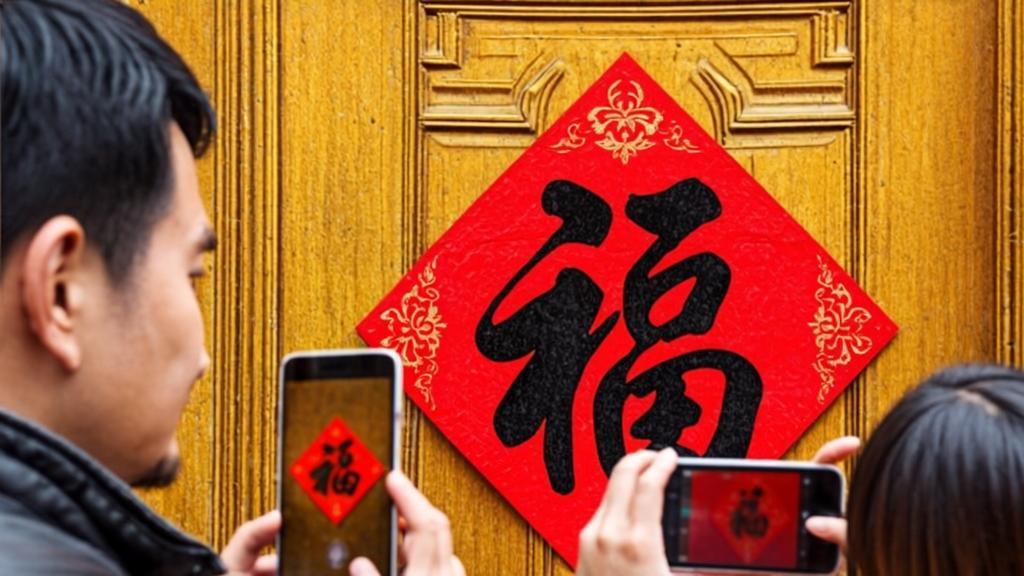
Symbols are the shortest cross-cultural “code” for human beings. Experiments in neurocommunication show that it takes only 100 milliseconds for the human brain to recognize images, which is 600 times faster than the recognition of words (Rolls, 2,021). When foreign tourists see the red “Fu” reversed post, they can guess the meaning of “good luck” without understanding Chinese; When the international student printed the Taiji pattern on his T-shirt, he declared to the world that he liked the East balance philosophy. Symbols are social currency, without translation, direct emotion.
Dragon: Chinese totem and world class IP
Meaning
Symbolizing authority, auspiciousness and rain, it is the ancient Logo of emperor power.
Origin
In the Neolithic Age, Liangzhu culture had appeared in ERON, and by the Shang and Zhou dynasties, it was deified as a auspicious animal of “communication between heaven and earth” (Institute of archaeology, Chinese Academy of Social Sciences, 2,022). Different from the Western dragon, the Chinese dragon long is wingless and clouds and rain, reflecting the wishes of the farming people for good weather.
Data
38.5% of the artifacts in the Imperial Palace collection are painted with dragon patterns (the Imperial Palace Museum, 2,023), which shows its visual dominance.
Feng: the soft power of Empress
Meaning
It is feminin, beautiful and reborn. It is often matched with a positive dragon to form a “dragon and phoenix”.
Origin
Originated from the bird totem of the Dongyi group, it was merged with the Phoenix myth and became the exclusive logo of the queen.
Taiji: the balanced universe in black and white
Meaning
The harmony of yin and Yang and the unity of opposites of all things.
Origin
Zhou Dunyi in the Northern Song Dynasty put the generation of the universe into a circle, which was later absorbed by Taoist and martial arts circles.
Science
In 2020, the Journal of geriatric medicine pointed out that after 24 weeks of Taiji exercise, the risk of falls for people over 65 years old decreased by 43%, significantly better than fast walking (Li et al., 2,020).
Red and blessing: the shortest path of color memory
Meaning
Red = happy and auspicious; Reverse the homonym of “Fu” and “Fu”.
Neurology
The red visual stay time was only 0.13 seconds, which was 30% faster than other colors (Zhang et al., 2,022).
Knot and Paper Cuttings: high premium for handmade
Meaning
China = continuous connection; Paper Cuttings tells folk stories by carving.
Economy
The average export price of Yiwu with Chinese knot packaging gifts was raised from US $0.8 to US $2.1, with a premium of 162% (Yiwu small goods index, 2,023); The re purchase rate of Amazon’s Paper Cuttings DIY package was 38%, higher than the average of the same kind of manual 12%.
Tea and tea horse road: the taste circuit in the symbol
Meaning
Tea = “Qingxin” and “Qingyi”. The ancient road is the earliest linear World Heritage in China.
Origin
Tangfan ancient road + Yunnan Tibet trade = tea horse market; The horse Gang carried tea in exchange for war horses, forming multi-ethnic hybrids along the way.
Industry
In 2023, the multi day route of “tea horse ancient road walking + Pu’er appreciation” in Yunnan attracted 21,000 European and American tourists, with an average consumption of US $2,800, 75% higher than urban tourism (Yunnan Provincial Department of culture and tourism, 2,024).
How to tell the destination story quickly with symbols
- visual hook: 0. 1 second recognition, red, dragon and blue and white
- emotional hook: decompression → calligraphy; Healing to Taiji; Social → Paper Cuttings
- behavior hook: punch book set seal, solar term passport change small wine
- consumption hook: Portable + premium, such as Chinese character T-shirt, dragon and Phoenix key chain
Conclusion: let the Chinese traditional cultural symbols become “China invitation”
Chinese traditional cultural symbols are a speechless poster and a “compressed package”, which packages national emotions, historical memories and contemporary aesthetics together. As long as you “use the right symbols and tell a good story” in urban space, exhibition, research and e-commerce platform, you can let global visitors turn curiosity into tickets, Offer and orders.
References
- Rolls, E. (2021). The brain’s visual recognition system. Nature Reviews Neuroscience, 22(3), 1-13. https://doi.org/10.1038/nrn.2021.10
- the palace museum. (2023). 2,023 the Imperial Palace collection pattern analysis report * https://www.dpm.org.cn/
- Yiwu commodity index (2023). Price index of export products in the first half of 2023 * http://www.ywindex.com/
- Department of culture and tourism of Yunnan province (2024). Statistics of ancient tea and horse road hiking * http://whlyj.yn.gov.cn/
- Zhang, Y., Liu, X., & Wang, J. (2022). Color perception and attention capture in digital interfaces. Journal of Visual Communication, 45, Article 103256.
- Institute of archaeology, Chinese Academy of social sciences (2022). Research on jade totem of Liangzhu Culture * https://kaoguxue.cn
More Chinese traditions content: Chinese-traditions