


The Living Tapestry of Chinese Traditions: A Journey Through Time and Tradition
Chinese traditions are the foundation of one of the world’s oldest continuous civilizations. Moreover, they form a rich, complex tapestry woven over five millennia. These traditions are not just historical artifacts; instead, they guide social harmony, philosophy, and daily life for over a billion people. For example, festivals and meal etiquette offer a window into the Chinese worldview. Additionally, core values like family, balance, respect, and renewal stand at the center.
The Philosophical Pillars of Chinese Traditions: Confucianism, Daoism, and Buddhism
Three key philosophies shape Chinese traditions. Importantly, they converge rather than conflict, forming a cohesive value system.
- Confucianism provides social and ethical guidelines for Chinese communities. Specifically, it emphasizes filial piety, respect for elders, and harmonious hierarchical relationships. These principles underpin ancestral worship and the value of education; furthermore, education is seen as a path to stability and virtue.
- Daoism focuses on living in harmony with the Dao, the universe’s natural flow. In turn, it influences concepts like Yin and Yang and practices like traditional Chinese medicine. Tai Chi, classical gardens, and landscape painting reflect Daoist ideals, as they seek to mirror nature’s effortless order.
- Buddhism arrived from India and, over time, integrated deeply into Chinese culture. It introduced karma, compassion, and rebirth; meanwhile, Buddhist practices include meditation and temple rituals. For instance, festivals like the Ghost Festival honor ancestors and ease their afterlife journey.
Together, these philosophies prioritize collective well-being, natural harmony, and moral growth.
The Rhythm of the Year: Major Festivals and Celebrations
Chinese festivals follow the lunar calendar, marking seasons, harvests, and ancestors. For example: The Chinese New Year of Snake is Around the Corner: A Celebration of Tradition and Joy
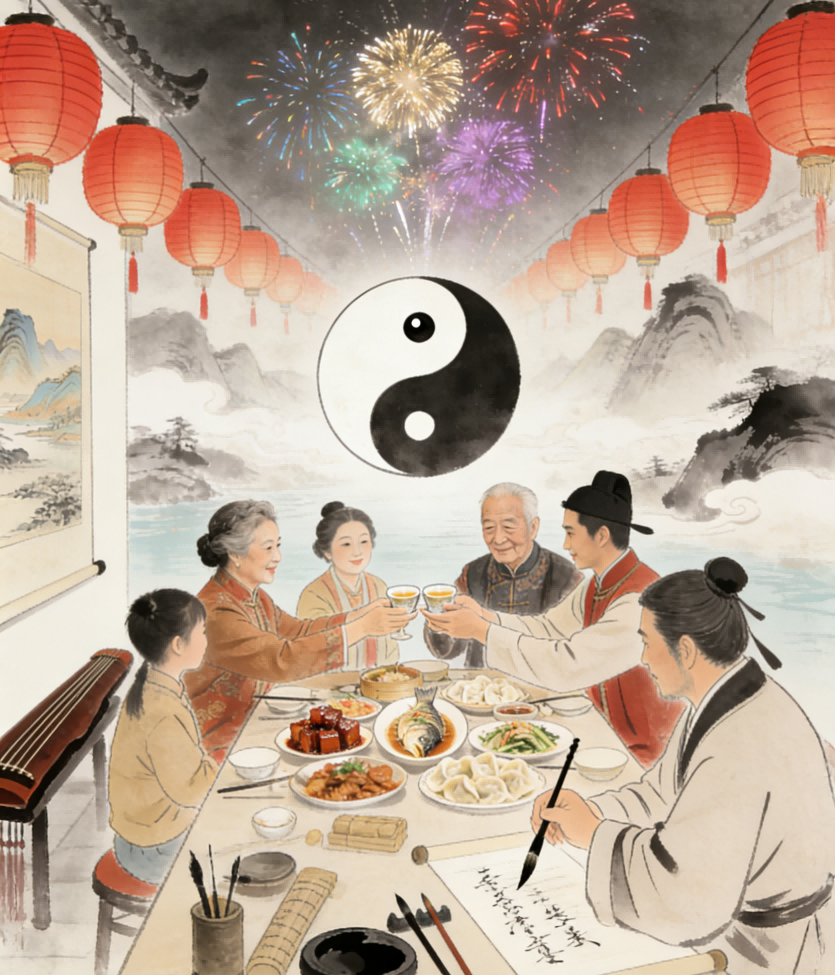
- Chinese New Year (Spring Festival) is the most important celebration. First, it brings families together for reunions and feasting. Symbolic foods include dumplings (wealth) and fish (abundance); also, families clean houses to sweep away bad luck. Besides, red envelopes (hongbao) carry wishes for good fortune, while firecrackers and dragon dances ward off evil spirits.
- Mid-Autumn Festival coincides with the roundest, brightest moon. It celebrates family unity and harvest gratitude; specifically, mooncakes—sweet pastries with lotus paste or egg yolks—symbolize completeness. Therefore, families gather under the moon to chat and honor their bonds.
- Qingming Festival (Tomb-Sweeping Day) focuses on ancestor veneration. To this end, families visit graves to clean, lay offerings, and bow in respect. As a result, it strengthens the connection between the living and the deceased.
The Cornerstone of Society: Family and Social Traditions
Family (家 jiā) is the fundamental unit of Chinese society. Consequently, many traditions aim to strengthen family bonds. Filial piety demands lifelong responsibility toward parents and elders; for example, this includes caring for them in old age. Multi-generational households were once common, but modern urban life has shifted this pattern; yet, the duty remains.
Social etiquette guides interactions, such as “giving face” (给面子 gěi miànzi). In other words, this means upholding dignity and avoiding public embarrassment. Thus, it fosters community harmony. Another tradition is modestly refusing gifts or compliments before accepting; in fact, this shows humility and respect for the giver.
Artistic and Symbolic Expressions
Chinese traditions shine through long-standing artistic heritage. Notably, creativity and philosophy blend seamlessly in these arts.
Calligraphy is more than writing—it’s a meditative art form. Furthermore, brushstrokes reflect the practitioner’s spirit, patience, and inner state. Traditional landscape painting depicts nature to express philosophical ideals; in particular, it explores humanity’s place in the natural world.
Symbolism enriches daily life. For instance, red represents luck, joy, and celebration, as it appears in weddings, New Year decorations, and lanterns. Bats symbolize good fortune (their Chinese pronunciation means “blessing”); similarly, peaches stand for longevity, used in art and gifts for elders. Numbers hold power too: eight brings prosperity (sounds like “wealth”), while four is avoided (sounds like “death”). Overall, these symbols appear in architecture, clothing, gifts, and celebrations.
Chinese Traditions in the Modern World
In globalizing China, ancient traditions adapt to contemporary life. Although urban lifestyles simplify some rituals, they keep their core meaning. For example, young people send digital hongbao via WeChat instead of physical ones; however, the gesture of blessing loved ones remains unchanged. Families travel far for New Year via high-speed rail or planes, yet the need to reunite and honor family bonds stays strong.
This resilience shows the depth and relevance of these customs. In fact, they are not rigid rules but a living cultural language. Moreover, they help individuals understand their place in family, history, and the cosmos. Engaging with Chinese traditions means embracing a timeless worldview; ultimately, it connects past, present, and future through enduring values. These anchors—family, respect, harmony, celebration—remain forever relevant.
Share this:
- Click to share on Facebook (Opens in new window) Facebook
- Click to share on Threads (Opens in new window) Threads
- Click to share on X (Opens in new window) X
- Click to share on LinkedIn (Opens in new window) LinkedIn
- Click to share on Telegram (Opens in new window) Telegram
- Click to share on WhatsApp (Opens in new window) WhatsApp
- Click to share on Pocket (Opens in new window) Pocket
- Click to share on Pinterest (Opens in new window) Pinterest
- More