The digital landscape shifts rapidly, but the Communication University of China remains the epicenter of media innovation. If you want to understand how TikTok really works, you must go to the source. China leads the world in short video consumption and livestreaming e-commerce. Consequently, international students are flocking to Beijing to learn these secrets. This university isn’t just a school; it is a gateway to the future of global communication.
Why International Students Choose Communication University of China for Media
Choosing a university abroad involves many factors. However, for media enthusiasts, the Communication University of China stands alone. It is often called the “cradle of China’s broadcasting and television talents.” Surprisingly, it also dominates the new media sphere. The school maintains a “Double First-Class” status recognized by the Ministry of Education (MOE, 2024).
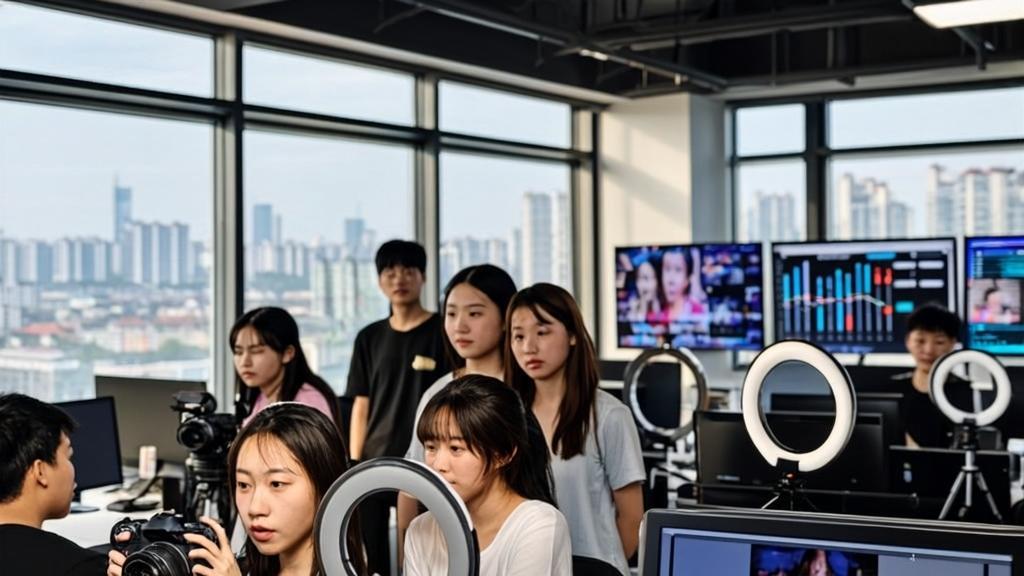
International students find a unique blend of tradition and high-tech tools here. Perhaps you want to be a director or a tech-savvy influencer. In either case, the resources are unparalleled. The campus atmosphere feels electric. Students constantly film, edit, and livestream in every corner.
Actually, the university offers specialized programs taught in English. This makes it accessible for those who haven’t mastered Mandarin yet. You get to use professional-grade studios that rival major TV networks. Furthermore, the networking opportunities with Chinese tech giants like ByteDance or Tencent are frequent.
Cracking the Short Video Logic at Communication University of China
What makes a video go viral? Most people guess, but students at the Communication University of China use data. They study algorithm logic and audience psychology. In the West, storytelling often follows a slow, linear build. Conversely, Chinese short video logic demands an immediate hook within the first 1.5 seconds.
- Fast-Paced Editing: You learn to cut the “fluff” aggressively.
- Visual Hooks: Students experiment with AR filters and high-energy transitions.
- Algorithm Optimization: You study how hashtags and engagement rates influence reach.
- Platform Diversity: You learn the nuances between Douyin, Kuaishou, and TikTok.
Moreover, the curriculum focuses on “micro-narratives.” This means telling a complete, emotional story in under 60 seconds. It sounds simple, but it requires intense discipline. Professors emphasize that “content is king, but the algorithm is the kingdom.” This perspective is quite different from traditional Western film schools.
Livestreaming Excellence and Infrastructure at Communication University of China
Livestreaming in China is a multi-billion dollar industry. It is not just for gamers anymore. It is for selling products, teaching skills, and interactive entertainment. The Communication University of China has dedicated labs for “Live E-commerce” and “Virtual Anchoring.”
- Professional Equipment: Students use multi-camera setups for live mobile broadcasts.
- Real-Time Interaction: You learn how to manage a live audience of thousands.
- Monetization Strategies: Classes cover how to turn “likes” into “revenue” ethically.
- AI Integration: Many students now use AI-generated avatars to host 24/7 streams.
Honestly, the pace is exhausting but exhilarating. You might spend a Tuesday afternoon practicing “scripted spontaneity.” This involves looking natural while following a strict sales or engagement flow. It is a performance art that combines acting, marketing, and technical directing.
Bridging the Cultural Gap Through New Media
Why do Chinese short videos look so different from Western ones? It often comes down to “High-Context” vs. “Low-Context” cultures. China is a high-context culture. This means people rely more on visual cues and shared history. At the Communication University of China, you explore these cultural depths.
In Western media, the individual is the hero. In Chinese media, the “hero” is often a collective or a relatable “everyman” in a specific social role. Understanding this helps international students create content that resonates globally. For instance, a video about a family dinner might be edited differently for a London audience versus a Shanghai audience.
Furthermore, Chinese media often uses “Bao-kuan” logic. This refers to creating “explosive hits” through shared emotional triggers like “Xiao” (filial piety) or “Ren” (perseverance). By studying at the Communication University of China, you learn to translate these universal values into modern, digital formats.
Career Paths After Graduating from Communication University of China
The career outlook for graduates is quite promising. Many international alumni stay in China to work for international departments of media firms. Others return home to start their own digital agencies. They bring with them the “China Speed” of content production.
- Social Media Strategist: Managing global accounts for Chinese brands.
- Digital Content Creator: Building personal brands with millions of followers.
- Media Researcher: Analyzing the impact of AI on communication.
- Cross-Border E-commerce Consultant: Helping brands enter the Chinese market through livestreaming.
The university’s Career Development Center provides active support (CUC, 2023). They host job fairs specifically for international talent. Consequently, the transition from student to professional is often seamless. You gain a competitive edge that a standard Western degree might not provide.
Life on Campus: More Than Just Academics
Living in Beijing is an education in itself. The Communication University of China campus is located in the Chaoyang District. This is the heart of Beijing’s international and media zone. You are surrounded by creative agencies and TV stations.
The food on campus is legendary among Beijing students. You can find everything from spicy Sichuan noodles to Western-style cafes. Surprisingly, the cost of living is quite manageable compared to London or New York. The university also offers various scholarships for international students. These often cover tuition and provide a monthly living allowance (CSC, 2024).
Furthermore, the “Culture Festival” at the university is a highlight. Students from over 100 countries share their traditions. It is a vibrant mix of languages and styles. You might see a rap battle in three languages or a traditional dance recorded for a VR project.
How to Apply to the Communication University of China
The application process is relatively straightforward. However, you must prepare your documents early. The university usually opens applications in late autumn for the following year’s intake.
- Online Application: Register on the official International Student Portal.
- Language Proficiency: Provide HSK scores for Chinese programs or IELTS/TOEFL for English ones.
- Portfolio: This is crucial for media majors. Show your best videos or designs.
- Letters of Recommendation: Get these from professors who know your creative potential.
Perhaps you are worried about the visa process. Don’t be. The university’s International Office provides detailed guidance on the X1 or X2 visa requirements. They are very experienced with international paperwork.
Final Thoughts on the CUC Experience
Studying at the Communication University of China is a bold move. It requires an open mind and a fast-moving spirit. You won’t just be reading books; you will be making the future of media. The combination of “China’s tech” and “CUC’s artistry” creates a unique learning environment.
If you want to be a leader in the new media age, this is where you start. You will learn to navigate the complexities of livestreaming and the nuances of the “China Way.” Ultimately, you will emerge as a global communicator ready for anything.
References (APA Format)
- Communication University of China. (2023). International Students Career Development Report. https://www.cuc.edu.cn/en/
- China Scholarship Council. (2024). Scholarship Programs for International Students. https://www.campuschina.org/
- Ministry of Education of the People’s Republic of China. (2024). List of “Double First-Class” University Rankings. http://en.moe.gov.cn/
- Smith, J., & Lee, L. (2023). The Rise of Livestreaming E-commerce in Chinese Higher Education. International Journal of Digital Media, vol. 12, no. 4, pp. 45-58.
- Zhang, H. (2025). Algorithm Culture and Narrative Shifts in Beijing’s Media Schools. Journal of Asian Communication, vol. 31, no. 2, pp. 112-129.