China’s first dedicated energy engineering satellite just crossed a major milestone. On March 20, 2026, the “Dianjian-1” satellite passed its factory exit review in Changsha, Hunan Province. That means it is ready to ship to the launch site — and lift-off could come soon.
This is not just another satellite launch. Dianjian-1 represents a genuine first for China’s space program: a purpose-built radar satellite designed exclusively to serve large-scale energy infrastructure projects.
What Exactly Is Dianjian-1?
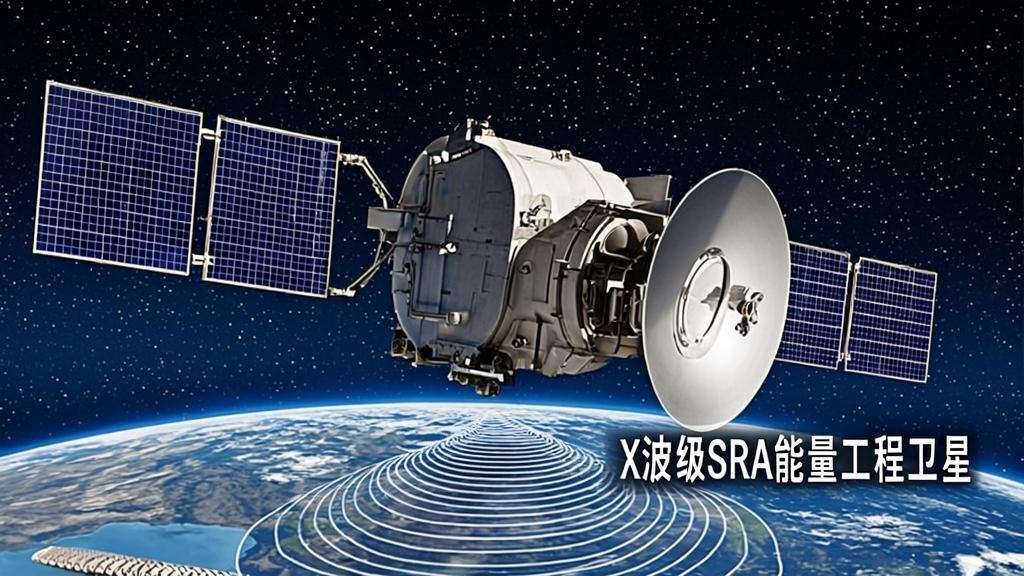
At its core, Dianjian-1 is an X-band Synthetic Aperture Radar (SAR) satellite. SAR satellites use radar waves instead of optical cameras, so they work through clouds, rain, and darkness. That makes them particularly useful for monitoring construction sites and remote terrain.
The satellite is jointly developed by PowerChina Chengdu Engineering Corporation, China University of Geosciences (Wuhan), and Spacety Co., Ltd. The combination of an engineering giant, an academic institution, and a commercial space company reflects how China’s aerospace sector increasingly blends state resources with university research and private innovation.
Dianjian-1 adopts a sun-synchronous orbit at 500±50 km altitude, weighs 298 kg, achieves sub-meter resolution, has a revisit period of 11 days, and is designed for a 5-year operational lifespan.
A Satellite Built Around One Goal: Engineering Safety
Watching Over Dams, Railways, and Power Grids
The satellite’s primary focus is large-scale engineering structure deformation monitoring and geological disaster identification and early warning — specifically in harsh environments and areas with complex terrain and geological conditions.
Think about what that covers in practice:
- Hydropower dam walls in remote mountain valleys
- High-speed railway embankments crossing unstable ground
- Wind and solar farm foundations in arid or seismically active zones
- Transmission line corridors through steep, forested terrain
For all of these, ground-based monitoring has real limitations. Sensors fail. Access is difficult. Coverage is partial. A dedicated satellite changes that equation.
Millimeter-Level Precision From 500 Kilometers Up
The most striking technical claim about Dianjian-1 is its detection sensitivity. Through low-orbit X-band SAR technology, the satellite can monitor structural deformation at the sub-millimeter level — even movements as small as the diameter of a human hair will not escape its detection, whether at a deep-mountain hydropower dam or a railway embankment crossing rugged mountains.
That level of precision is operationally significant. Structural failures rarely happen without warning. Small, gradual deformations — measured over weeks or months — often precede major incidents. Catching those signals early gives engineers time to intervene.
The “Muscle Memory” Orbit Design
One of the cleverer engineering aspects of Dianjian-1 is how it handles orbital consistency. The satellite uses an innovative orbital design method that achieves high-precision orbital revisit control at the 150-meter level — comparable to giving the satellite a kind of “muscle memory,” passing over the same area from the same position and angle each time, ensuring that data collected at different times remains precisely comparable.
That matters for SAR-based change detection. If the satellite’s viewing angle shifts between passes, the radar returns cannot be accurately compared. Locking the orbital geometry down to 150-meter precision solves that problem — and makes millimeter-level deformation detection possible in practice.
Key Technical Specifications at a Glance
| Parameter | Specification |
|---|---|
| Satellite type | X-band SAR |
| Orbit type | Sun-synchronous |
| Orbital altitude | 500 ± 50 km |
| Total mass | ~298 kg |
| Maximum resolution | Sub-meter |
| Revisit period | 11 days |
| Revisit precision | 150-meter level |
| Operational lifespan | 5 years |
Lightweight by Design: The Engineering Behind the Numbers
Unlike the spherical shape many people associate with satellites, Dianjian-1 uses a flat-panel design suited to the drag-free vacuum of space. Its solar panels use special materials that achieve over 50% higher photoelectric conversion efficiency than ground-level solar panels. A combination of carbon fiber baseplate and honeycomb ultra-light aviation aluminum reduces each panel to just over 400 grams. The foldable design also shrinks the satellite’s maximum width from 4.8 meters to 2.8 meters, significantly improving launch convenience.
Furthermore, the development team used an integrated mechanical, electrical, and thermal design approach to keep total satellite mass at around 300 kg. For reference, many research-grade SAR satellites weigh several tons. Keeping Dianjian-1 under 300 kg reduces launch costs and increases flexibility in choosing a rocket.
Why This Matters for China’s Energy Sector
Filling a Critical Gap
The satellite rolled off the production line on December 10, 2025, filling a gap in China’s space-based monitoring equipment for large engineering projects. Before Dianjian-1, China’s energy engineering sector relied partly on foreign satellite data for high-precision remote monitoring. That dependency carried both cost and access risks — foreign satellite operators do not always prioritize coverage of Chinese infrastructure zones.
Supporting the Full Project Lifecycle
Dianjian-1 will directly serve major national energy engineering projects, improving safety management across the full lifecycle — from survey and design, through construction, to operations and maintenance. It will also support new energy development by providing precise engineering and geological environment data.
That “full lifecycle” framing is important. Currently, satellite monitoring tends to focus on operational infrastructure. Bringing high-resolution SAR coverage into the survey and construction phases — when the risk of undetected ground movement is often highest — represents a meaningful shift in how China manages large-scale project risk.
A Step Toward Energy Self-Sufficiency in Space
According to plans, Dianjian-1 will progressively work alongside “Dianjian-2” — a low-orbit microwave link precipitation-monitoring satellite — and other future satellites. Together, they will build a space-based information support system covering the entire lifecycle of energy engineering: from survey and design, through construction, to operations.
The broader goal, as Chinese industry observers note, is to end reliance on foreign satellite data for domestic energy infrastructure monitoring — and to build an indigenous, purpose-built satellite constellation.
What Happens Next?
Having passed the factory exit review — the final quality checkpoint before launch — the project has officially transitioned from the development phase to the launch implementation phase. The satellite will soon be transported to the launch site for a launch opportunity in the near future.
The factory exit review is typically the last major technical gate before a satellite is handed over to the launch team. So in practical terms, Dianjian-1 is done being built. The next major event will be its arrival at the launch center, followed by final pre-launch preparations.
No specific launch date has been announced as of March 22, 2026.
Broader Context: China’s Commercial Space Sector
Dianjian-1 fits into a rapidly expanding picture. As China’s 15th Five-Year Plan proposal lists aerospace as a strategic emerging industry, the satellite sector is entering a phase of explosive growth. Dianjian-1 is not merely a monitoring tool — it is a key component in driving the digital transformation of energy infrastructure.
The involvement of Spacety (天仪空间科技), a private commercial space company, also points to how China is opening high-value satellite applications to non-state actors. Rather than waiting for government-owned satellites to expand their coverage, specialized commercial operators are now building mission-specific hardware faster and at lower cost.
References
China News Service. (2026, March 20). China’s first dedicated energy engineering satellite “Dianjian-1” passes factory exit review. China News Network. https://www.chinanews.com.cn/gn/2026/03-20/10590294.shtml
State-owned Assets Supervision and Administration Commission of the State Council (SASAC). (2025, December 19). China launches first remote sensing satellite for energy engineering. http://en.sasac.gov.cn/2025/12/19/c_20219.htm
Securities Times Network. (2025, December). PowerChina: “Dianjian-1” satellite successfully rolls off production line, energy infrastructure monitoring enters a new era. https://www.stcn.com/article/detail/3536928.html