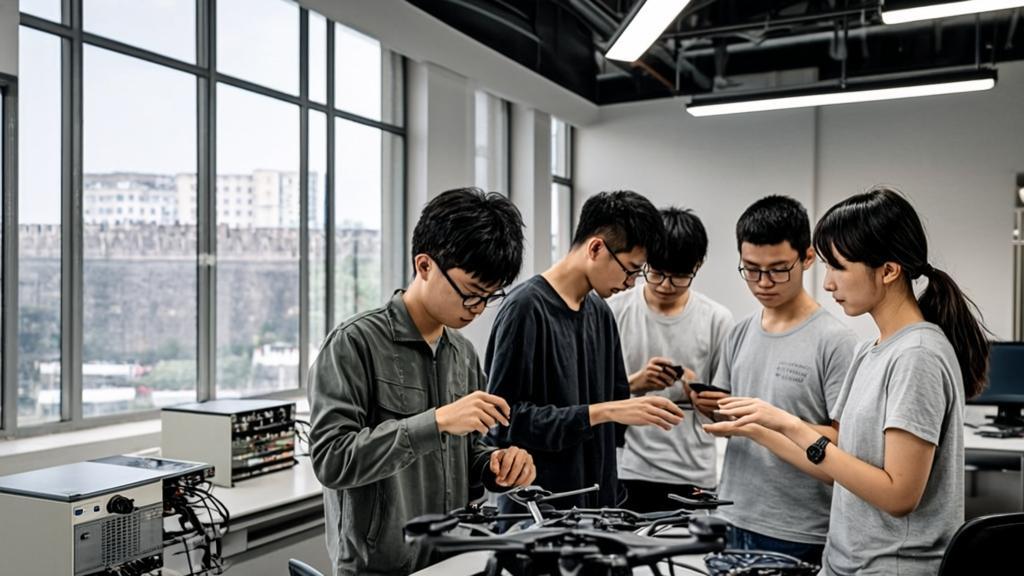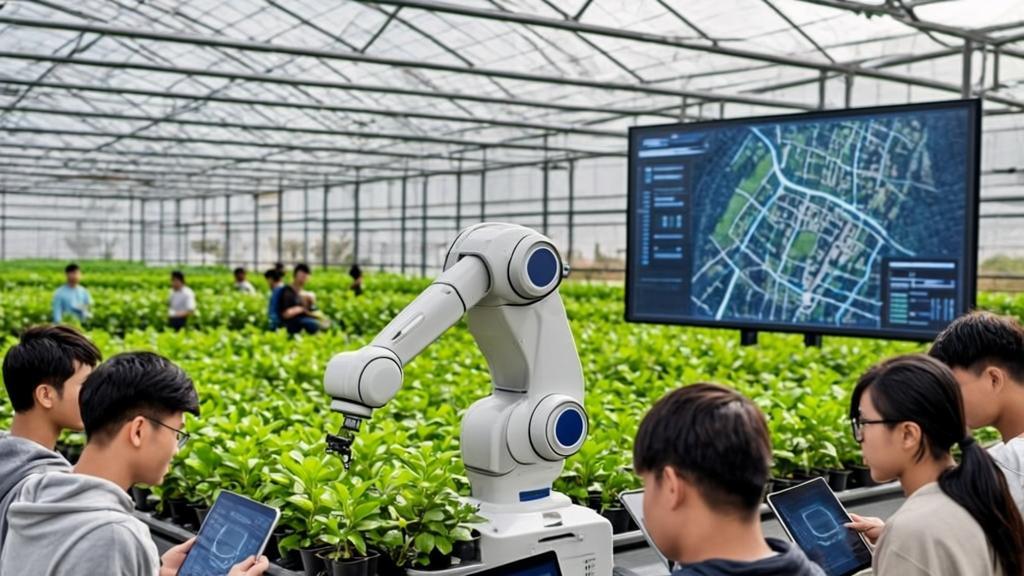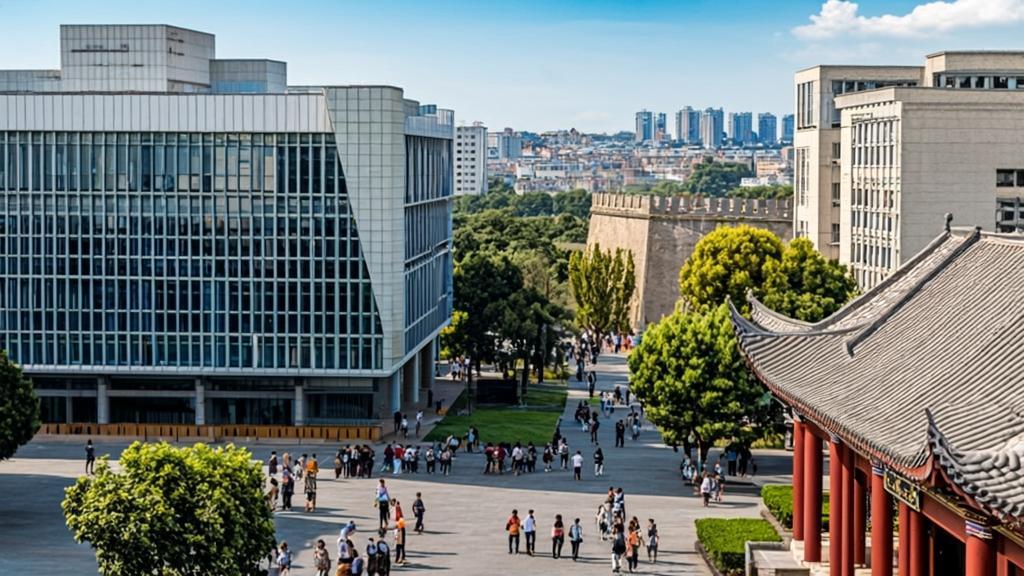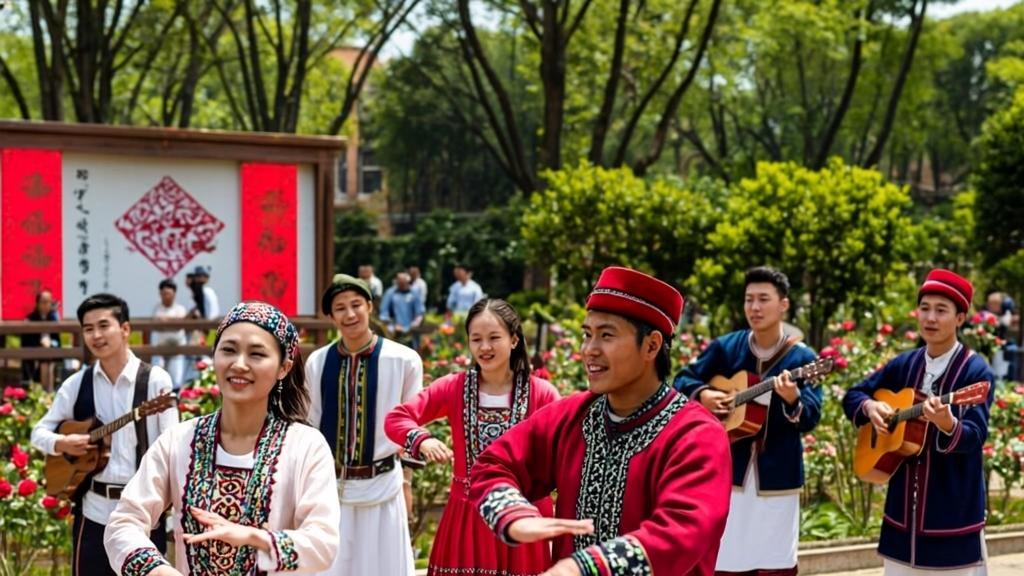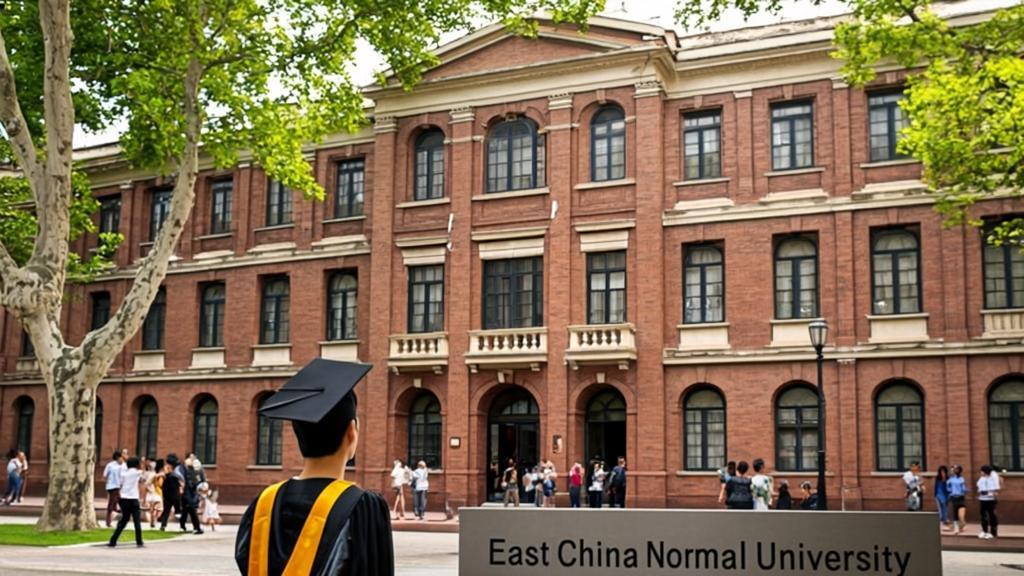
East China Normal University (华东师范大学, ECNU) sits on a leafy campus in Shanghai. Established in 1951, it holds the distinction of being the first normal university founded after the People’s Republic of China came into existence. Teacher training is not a side mission here — it is the institutional DNA. And within that DNA lies one of the least-discussed programs in international education: the systematic training of Chinese language teachers who go on to work in classrooms across every continent.
This is not a story about Confucius Institutes, though ECNU co-sponsors five of them. It is a story about something older and more academically rigorous — a decades-long experiment in what it actually means to teach a language that thinks differently.
A Brief History of Why ECNU Matters Here
Most Western articles about Chinese language education abroad focus on political debates. Rarely do they examine the pedagogical infrastructure that produces the teachers.
ECNU began its international Chinese education work in 1964. In 1984, the Ministry of Education approved it as one of China’s first four universities authorized to establish an undergraduate program in Teaching Chinese as a Foreign Language (TCFL). Then, in 1990, it became the first institution in the country to enroll students at both the master’s and doctoral level in Teaching Chinese to Speakers of Other Languages (TCSOL) (School of International Chinese Studies, ECNU, n.d.).
Today, ECNU runs three national bases dedicated to this field:
- The National TCFL Base
- The Chinese Language Teaching Base under the Overseas Chinese Affairs Office
- The International Chinese Language Teacher Training Base
Add to this an online Chinese language college — developed with the National Office for Teaching Chinese as a Foreign Language — that currently reaches over 5,800 students in 137 countries and regions (Wikipedia, East China Normal University, 2025). Those numbers are not marketing copy. They reflect decades of incremental institution-building that most English-language coverage simply ignores.
What Does a “Cultural Translator” Actually Do?
The distinction matters — and it’s worth slowing down here.
A cultural exporter sends messages outward. The model assumes the message is valuable in itself. The receiver absorbs. Transmission runs in one direction.
A cultural translator operates differently. Translation requires understanding both sides of a linguistic boundary. It means knowing what the source language carries that the target language cannot easily contain — and finding a way across that gap anyway. The translator mediates. Neither culture overwhelms the other.
East China Normal University’s TCSOL training tends toward the latter model. Its teachers are trained not just to deliver grammar rules but to navigate the cognitive and cultural dissonance that comes with teaching a logographic, tonal, context-heavy language to learners whose entire linguistic background is alphabetic and stress-timed.
That dissonance is real. And it produces interesting classroom dynamics.
The Alliance Française Model: When Language Is Empire by Other Means
France established the Alliance Française in 1883. Its original full name — “National Association for the Teaching of the French Language in the Colonies and Abroad” — tells you everything about its founding logic (Alliance Française, Wikipedia, 2025).
Over time, the model evolved. The explicit colonial framing softened. Today, the Alliance Française operates 850+ centers in 137 countries and reaches roughly 500,000 students annually. It organizes cultural events, art exhibitions, and film festivals alongside language classes.
However, its underlying structure remains what scholars call a “soft power” instrument. The French language, in this framework, is the vehicle for projecting France’s cultural prestige. The relationship is fundamentally asymmetrical — Paris holds the brand, local franchises operate under it. The learner approaches French culture from outside and works inward.
This is not criticism. France built something remarkable. But its premise — that French culture is the destination — differs sharply from what a cultural translator’s training looks like.
The Goethe-Institut: Elite Cultural Export
Founded in 1951, the Goethe-Institut takes a different angle. Where the Alliance Française built a mass franchise, the Goethe-Institut became a curated cultural institution — 159 offices in 98 countries, emphasizing literature, philosophy, architecture, film, and music alongside German language teaching (Fundación Princesa de Asturias, 2005).
The Goethe-Institut positions German culture as intellectually rich, diverse, and forward-looking. Its programming consciously counters historical baggage by emphasizing contemporary German creativity. Still, the model is ultimately one of cultural output — Germany transmits, the recipient engages.
Neither the Alliance Française nor the Goethe-Institut spends much energy training teachers to understand the learner’s own conceptual universe. That’s not what they’re for.
The Cognitive Gap at the Heart of Chinese Language Teaching
Here is where East China Normal University’s approach gets genuinely interesting — and where the comparison with Western language institutes reveals something deeper than pedagogy.
Written Chinese uses logographs. Each character carries semantic meaning independently of sound. A learner cannot “sound out” a Chinese character the way a learner of French or German can phonetically decode a new word. Instead, recognition is holistic — the whole shape carries meaning. Researchers sometimes describe this as a “gestalt” or whole-form cognitive approach, contrasted with the sequential phonemic decoding central to alphabetic literacy.
Teaching Chinese to speakers of alphabetic languages therefore requires bridging two fundamentally different cognitive orientations toward written language. This is not a minor pedagogical challenge. It reshapes everything from how vocabulary is introduced, to how stroke order is explained, to how reading comprehension is scaffolded across proficiency levels.
ECNU’s TCSOL doctoral and master’s programs train teachers to understand this gap explicitly. The curriculum is not simply “Chinese for foreigners.” It is the study of cross-linguistic cognition, second language acquisition theory, and intercultural communication, applied to a language system that genuinely does not behave like a European language.
What ECNU Offers International Students: Programs Worth Knowing
For students considering graduate study or intensive language learning, ECNU offers a range of options that go well beyond tourist-level Mandarin.
Degree Programs in TCSOL:
- Bachelor’s, Master’s, and PhD programs in Teaching Chinese to Speakers of Other Languages
- Professional master’s and doctoral degrees (among the first in China to offer both)
- The university is the current chair of the Joint Committee of Principals for BTCSOL at National Universities
Language Programs for International Students:
- Standard Chinese Language Program: 12 proficiency levels, 20 class hours per week, small class sizes (max 25 students)
- Intensive Chinese Language Program: for students targeting rapid advancement
- Business Chinese Program: for commercially focused learners
- Global China Program: content courses in English (Business, Economics, Sociology, History, Culture) combined with Chinese language instruction at all levels
Cultural Supplementaries:
- Elective courses in Chinese calligraphy, martial arts, painting, and song — offered free of charge each semester
- Organized field trips within Shanghai and beyond
Practical Access: ECNU operates across two Shanghai campuses (Minhang and Putuo), and roughly 5,000 of its students are international (Times Higher Education, 2024). The campus environment is deliberately international without sacrificing the full immersion that serious language learners need.
Why “Academic Chinese” Is Different From “Commercial Chinese”
This distinction rarely appears in English-language content about studying in China. But it matters considerably for students planning careers in cross-cultural work, diplomacy, translation, or education.
Commercial Chinese programs — offered by apps, short courses, and business-focused language centers worldwide — optimize for functional communication: ordering meals, conducting transactions, navigating offices. Useful, certainly.
Academic Chinese, as ECNU teaches it, is something else. It treats the learner as a future participant in Chinese intellectual discourse. Reading classical texts, understanding how proverbs encode philosophical assumptions, recognizing the difference between spoken registers and written registers — these are the skills of a cultural translator, not a transactional communicator.
The gap between the two is similar to the gap between learning enough French to order a croissant and reading Camus in the original. Both are “French.” Only one prepares a person for deep cross-cultural work.
A Different Philosophy of Language Transmission
Returning to the broader comparison: Alliance Française, Goethe-Institut, and ECNU’s international Chinese teacher training represent three distinct philosophies about what language education is for.
The Alliance Française transmits French culture through the prestige of French. The Goethe-Institut uses German as a window into contemporary German creative and intellectual life. Both operate outward from their home culture.
East China Normal University, through its TCSOL training system, operates differently. Its graduates are trained to enter someone else’s classroom, in someone else’s country, and make Chinese accessible on the learner’s own terms — not to impose a cultural hierarchy but to build a bridge between cognitive worlds.
Whether that distinction holds consistently in practice is debatable. Institutions are imperfect. But the structural difference — a teacher-training university versus a cultural broadcasting network — produces a meaningfully different kind of language professional.
That is, perhaps, the most honest argument for spending serious time at ECNU. Not to absorb China from the outside, as a tourist absorbs a culture. But to develop the internal toolkit of someone who genuinely crosses between two ways of thinking about language, meaning, and text.
References
Alliance française. (2025, March). Alliance française. Wikipedia. https://en.wikipedia.org/wiki/Alliance_fran%C3%A7aise
East China Normal University. (2025, March). East China Normal University. Wikipedia. https://en.wikipedia.org/wiki/East_China_Normal_University
Fundación Princesa de Asturias. (2005). Alliance française, Società Dante Alighieri, British Council, Goethe Institut, Instituto Cervantes and Instituto Camões. https://www.fpa.es/en/princess-of-asturias-awards/laureates/alliance-francaise-societa-dante-alighieri-british-council-goethe-institut-instituto-cervantes-and-instituto-camoes/?texto=trayectoria
School of International Chinese Studies, ECNU. (n.d.). Overview. East China Normal University. https://chinese.ecnu.edu.cn/sicsenglish/Overview/list.htm
Times Higher Education. (2024). East China Normal University. https://www.timeshighereducation.com/world-university-rankings/east-china-normal-university
ECNU International Education. (n.d.). International education of Chinese language. East China Normal University. https://english.ecnu.edu.cn/Global/International_Education_of_Chinese_Language.htm