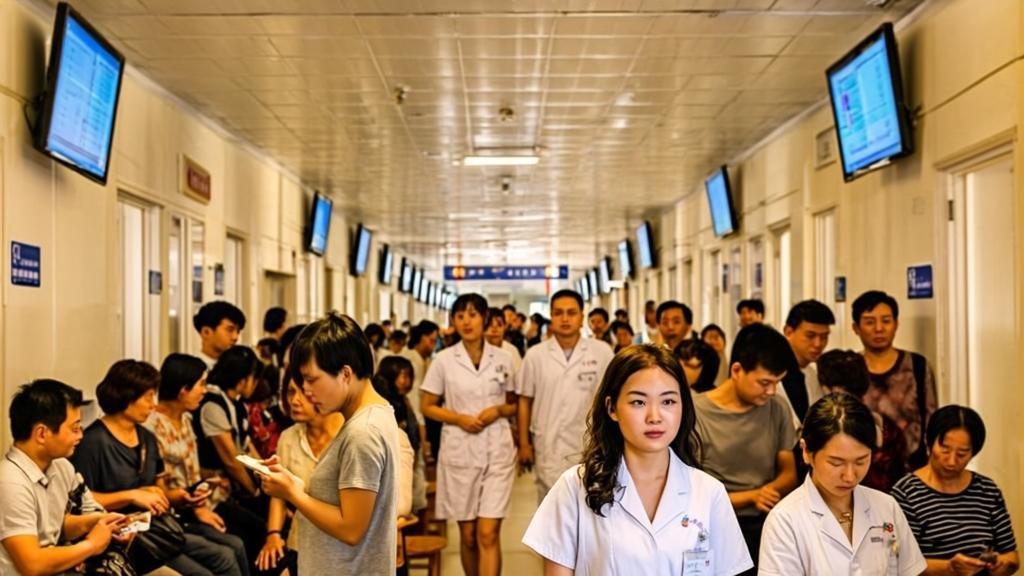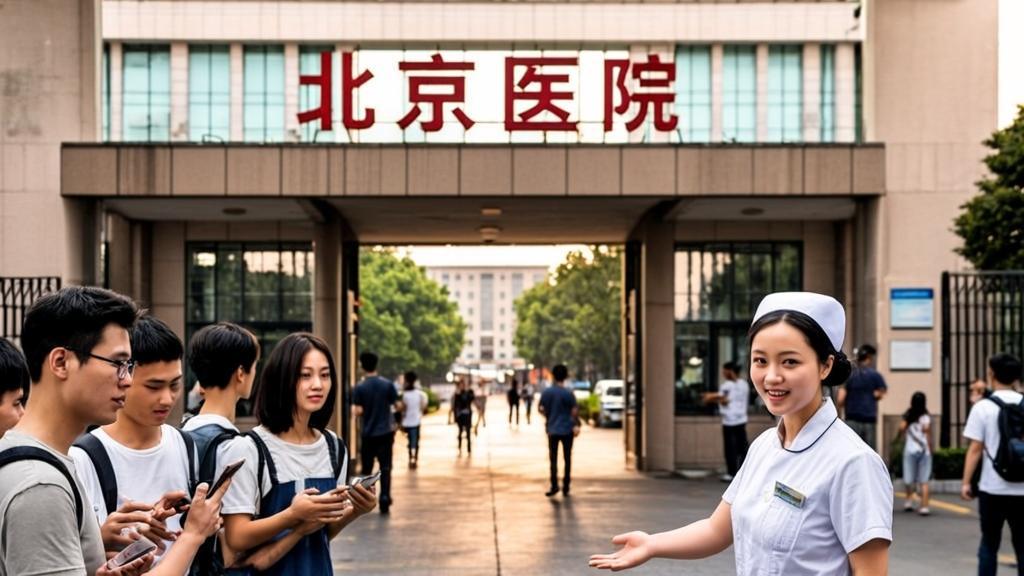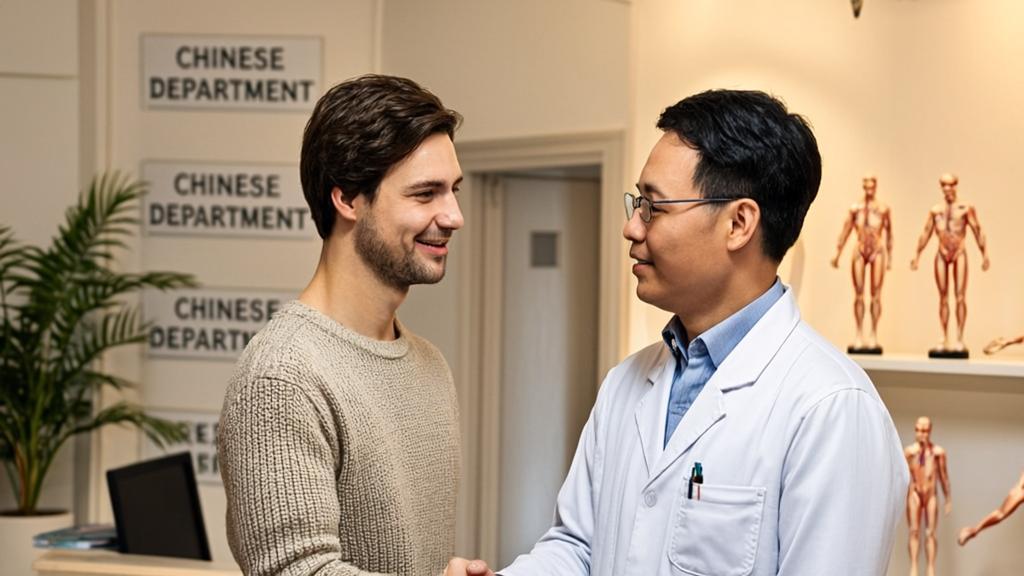
Why did foreigners suddenly become a traffic code when they came to China for medical treatment?
Foreigners coming to China for medical treatment are shifting from “small group test” to “social hot money.” On TikTok, the number of #ChinaHealthcare topics exceeded 320 million. A British boy brought his stepfather to Shenzhen for an MRI, exclaiming that “it’s only $100 to take the film that day.” Martin, a Swiss cancer patient, documented his treatment process in a vlog after acupuncture and moxibustion in Chengdu, with the text “I learned to breathe again in China.” These real clips let “foreigners come to China for medical treatment” transition from a curiosity label to a new choice for the global middle class. I mean, when “medical treatment” became an item on the travel list, what did China do right?
Price, queuing, and technology: the “Impossible Triangle” in the minds of foreign patients has been broken
1. Price: the bill for appendicitis in the United States is 580,000 yuan, and in Shenzhen it is 24,000 yuan
According to the 2024 report of the U.S. international medical insurance fund, the average cost for an ordinary appendicitis operation in the United States is 82,000 US dollars (about 580,000 yuan) [IFHP, 2024] https://www.ifhp.com. The total price of the same operation in the International Department of Shenzhen Hong Kong hospital is 24,000 yuan, including Chinese and English medical records and postoperative holiday suggestions. In other words, the 550,000 yuan saved is enough to fly to China three times and explore all of Yunnan.
2. Line up: 26 weeks in the UK, MRI, Beijing Xiehe, the same day
According to British NHS statistics in 2023, the average waiting time for a non-emergency MRI was 26 weeks [NHS, 2023] https://www.england.nhs.uk. The International Department of Peking Union Medical College Hospital promises to “shoot on the same day and film on the same night” for self-funded foreign patients. Franco, a Canadian, came to China for three consecutive years to review intestinal polyps. He said, “It takes 4 months to get an endoscopy in Toronto, and it can be done after drinking coffee in Beijing.”
3. Technology: proton knife, CAR-T, acupuncture, and moxibustion—three arrows
The proton center of Shanghai Ruijin Hospital has a local control rate of 87% for refractory pediatric tumors over 5 years, and the cost is 35% [Zhang et al., 2023] lower than in Japan https://doi.org/10.1016/j.ijrobp.2023.04.017. In addition to CAR-T cell therapy and traditional Chinese medicine’s collateral disease theory, foreigners come to China to see a doctor no longer just for “cheap”, but for “solutions.”
Traditional Chinese Medicine + vacation: Russian families regard the acupuncture and moxibustion museum as a “back garden.”
In 2024, Jilin Hunchun city Traditional Chinese Medicine Hospital launched the “Traditional Chinese Medicine + health + vacation” package: acupuncture and moxibustion + massage + Changbai Mountain skiing for 6,999 yuan, including Russian guidance and visa invitation for a 5-day, 4-night trip. In the summer, an average of 80 Russian patients visit daily, enjoying gas while undergoing dragon moxibustion. I mean, when “foreigners come to China for medical treatment” plus “weekend excursions,” medical care is no longer a cold operating table, but a vibrant celebration.
Policy relay: 240 hours of visa-free travel, 30 days of medical visas
At the end of 2024, China extended the transit visa exemption to 240 hours, and Guangdong and Hainan subsequently opened a 30-day medical visa green channel for “foreigners coming to China for medical treatment.” A total of 19 hospitals in Beijing, 13 in Shanghai, and 10 in Shenzhen were included in the international medical pilot, featuring unified Chinese and English bilingual signage and international insurance direct claim windows. Hainan also permits innovative medical devices not listed in the domestic market to be used at Boao, essentially writing “authorized medical care” into the travel strategy.
Will local resources be occupied? The two-track system separates “water” from “oil.”
Many people are worried: will foreigners take my appointment when they come to China for medical treatment? In fact, the International Department of the pilot hospital is located on an independent floor, and the foreign reservation channel is physically separated from the medical insurance channel. The proportion of functional needs services is strictly locked within 10% [National Health and Medical Development, 2023, No. 18] http://www.nhc.gov.cn. The premium income of the International Department feeds back into basic medical care. A grade A tertiary hospital in Beijing updates two 3.0T MRIs using the profit from the International Department, and general outpatient services remain free of charge. In other words, when foreigners come to China for medical treatment, it speeds up care for local people.
Real case sketches: three foreigners, three diseases, a “true fragrance.”
- A Bulgarian 16-year-old with cerebral palsy received SPR surgery + 3 weeks of rehabilitation in Shanghai, transitioning from wall support to walking independently, at a cost of 110,000 yuan, about 1/5 of the German quote.
- An Indian 14-year-old girl with scoliosis had a height correction of +24 cm at Xinhua Hospital; her mother made a comparative poster of the X-rays before and after the operation, which garnered 520,000 likes on Instagram.
- A German diver was “paralyzed” by jellyfish, and 12 debridement and limb preservation procedures were successfully performed at the General Hospital of Guangzhou Military Region. Upon discharge, he stuffed thousands of paper cranes he folded in the ward into his backpack: “German medicine said cut; Chinese medicine said try.”
Challenges and obstacles: language, insurance, privacy—how to overcome three mountains?
1. Language
Some hospitals outsource translations to AI earphones and produce tri-lingual medical records in Chinese, English, and Russian in 30 seconds, but the cultural context is still a limitation. I mean, when the doctor says “go back to drink more hot water,” AI may be translated as “drink hot water,” so that foreigners think that they have found a new therapy.
2. Insurance
At present, the international insurance direct claim only covers 17 hospitals, and the United States Medicare, the British NHS, and China’s medical insurance have not yet interoperated. In 2024, Shanghai pilot “medical travel insurance”, packing emergency transfer, accompany translation, and hotel cancellation insurance, with a one-year premium of 699 yuan, known as “medical Airbnb Protection” by foreigners.
3. Privacy
Patients in Europe and the United States are used to “one doctor, one patient”. Beijing Xiehe set up a “foreign independent consulting room” for this purpose, with a curtain pulled, leaving only doctors, patients, and translators, and the logs that meet the requirements of GDPR are desensitized and stored, and the medical examination of 38 embassies in China has been received.
The next stop: Medical Tourism 300 billion cake, who will cut it?
PWC forecasts that by 2029, the scale of China’s medical tourism market will exceed 300 billion [PwC, 2,024] https://www.pwc.com . Hainan, the Yangtze River Delta, and the Guangdong Hong Kong Macao Greater Bay area are quietly competing: Hainan is betting on “licensed medicine + vacation”, Shanghai is playing “high-end surgery + city tour”, and Shenzhen is selling “digital medical + hardware experience”. In other words, foreigners coming to China for medical treatment is only the export version of “healthy China 2,030”; To improve technology at home and earn foreign exchange abroad, two goals with one stone.
For you who are ready to fly to China: a “medical treatment book.”
- First mail: Most international departments reply to English appointments within 48 hours.
- With image: the previous disc is engraved into DICOM, and the hospital uploads the cloud PACS for free.
- Buy insurance: choose the travel insurance with the “medical transfer” clause, and charter flights after a cheap pass.
- buffer for 3 days: it takes time to seal, translate, and settle insurance claims after surgery.
- learn a Chinese sentence: “thank you, doctor” – enough to make the angel in white smile into a curved moon.
Conclution
From the Great Wall to MRI, from roast duck to acupuncture and moxibustion, foreigners come to China for medical treatment, not only for technology output, but also for a global dialogue about trust, speed, and temperature. I mean, when foreigners make beds into vlogs and traditional Chinese medicine as a companion gift, China Medical has quietly completed a brand upgrade – not just a “world factory”, but a “world consulting room”. Next time, when you see a foreign family with an X-ray on its back at the port, you can nod and smile: Hi, welcome to China, may your healing journey be awesome.
References
International Federation of Health Plans. (2024). 2024 Global Medical Trends Survey Report. IFHP. https://www.ifhp.com
NHS England. (2023). Diagnostic Waiting Times and Activity Data. https://www.england.nhs.uk
PwC. (2024). China Medical Tourism Industry Report 2024-2029. PricewaterhouseCoopers. https://www.pwc.com
Zhang, X., Liu, H., & Li, M. (2023). Proton therapy for pediatric tumors: A single-center experience in Shanghai. International Journal of Radiation Oncology, 117(2), 245-253. https://doi.org/10.1016/j.ijrobp.2023.04.017
National Health Committee (2023). Guidance on comprehensive reform pilot of urban public hospitals * http://www.nhc.gov.cn