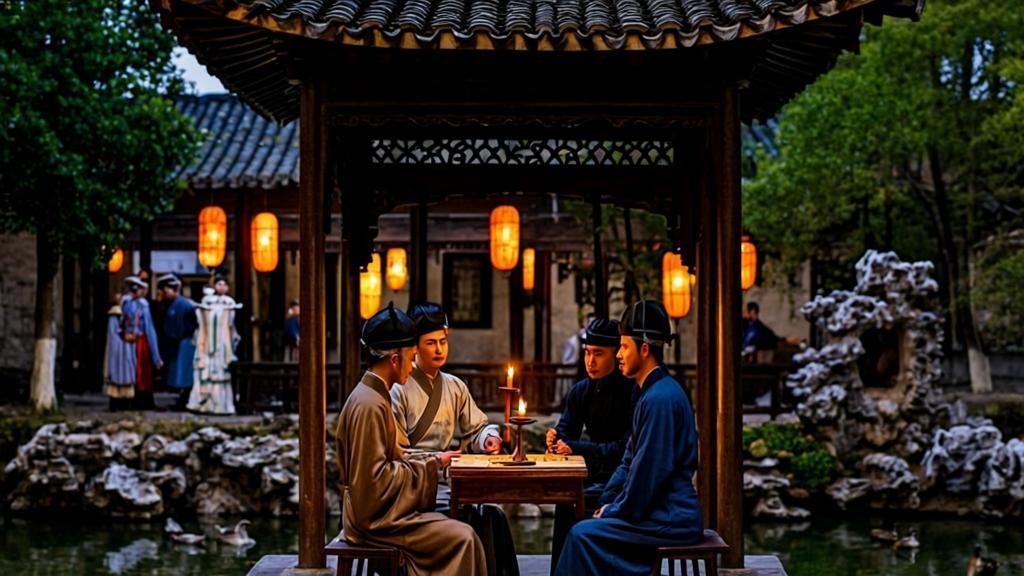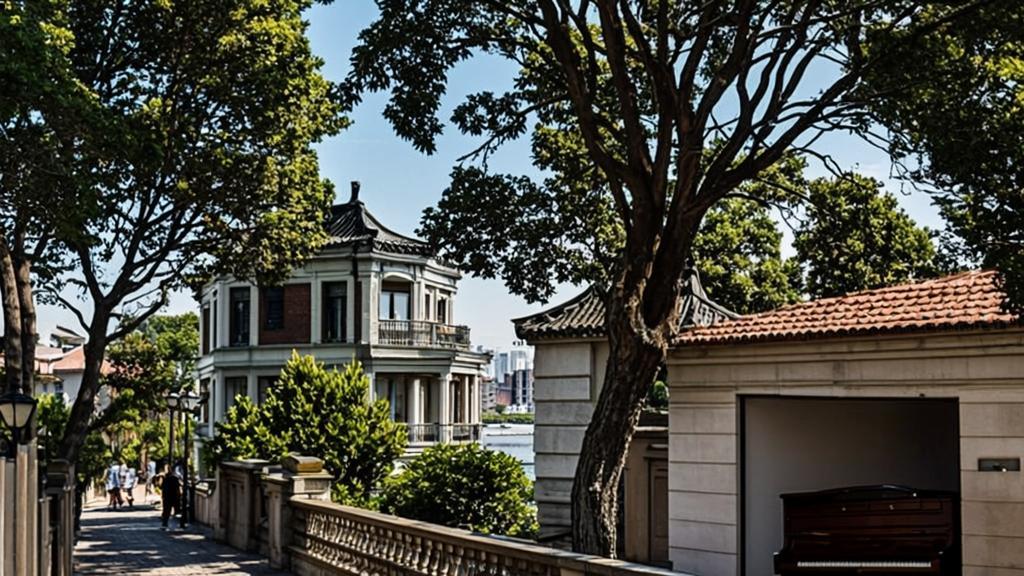
Gulangyu Island doesn’t look like a music capital. It covers just 1.88 square kilometers. No cars allowed. Narrow lanes, banyan trees, colonial villas. And yet, this tiny island off the coast of Xiamen, Fujian, holds more pianos per capita than anywhere else in China — probably anywhere else in the world. Over 30% of households own one (World Piano News, 2023). That figure is staggering. How did it happen? The answer is stranger — and more interesting — than any travel brochure suggests.
A Fisherman’s Island That Accidentally Fell in Love With Western Music
Before the 1840s, Gulangyu was ordinary. Around 100 Minnan fishing families. Agriculture. Quiet sea life.
Then the Opium Wars opened China’s ports. Xiamen became a treaty port. Foreign missionaries, merchants, and diplomats crossed the strait and settled on the island. Churches went up. Schools followed. And with them came instruments.
The first recorded Western instrument on Gulangyu arrived in 1878 — a church organ (Wikipedia, 2026). However, music had been filtering in even earlier. According to archival records held in the United States, a monthly concert series called the “Chinese Monthly Concert” was already running every first Monday at a local chapel as far back as January 5, 1846 (Fujian Provincial Government, 2024).
Western classical music, in other words, did not storm the gates. It walked in quietly, on a Sunday, wearing church clothes. And Minnan people — historically seafarers, traders, open to outside influence — did not reject it. Instead, they made it their own.
From Chapel to Living Room: How Gulangyu Island Got Hooked on Piano
The first private piano arrived on Gulangyu Island in 1913. After that, the spread was almost viral.
Churches introduced music into their services. New-style schools added music education to their curriculum. Wealthy returned overseas Chinese — having lived in Southeast Asia and encountered Western culture — brought instruments home. Neighbors heard the music through open windows. Children grew up with Beethoven drifting across the alley.
By the 1980s and 1990s, Gulangyu had the highest piano ownership density in all of China (Fujian Provincial Government, 2024). Today, an estimated 600 pianos — large and small — are scattered across the island.
Think about Vienna for a moment. Vienna built its classical music identity over centuries. Imperial courts funded composers. Noble families patronized orchestras. Conservatories trained professionals across generations. Gulangyu did something different. It built its musical culture grassroots-up, in roughly 100 years, neighbor-to-neighbor, family-to-family. Music became social currency here. Families that played well gained status. That bottom-up energy may explain why the roots went so deep.
The Only Piano Museum in China Sits on Gulangyu Island
In 2000, a patriotic overseas Chinese named Hu Youyi donated his life’s collection to his home island. The result was the Gulangyu Piano Museum — the only museum of its kind in China (China Travel Guide, n.d.).
Hu was born on Gulangyu. He later studied organ and piano at the Royal Conservatory of Brussels, then emigrated to Australia, made his fortune in real estate, and spent decades collecting rare instruments (World Piano News, 2023). Eventually, he sent them home.
The collection includes:
- A rare gilded piano
- The world’s oldest surviving square piano
- The earliest and largest upright piano
- A foot-pedal self-playing piano
- A hand-cranked mechanical piano
- Instruments by Steinway, Bösendorfer, Bechstein, and Broadwood
That last point matters. These brands built instruments for European royalty and concert halls. Finding them on a 2-square-kilometer Chinese island, donated by a man from Fujian who studied in Brussels — that’s genuinely unusual. Furthermore, the museum sits inside Shuzhuang Garden, right above the sea. The views from the balcony, as more than a few visitors have noted, might be the best from any museum on earth.
Famous Musicians Gulangyu Island Sent to the World
Here is perhaps the most striking fact. For a place this small, Gulangyu produced a disproportionate number of China’s most celebrated classical musicians.
Notable figures include:
- Yin Chengzong — internationally acclaimed pianist, known for performing Beethoven’s Emperor Concerto with the Philadelphia Orchestra in the 1970s; described Gulangyu as “the cradle of my music” (The Paper, n.d.)
- Xu Feiping — internationally recognized concert pianist, also a Gulangyu native
- Zhou Shu’an — regarded as China’s first female choral conductor
- Chen Zuohuang — prominent Chinese-American conductor
Moreover, the Gulangyu connection extended beyond music. Lin Yutang, one of China’s most celebrated writers, had his first contact with Western life on Gulangyu. Zhong Nanshan, China’s most famous respiratory physician, also has roots on the island. Something about this place produced extraordinary people. The musical culture was simply the most visible layer.
What to Do on Gulangyu Island: A Music Lover’s Practical Guide
Gulangyu Island is not a relic. It is still active — and notably, still musical.
Play a piano for free. Since 2025, the island has placed shared pianos at 8 public performance spots, from the Shuzhuang Garden to the old concert hall area. Book a time slot through the WeChat mini-program at no cost. Play a historic instrument while ocean breezes come in off the strait (Xinhua News Agency, 2025).
Visit the Piano Museum and Organ Museum. Both sit within easy walking distance. The Organ Museum houses Asia’s largest pipe organ, recently restored. The Piano Museum ticket includes entry to Shuzhuang Garden.
Ticket prices (as of 2025):
| Attraction | Price |
|---|---|
| Shuzhuang Garden + Piano Museum | ¥30 |
| Sunlight Rock | ¥60 |
| 5-attraction combo ticket | ¥100 |
Getting there:
Ferries leave from two Xiamen terminals. The International Cruise Terminal suits day-trippers best. Round-trip tickets cost approximately ¥35–50. Ferries run every 10–20 minutes, from 7 AM to midnight. No cars are allowed on the island. Walking is how everything works here.
Visa note: As of December 2024, US, UK, and Canadian passport holders can enter China visa-free for up to 6 days. Many EU nationalities enjoy 30-day visa-free stays (Asia Odyssey Travel, n.d.). Gulangyu makes an excellent stop within a broader China itinerary.
Gulangyu Island Today: Still Playing, Still Growing
Some worry that mass tourism has hollowed out the island’s musical soul. That concern is fair — longtime residents have noted the streets are quieter now than in earlier decades. However, the numbers tell a more optimistic story.
Since UNESCO listed Gulangyu as a World Heritage Site in 2017, cultural investment has accelerated. Recent figures from the Xiamen Foreign Affairs Office show:
- In 2024 alone, 358 guests from 28 countries visited as part of formal cultural exchange programs
- 94 cultural events were held that year
- Daily foreign visitor numbers rose 44.8% after China’s expanded visa-free policy took effect (Xiamen Municipal Foreign Affairs Office, 2025)
Additionally, an Artist-in-Residence Program now brings world-class musicians to live and create on the island. Seven international artists have participated. In May 2025, Gulangyu signed cultural cooperation agreements with institutions in Germany and Uzbekistan. The Piano Art Week and annual New Year’s Concert have become internationally recognized events.
Why Gulangyu Deserves More Than a Half-Day Visit
Most visitors arrive on a morning ferry, eat pineapple cake, take photos of the colonial villas, and leave by afternoon. That’s understandable. The island is compact.
But staying longer — even just one night — reveals something different. After the day-trippers leave, the island quiets down. And then, from somewhere in the narrow lanes, piano notes drift into the evening air. A child practicing scales. A retired musician running through old repertoire. Or perhaps a visiting artist warming up for tomorrow’s concert.
On Gulangyu, that sound is not a performance. It’s not staged for tourists. It is simply what has been happening here, in some form, since 1846.
No other place in China sounds quite like this.
References
Fujian Provincial Government. (2024, August 30). Gulangyu: A convergence of world multiculturalism. Fujian Provincial People’s Government. https://fj.gov.cn/zwgk/ztzl/sxzygwzxsgzx/sdjj/wvjj/202408/t20240830_6508715.htm
The Paper. (n.d.). Pianist Yin Chengzong on Gulangyu: Music sounds are decreasing. The Paper. https://www.thepaper.cn/newsDetail_forward_1381789
Wikipedia. (2026, February 5). Gulangyu. Wikipedia. https://en.wikipedia.org/wiki/Gulangyu
Xinhua News Agency. (2025, April 28). Cultural tourism: Xiamen Gulangyu Island, a journey to the Piano Island. Xinhua. http://www.news.cn/local/20250428/96873952873242a8bb2fe84985f7b40c/c.html
Xiamen Municipal Foreign Affairs Office. (2025, June 20). From world heritage to global stage: Gulangyu’s cultural odyssey. Xiamen Municipal Government. http://en.fao.xm.gov.cn/2025-06/20/c_1102090.htm
Asia Odyssey Travel. (n.d.). Gulangyu Island – Ultimate China guide. Asia Odyssey Travel. https://www.asiaodysseytravel.com/xiamen/gulangyu-island-guide.html
World Piano News. (2023, November 30). What or where is Piano Land? World Piano News. https://www.worldpianonews.com/historical/piano-land/
China Travel Guide. (n.d.). Gulangyu Piano Museum. TripChinaGuide. https://www.tripchinaguide.com/attraction-p84-gulangyu-piano-museum.html