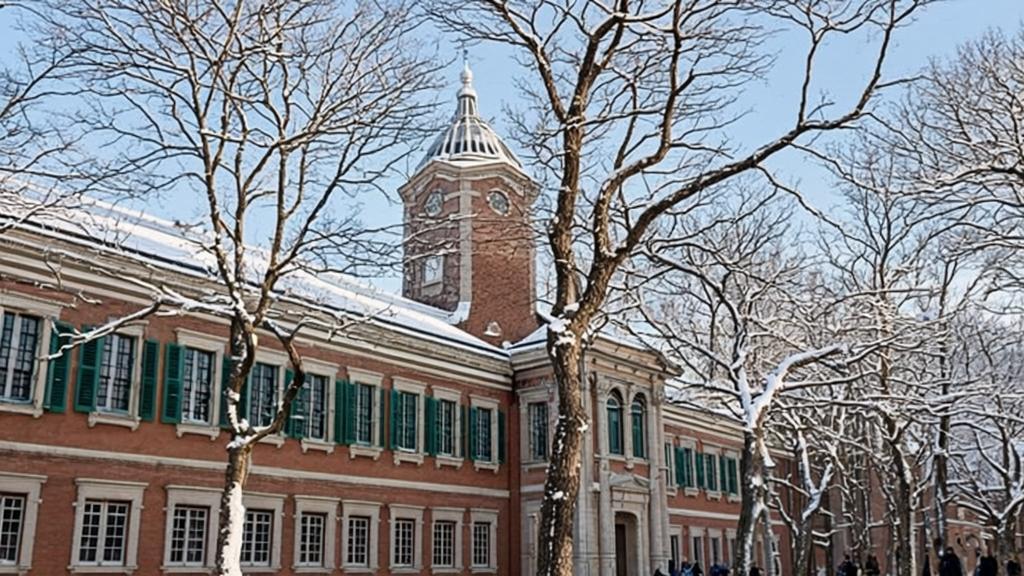
Harbin Institute of Technology, often referred to as “Harbin University of Technology,” is the first name that most foreign friends think of when they search for “China’s top engineering university.” It is not just an academic landmark in the northeast; it is more like a window for the world to see the foundation of China’s advanced nuclear technology. In the following sections, I will break down “why you should come to Harbin University of Technology,” “what you could do,” and “how to stay” into several pieces so that you can follow the plan.
What Is the Origin of Harbin Institute of Technology?
It was established in 1920 and was designated as one of the first six key universities by the state in 1954; it was part of the first batch of “211” in 1996, the first batch of “985” in 1999, and received “double first-class Class A” in 2017 (Harbin Institute of Technology, 2023). In other words, it has been involved in almost every “upgrading and advancement” of modern higher education in China. The key lies in Engineering: aerospace, robotics, small satellites, and laser communication, which sound like science fiction keywords but are just daily work in the laboratories of Harbin University of Technology.
Three Cities in One: Harbin – Weihai – Shenzhen, Three Customs Clearances for One Admission Notice
Many people don’t know that Harbin Institute of Technology has “one school and three campuses.” The main campus is in the ice city of Harbin, a “natural freezing laboratory” with temperatures reaching minus 30°C in winter; the Weihai campus was established in 1985, where the sea breeze keeps winter temperatures around zero, suitable for students from the south who fear the cold; the Shenzhen campus became fully operational in 2017 and is situated in the innovation hub of the Greater Bay Area. With course mutual recognition and credit exchange among the three campuses, you can lay a foundation in Harbin as a freshman, work on marine robotics in Weihai as a sophomore, practice in Shenzhen, and launch satellites in Harbin—all of this is not just theoretical; the academic affairs office system really recognizes it.
Why Do Foreign Students Flock to Harbin Institute of Technology?
Let’s look at the numbers first: in the 2023 academic year, there were more than 2,400 international students from 128 countries, with 53% enrolled through the China Scholarship Council (2023). The reasons can be listed extensively, but the key lies in the “three highs and one low”: high-level laboratories, high English teaching rates (over 300 English courses), high scholarships (government + school + enterprise), and living costs that are less than half of those in Europe and America. The average rent in Harbin is $35 per month, and you can eat a braised pork belly set meal for $3—this is incredibly friendly for students with a limited budget.
Aerospace Business Card of Harbin Institute of Technology: Move Classroom to Space
China’s first small satellite, “Test Satellite 1,” developed by a university, was launched in 2004 by the Harbin Institute of Technology; in 2020, the “Lilac” series micro-nano satellite was launched again, and the core members were still pursuing their master’s degrees. The school, the European Space Agency (ESA), and Bauman State University of Technology in Russia jointly built the “Small Satellite Joint Laboratory.” International students can directly participate in the CubeStar project, publish papers, earn credits, and even receive a “space mission certificate” with their graduation certificate. This experience surpasses any self-introduction on LinkedIn.
How to Collect Scholarships? A Timeline Teaches You to Get Funding
- In January: apply for the Chinese Government Scholarship (CSC) – full tuition + accommodation + medical insurance + monthly stipend of 3,000 yuan;
- In March: simultaneously apply for Harbin University of Technology International Excellence Scholarship – an additional 20,000 yuan per year;
- In May, some enterprise scholarships (such as the China Aerospace Science and Technology Trust) become available, adding an additional 2,000 yuan monthly for the Master of Engineering program. In other words, if you remain in the top 30%, not only will you spend no money during your postgraduate studies, but you may also save a trip to Mohe County to see the aurora.
Campus Life: 30°C Below Zero
Don’t be intimidated by the “ice city.” The dormitory heating operates 24/7, and wearing short sleeves in the corridors is not a joke; while it’s cold outside, it’s the best setting for ice sculpture DIY. In December each year, the ice lantern team from Harbin Polytechnic University takes international students to cut ice with machine tools, and with LED lighting, you can create a luminous “rocket” ice sculpture in just a week. In summer, the average temperature is 22°C, which is more comfortable than the Jiangnan heat. The key is that the cold weather “forces” you into the room; the coffee corner, 24/7 self-study room, and maker space become lively, significantly increasing the probability of interdisciplinary collaboration.
From Harbin Institute of Technology to the Workplace: Stay in China or Return Home, Two Roads Are Open
Do you want to stay in China? The three major industries of aerospace, robotics, and materials consistently recruit from Harbin University of Technology throughout the year. In 2022, the Heilongjiang Free Trade Zone launched the “green channel of employment for foreign students,” allowing enterprises to issue work permits to international students without quotas (Ministry of Commerce of China, 2022). Want to return home? Harbin Polytechnic University ranks in the top 100 of the QS engineering discipline list globally, and its credits are recognized in Russia, South Korea, Germany, and the United States. Companies like Bosch, Siemens, and Airbus feature Harbin Polytechnic University, TU Munich, and KAIST in parallel searches on their enrollment webpages. In other words, the “Harbin Institute of Technology” on your diploma genuinely provides transnational recognition.
There Are 5 Steps in the Application Process; the Key Is to “Contact the Tutor in Advance”
- Choose a major: the English teaching list is available in the “International Programs” section of the official website, updated every January.
- Contact the tutor: it is advisable to email your potential tutor before March, including your CV, transcript, and research proposal, keeping it to one A4 page.
- Pre-admission: after the tutor’s online interview, the college will issue a “pre-admission notice”;
- Scholarship: apply for CSC or an internal scholarship based on the pre-admission notice;
- Send the original documents: submit the notarized original of your highest degree to the International College by July, and send the official notice and form JW202 in September. Note: The two popular majors, aerospace and computer science, were full by April, so it is important to act quickly.
Common Concerns Q&A
- Is English sufficient? Over 300 English courses cover 80% of science and engineering majors, and the administrative office also provides three language services: English, Russian, and Korean.
- Is it possible to cry in winter? It is indeed very cold outdoors, but the campus underpass and heated rooms cover 95%, making it feasible to walk from your dormitory to the lab.
- Is the visa process difficult? Heilongjiang entry and exit services provide a “one-stop” service for students at Harbin University of Technology. It is advisable to extend the signing on the same day, which is at least three days faster than in Beijing, Shanghai, and Guangzhou.
Turn “Want to Come” Into “Learning”: You Can Take This Next Step
Open the official website of the International College of Harbin Institute of Technology https://international.hit.edu.cn, download the latest enrollment manual, choose three favorite tutors, and send an email tonight. The earlier we act, the more abundant the number of scholarships, and the winter in the ice city will warm up ahead of time.
References
- Harbin Institute of Technology. (2023). About HIT. https://www.hit.edu.cn
- China Scholarship Council. (2023). Study in China Statistical Report. https://www.csc.edu.cn
- Ministry of Commerce of the People’s Republic of China. (2022). Heilongjiang Free Trade Zone Employment Policy. http://www.mofcom.gov.cn
More study content: Study