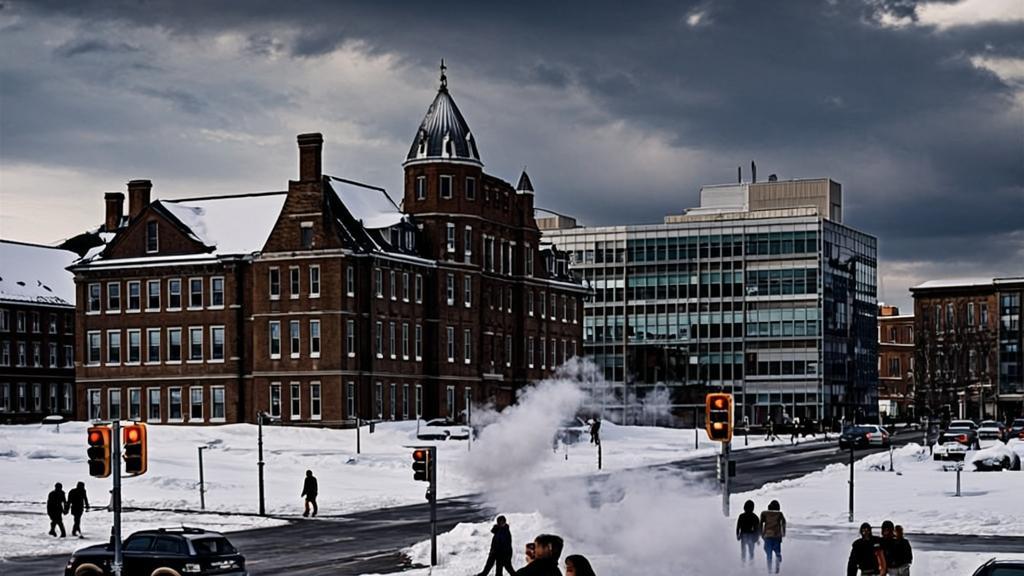
Jilin University doesn’t sit inside Changchun. In many ways, it is Changchun.
That might sound like an exaggeration. But once you look at the numbers, it’s hard to argue. The campus covers over 600 hectares. That’s roughly ten times the area of the Forbidden City in Beijing. There are six major campuses spread across different districts. Students commute between buildings the way most people commute to work. Some actually cross a traffic light on a main road just to reach their next lecture.
So — what does that mean for your education? More than you’d expect.
The Scale That Changes Everything About Learning
Most universities have one campus. You learn the layout in a week. After a month, the place feels small.
Jilin University never feels small.
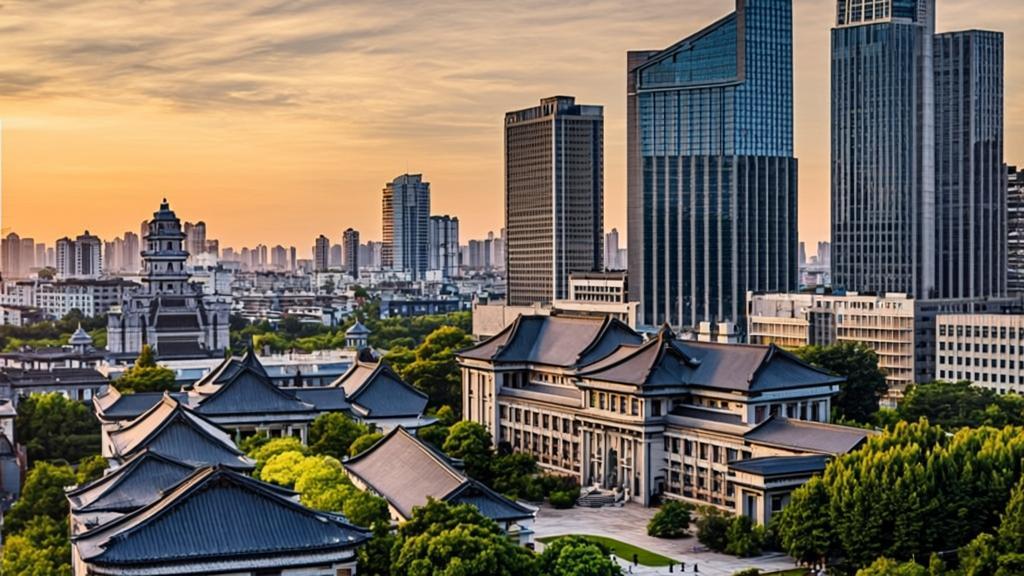
Across seven campus zones, over 70,000 students study everything from archaeology to zoology (Times Higher Education, 2023). Some take classes on the historic Xinmin Campus, surrounded by striking colonial-era architecture. Others work in modern labs on the Nanling Campus. Meanwhile, the Chaoyang Campus houses the College of Earth Sciences — and a geology museum where you can stand next to dinosaur fossils unearthed in Jilin Province.
In other words, studying here is also spatial. Your classroom might be a heritage building. Your “short walk between lectures” might cut across a neighborhood. The university and the city genuinely blur together — and that blurring is part of the experience.
What You Can Actually Study at Jilin University
This is where things get impressive. Jilin University covers all 13 of China’s major academic disciplines — a breadth that very few universities anywhere in the world can match (JLU College of International Education, 2025):
- Philosophy, Economics, Law
- Literature, History, Education
- Science, Engineering, Agriculture
- Medicine, Management, Arts
- Interdisciplinary Studies
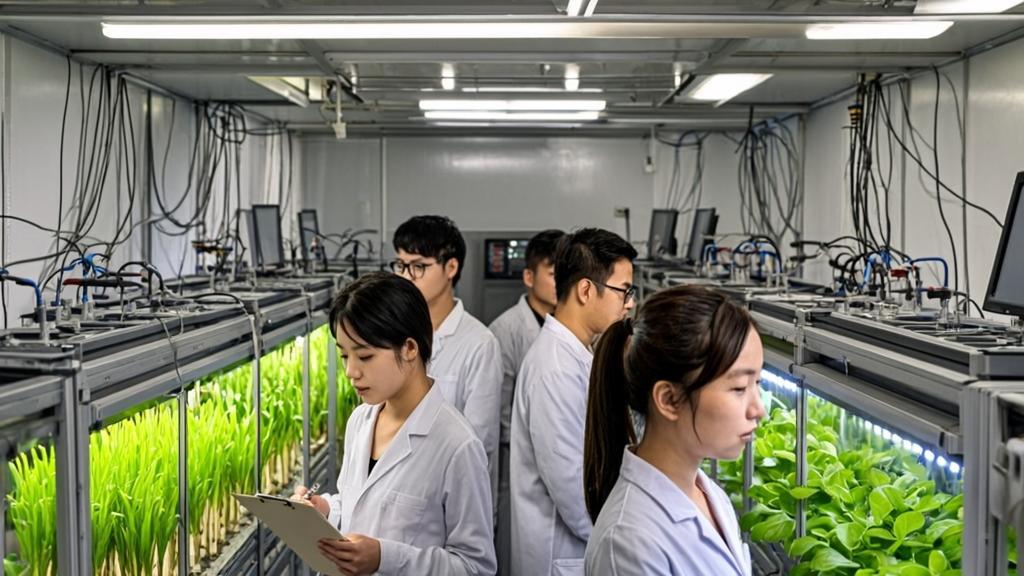
Moreover, the research output is genuinely world-class. In the Nature Index 2025 Annual Tables, JLU ranked 15th globally among all research institutions. That places it ahead of many Western universities that command far more international attention. Notably, 19 disciplines rank in the global top 1% of the Essential Science Indicators — with Chemistry and Materials Science reaching the top 1‰.
One former affiliate, Alan MacDiarmid, won the Nobel Prize in Chemistry. That detail, however small, reflects the kind of intellectual culture the place has long cultivated.
The Learning Environment Jilin University Shares With Its City
Here’s a detail that most university profiles leave out. The Xinmin Campus sits directly on Xinmin Avenue — one of Changchun’s most historically significant streets. Students walk past early 20th-century architecture to reach lecture halls. The buildings are not relocated or reconstructed. They’re original, and they’re still in use.
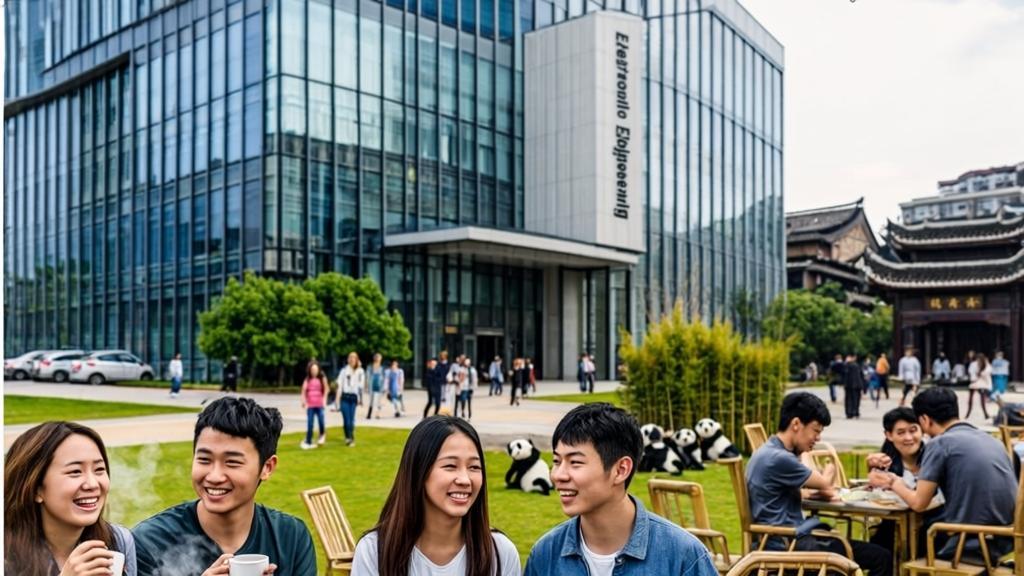
This matters more than it might seem. In Western university culture, there’s a clear boundary: campus life exists inside the gate, city life exists outside it. Oxford has its walls. MIT has the Charles River. But at JLU, that boundary barely exists. The campus bleeds into the surrounding city blocks. Coffee shops, bookstores, and street food vendors fill the spaces between faculty buildings.
For international students especially, that openness accelerates cultural immersion. You’re not living near China. You’re living inside it — in a way that a walled campus simply can’t replicate. That’s a different kind of education. And arguably, it’s a more honest one.
The Merger Nobody Talks About — But Every Student Benefits From
Here’s something most outsiders don’t know. The Jilin University you see today is, in fact, six universities merged into one.
In June 2000, five separate institutions combined. Then, in 2004, a former military logistics university joined them (Wikipedia, 2025). Each school brought its own traditions, buildings, and specializations. That history explains, in large part, why the campus is so scattered — and also why the curriculum is so unusually diverse.
Think of the University of London. That institution is also a federation of historically separate colleges, each with its own character. However, the difference is significant. At JLU, the merger created one unified institution — one student ID, one degree, one shared academic identity. There’s no “which college are you from?” awkwardness here.
For students, the practical benefit is broad access. An engineering student can take medical electives. A law student can attend chemistry seminars. That kind of academic cross-pollination is rare, even by global standards. Furthermore, the merged structure means the university holds resources — labs, hospitals, research centers — that no single-origin institution could easily replicate.
How the Cold Reshapes the Way You Study at Jilin University
Changchun winters are not gentle. Temperatures regularly drop below –20°C. And yet, paradoxically, the cold pushes students indoors in the best possible way.
The university’s libraries become genuinely lively spaces. The Central Library holds a collection recognized by UNESCO, UNIDO, and the World Bank (JLU Official Introduction, 2025). In winter, it’s also one of the warmest, most atmospheric places on campus. Study rooms fill up. Reading halls hum with concentration.
Compare that to campus life in Sydney or Los Angeles. In warm climates, students scatter — outdoors, in cafes, across parks. In Changchun, the cold concentrates people. There’s something almost Scandinavian about it: extreme weather quietly builds a culture of indoor intellectual community.
Of course, the cold also creates its own outdoor culture. The university sits near Jingyuetan National Forest Park, which becomes a winter sports destination each season. Students combine a week of study with a weekend on the slopes. That combination — world-class research library plus nearby ski trail — is genuinely unusual for any city university, anywhere.
International Students at Jilin University: What the Numbers Show
Students from 129 countries and regions currently study at JLU. The university maintains partnership agreements with 315 universities across 44 countries. In terms of global connectivity, that’s a serious network.
For international students, several programs run in English:
- MBBS (Medicine) — fully English-medium, recognized by WHO
- Chinese Government Scholarships (CSC) — covering tuition, housing, and medical insurance
- Master’s and PhD programs — available in Science, Engineering, Law, and more
Additionally, the College of International Education runs dedicated immersion programs. These include traditional Chinese medicine courses, Mandarin language classes, martial arts, and organized visits to Spring Festival and Dragon Boat Festival events. The goal is deliberate immersion rather than polite isolation.
Living costs in Changchun are also notably lower than in Beijing or Shanghai. Monthly expenses — housing, food, and transport combined — typically fall between \$300 and \$500 USD. The academic standard, however, remains genuinely competitive on a national and international level.
Why Jilin University Doesn’t Feel Like a Regular University
There’s a pattern to most universities. You arrive, you orient yourself, you find a rhythm. Within a semester, the campus feels knowable.
Jilin University resists that.
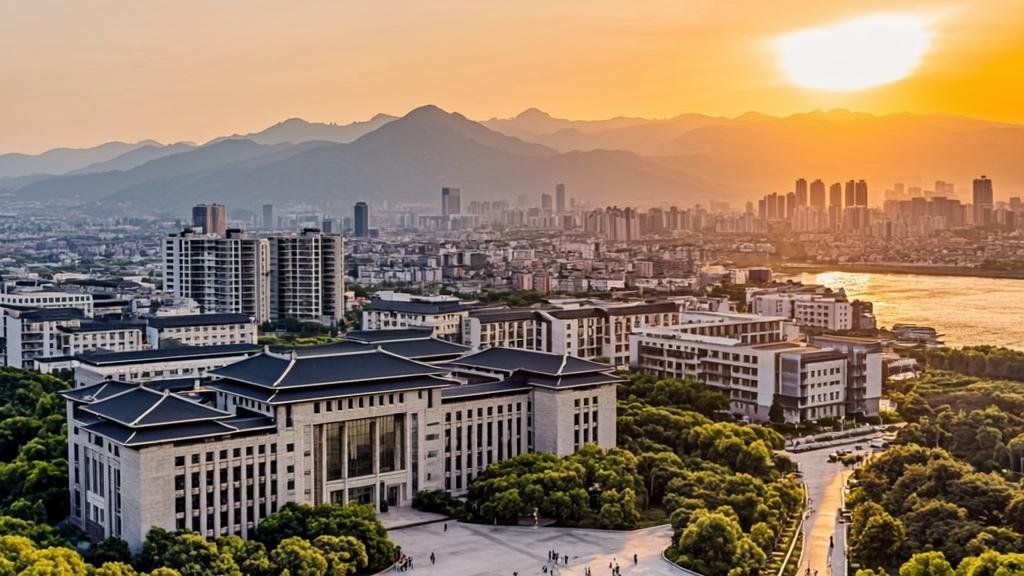
Walk from the Xinmin Campus — where colonial-era Xingya-style buildings now serve as medical education facilities — to the Nanling Campus’s modern 10,000-seat stadium. You’ve just moved through layers of 20th-century Chinese history, architecture, and urban life, all within the boundaries of a single institution. The campus doesn’t look like a campus. It looks like a city that kept growing and never stopped to draw an edge.
Western universities like Oxford or Cambridge are also deeply woven into their cities. However, the relationship tends to go one direction: the medieval city shaped those universities. At JLU, it feels more like the university absorbed Changchun’s growth — became inseparable from it. Changchun hosts 27 university-level institutions (Times Higher Education, 2023). JLU, by sheer scale and variety, defines the city’s academic identity.
At Last
Therefore, if you’re searching for a university experience that feels genuinely different — academically ambitious, historically layered, and frankly too large to fully understand in four years — Jilin University offers something that most campuses simply can’t. Sometimes the best way to understand a place is to get slightly lost in it.
And getting lost, here, is almost guaranteed.
That said, the size works in your favor once you settle in. With over 256 registered student associations, a multi-campus sports infrastructure, and a library system spanning eight buildings across the city, there’s rarely a shortage of things to do, places to study, or people to meet. The QS World University Rankings 2026 placed JLU at #473 globally — a ranking that reflects consistent strength across research, faculty, and international reputation.
The real value, though, is harder to quantify. It’s in the contrast: the -20°C winter that drives everyone into library study rooms together. The colonial-era building where you take your biochemistry exam. The city that doesn’t end where the campus begins. JLU is, above all, a place shaped by history, extreme geography, and scale — and all three show up in the way students learn.
References
Times Higher Education. (2023). Jilin University. Times Higher Education World University Rankings. https://www.timeshighereducation.com/world-university-rankings/jilin-university
Nature Index. (2025). Jilin University (JLU) research profile. Springer Nature. https://www.nature.com/nature-index/institution-outputs/china/jilin-university-jlu/513906bb34d6b65e6a00020d
Jilin University College of International Education. (2025). 2025–2026 Admission for international undergraduate students. https://cie.jlu.edu.cn/info/1079/3486.htm
Jilin University College of International Education. (2025). Overview of Jilin University for international students. https://cie.jlu.edu.cn/lxsq1/xxgk.htm
Jilin University. (2025). Introduction to Jilin University. Official Website. https://www.jlu.edu.cn/xxgk/jdjj.htm
Wikipedia Contributors. (2025). Jilin University. Wikipedia, The Free Encyclopedia. https://en.wikipedia.org/wiki/Jilin_University
QS World University Rankings. (2026). Jilin University profile. Quacquarelli Symonds. https://www.topuniversities.com/universities/jilin-university