Minzu University of China offers something most foreign students never expect when they sign up. Yes, you can study Chinese here. But buried inside the enrollment package is a list of free elective courses that reads more like a cultural festival than a university timetable — ethnic folk dance, traditional instruments, minority languages, calligraphy, paper-cut art, and martial arts. All included. All free.
That part rarely makes it into the headlines. Most English-language content about studying in China focuses on Tsinghua or Peking University. Yet for students who want depth — not just a degree — this campus in Beijing’s Haidian District quietly offers one of the most unusual educational experiences on the continent.
What Makes Minzu University of China Different From Any Other Campus
Most universities celebrate diversity through posters and events. Minzu University of China is built around it structurally.
It is, officially, the only university in China where all 56 recognized ethnic groups are represented among both faculty and students (CUCAS, 2024). Around 60% of the student body comes from ethnic minority backgrounds. That means the person sitting next to you in class might be Tibetan, Uyghur, Miao, Yi, or Mongolian. The campus is, in a real sense, a living archive of cultures that most outsiders never encounter, even in a lifetime of travel.
For context: in the West, specialized institutions like SOAS University of London or the School for International Training focus on non-Western cultures from the outside looking in. Minzu University of China operates from the inside. The cultures are not studied abstractly — they are practiced daily, on campus, by the people who live them.
The Free Elective Courses Most International Students Don’t Know About
Here is where things get genuinely interesting. International students enrolled in Chinese language programs at Minzu University of China can select free-of-charge elective courses on top of their core language curriculum. The options, listed in the university’s official admission brochure, include:
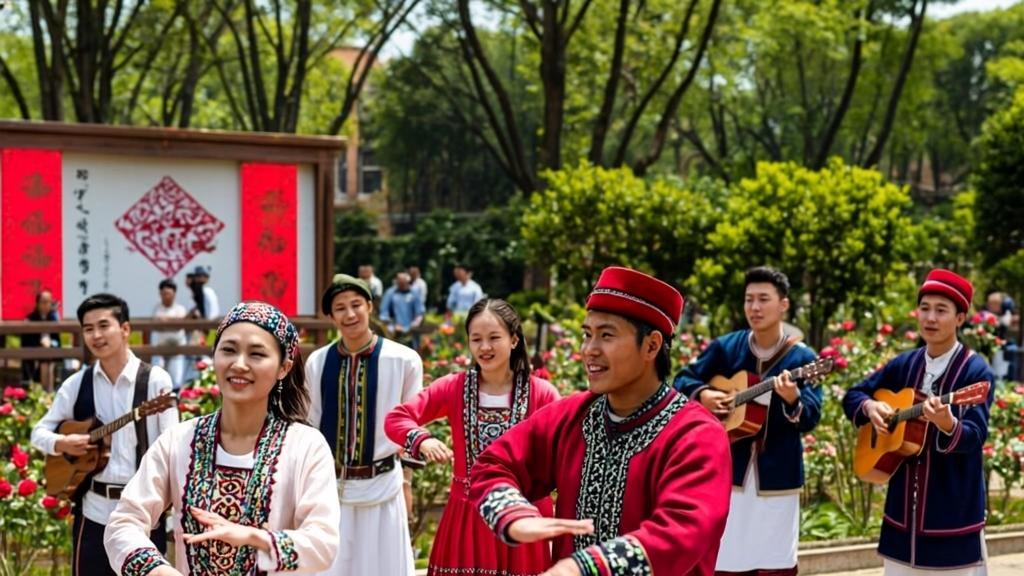
- Chinese ethnic folk dance (students join classes alongside minority peers)
- Ethnic music instruments (traditional instruments from various groups)
- Chinese ethnic minority languages (Tibetan, Mongolian, Uyghur, and others)
- Calligraphy and Chinese painting
- Paper-cut art
- Martial arts
These courses are not tokenistic add-ons. The university’s dance and music programs are among the top-ranked in the country for ethnic minority arts (CUCAS, 2024). In other words, the teachers delivering these electives are specialists. The quality is genuine.
Furthermore, classes are deliberately kept small — fewer than 20 students per group. That structure allows for hands-on learning rather than passive observation. It is a markedly different experience from a workshop in a tourist district.
Why This Kind of Learning Is Nearly Impossible to Find Elsewhere
Think about what it would take to learn a Tibetan folk instrument in London or New York. You’d probably need a specialist teacher, significant money, and months of searching. At Minzu University of China, it’s a course option on a standard enrollment form.
There’s also a social dimension that no private lesson can replicate. On Friday evenings, Tibetan students gather in open campus spaces to practice Guozhuang circle dancing. Participants from other backgrounds — and foreign students — join in. Research published in a 2025 academic study on international student experiences at Chinese universities found that these informal dance spaces function as some of the most effective cross-cultural contact points on campus, precisely because they operate without structure or pressure (Tandfonline, 2025).
In Western universities, multicultural programming tends to be organized, scheduled, and mediated. Here, it happens because the student body naturally reflects that diversity. The difference matters.
Practical Guide: How to Access These Courses as an International Student
Enrollment and Application Timeline
Applications for Chinese language programs at Minzu University of China open between January and April each year. Spring semester classes begin at the end of February; autumn semester begins in August. The five proficiency levels — from complete beginner to advanced — ensure students are placed appropriately rather than thrown into the deep end (SICAS, 2024).
The weekly schedule runs 20 to 24 contact hours for core Chinese language study. Free electives sit alongside that, selected at the start of each semester.
Scholarship Options Worth Knowing
Cost is often the first concern for international applicants. Fortunately, Minzu University of China participates in multiple scholarship programs.
The Chinese Government Scholarship (CSC), administered through the China Scholarship Council, covers full tuition, on-campus accommodation, and a monthly stipend. For master’s students, that stipend stands at CNY 3,000 per month; doctoral students receive CNY 3,500. Medical insurance of approximately CNY 800 per year is also included (DAAD Scholarship, 2024). The university’s CSC agency number is 10052, used when applying through the official portal at studyinchina.csc.edu.cn.
Additionally, the Beijing Government Scholarship and the International Chinese Language Teachers Scholarship offer further options for eligible applicants. Students in language programs may also qualify for partial funding. Worth checking the College of International Education directly at cie.muc.edu.cn for the most current details.
The Campus Itself: A Garden Rare in Northern China
Location-wise, Minzu University of China sits in Haidian District — Beijing’s university corridor. Tsinghua and Peking University are nearby. The National Library of China is to the south. Zhongguancun Science Park, often called China’s Silicon Valley, is just to the north.
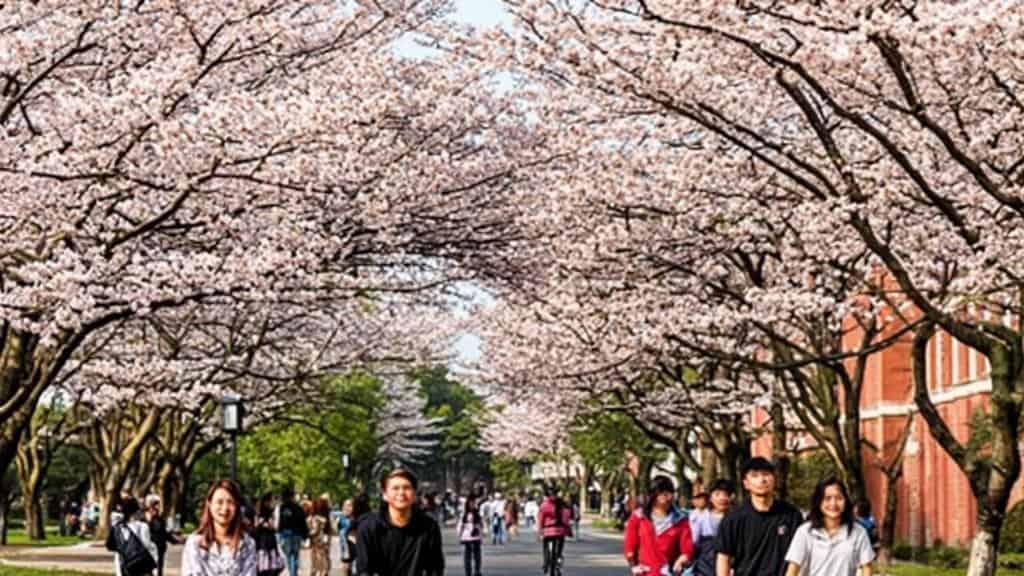
What sets the campus apart visually is its garden-style layout, which university materials consistently describe as unusual for northern China. The grounds are green, relatively quiet, and organized around cultural buildings rather than corporate architecture. The Ethnic Museum, located on the main campus at 27 Zhongguancun South Street, holds nearly 50,000 artifacts from all 56 ethnic groups — including prehistoric painted pottery, Eastern Han Dynasty bronze drums, thangkas, palm-leaf manuscripts, and historical musical instruments. It is open to visitors and serves as a research resource alongside its role as a teaching collection (Baidu Encyclopedia / MUC Official, 2024).
A Word on Cultural Depth: What “Hidden Curriculum” Actually Means Here
The term hidden curriculum in education research refers to the unspoken lessons a learning environment teaches beyond its formal syllabus. At most universities, that means learning professional norms, social hierarchies, and institutional culture.
At Minzu University of China, the hidden curriculum is something else entirely. Biology courses reference the flora and fauna of ethnic minority regions. History courses are taught through the lens of multiple ethnic perspectives. Even degree programs not directly connected to minority studies integrate cultural context as a matter of course (chinauniversities.com).
For a foreign student, that means immersion happens at multiple levels simultaneously — in the language classroom, through the electives, in the dormitory, in the cafeteria, and in the informal evening gatherings outside. It is not a study abroad program designed for tourists. It is a genuine academic environment where cultural learning is woven into the structure.
That distinction, ultimately, is what most English-language coverage of Chinese universities tends to miss.
References
CUCAS. (2024). MinZu University of China introduction. CUCAS. https://muc.cucas.cn/introduction/
SICAS. (2024). 2024 Minzu University of China admission brochure for international students. SICAS. https://m.sicas.cn/News/Detail?pid=1719
Baidu Encyclopedia. (2024). Minzu University of China. Baidu. https://baike.baidu.com/en/item/Minzu%20University%20of%20China/1001650
DAAD Scholarship. (2024). Minzu University fully-funded CSC scholarship 2025. DAAD Scholarship. https://daadscholarship.com/minzu-university-fully-funded-csc-scholarship-2025/
Tandfonline. (2025). Interculturality as (im-)possibilities in non-places: international university students’ encounters in China. Higher Education Research & Development. https://www.tandfonline.com/doi/full/10.1080/07294360.2025.2564994
China Admissions. (2024). The 2025 guide for international students: China scholarships. China Admissions. https://www.china-admissions.com/blog/china-scholarship/
chinauniversities.com. (n.d.). Minzu University of China (MUC). https://chinauniversities.com/university/minzu-university-of-china-muc