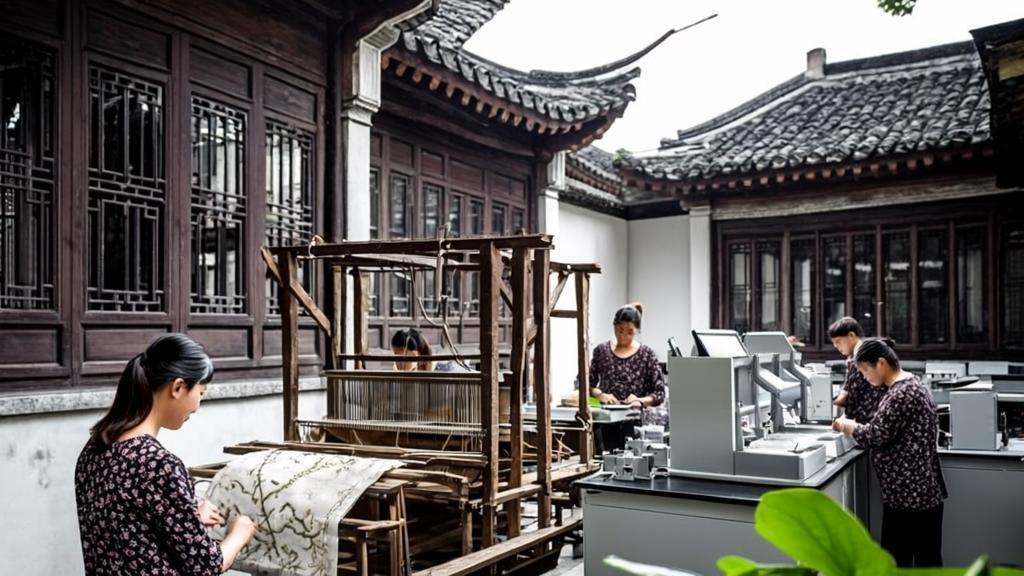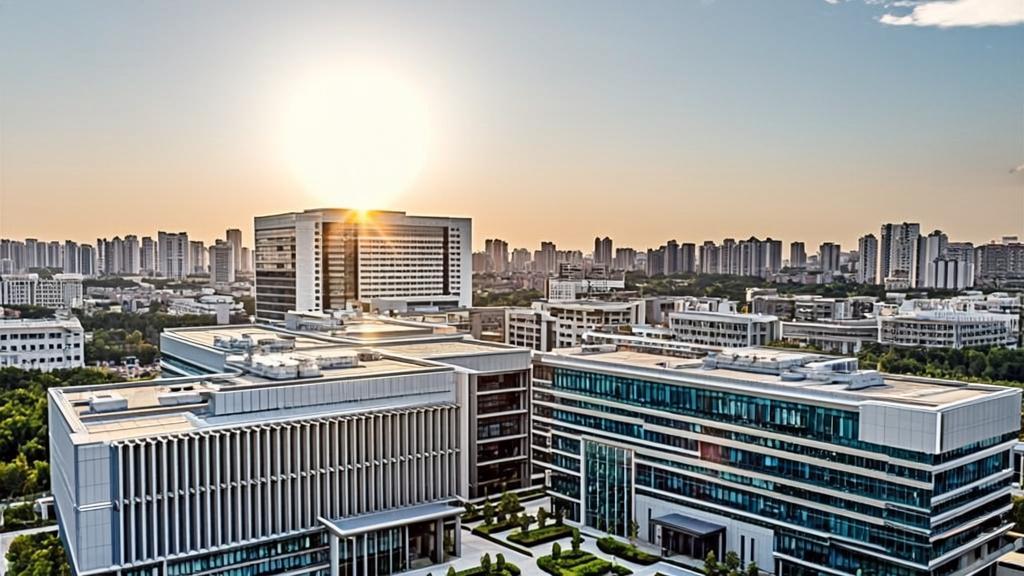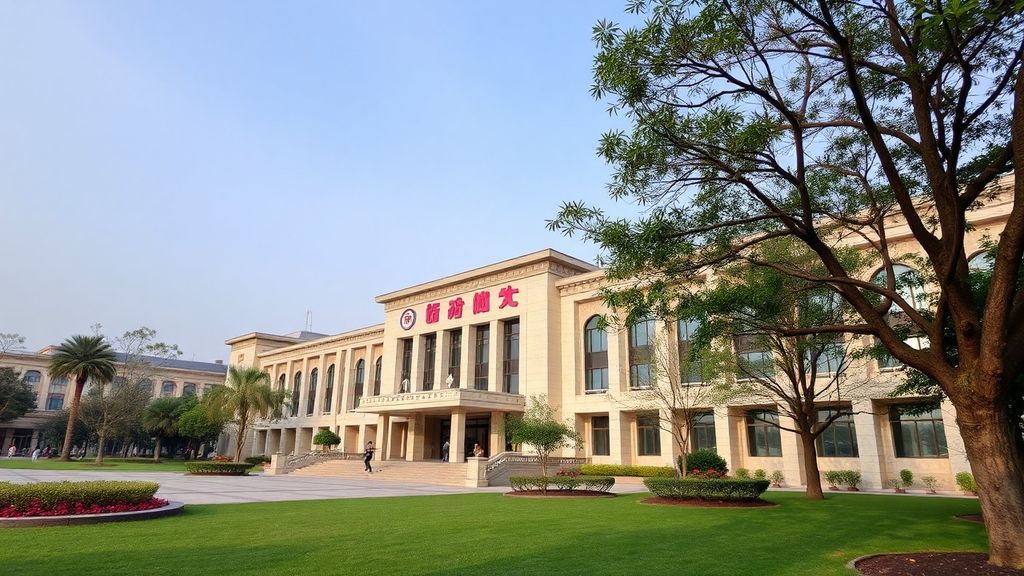
Nanchang University doesn’t show up on most students’ radar when they think about studying in China. Beijing, Shanghai, Guangzhou — those are the names people Google. And yet, here’s something that might surprise you: one department at Nanchang University ranks 7th in the world for Food Science (US News, 2025). Another team invented the LED technology now lighting up homes across the globe. And international students from over 120 countries have passed through its campus.
So what’s actually going on in Nanchang? And why are more foreign students quietly choosing it?
What Kind of University Is Nanchang University?
Founded in 1921, Nanchang University (NCU) sits in Nanchang, the capital of Jiangxi Province in southeastern China. It is a comprehensive public research university — part of China’s prestigious Double First-Class national initiative and Project 211, which places it among the country’s top-tier institutions (Wikipedia, 2025).
In terms of scale, it’s significant:
- Over 56,000 students across all campuses
- 132 undergraduate programs spanning 12 academic disciplines
- 22 doctoral-level disciplines and 51 master’s-level programs
- 5 affiliated hospitals, supporting one of China’s strongest clinical medicine programs
- Exchange and cooperation relationships with 230+ universities in over 40 countries (NCU official site)
Think of it like a mid-sized American state university — but one that punches well above its weight in research output.
The Rankings Story Most People Don’t Know
Here’s where things get interesting. Overall university rankings can be misleading. Nanchang University ranks around 301–400 globally (ARWU 2025). That sounds ordinary. But look at its subject rankings, and the picture changes dramatically.
Food Science: Genuinely World-Class
The College of Food Science and Technology at NCU has built something rare. According to its official department overview:
- Ranked 7th globally in the US News Best Global Universities (Food Science, 2025)
- Ranked 8th globally in the ARWU Subject Rankings (Food Science, 2025)
- Agricultural Science (primarily food) entered the top 0.214‰ of ESI global rankings as of May 2025
For context — the universities ahead of it on those lists include institutions from the US, Netherlands, and Australia. Few people outside China know a provincial university in Jiangxi competes at that level.
Why does this matter for international students? Because subject ranking often determines real academic quality in your specific field far more than overall university ranking does.
Other ESI Top-1% Disciplines at NCU
NCU has 11 disciplines in the top 1% of ESI global rankings, including:
- Chemistry
- Clinical Medicine
- Engineering
- Materials Science
- Pharmacology and Toxicology
Who Goes to Nanchang University?
According to NCU’s International Education College, the university has educated more than 6,000 international students from over 120 countries since it first began accepting foreign students in 1997. Currently, around 960 international students study there at any given time — a relatively intimate international community compared to mega-universities in Beijing or Shanghai.
That number might seem small. However, in practice, a smaller international cohort often means more direct interaction with Chinese students and deeper cultural immersion. It’s a different experience from attending a university where the international student bubble is large enough to feel self-contained.
Programs Available for International Students
NCU offers international students study options across multiple levels:
Degree Programs
- Bachelor’s programs: Medicine, Engineering, Economics, Science, Management, and more
- Master’s programs: Including the well-regarded Food Science and Engineering program; Computer Science (taught in English, available in dedicated classes)
- Doctoral programs: Research-based degrees across 22 first-level disciplines
Language of Instruction
Most undergraduate programs are taught in Chinese. However, some graduate programs — notably Computer Science — offer English-medium instruction. Students who arrive without Chinese proficiency typically spend the first year in intensive Mandarin training before transitioning into their major courses.
Short-Term and Non-Degree Options
NCU also runs short-term cultural programs, HSK preparation courses, and semester exchange placements for visiting students. These are useful for students who want a taste of Chinese university life without committing to a full degree.
For full program details and application, the official entry point is the NCU International Education College.
Scholarships: What’s Actually Available
Funding is one of the most searched topics for students considering Nanchang University. The good news: multiple scholarship channels exist.
Chinese Government Scholarship (CSC)
This is the flagship option — and it’s fully funded. The China Scholarship Council (CSC) scholarship at NCU (Agency Number: 10403) covers:
- Full tuition waiver
- Free on-campus accommodation
- Monthly stipend: 2,500 RMB (undergraduate) / 3,000 RMB (master’s) / 3,500 RMB (PhD)
- Comprehensive medical insurance
Applications go through the CSC Online System. Deadlines typically fall in March each year.
Jiangxi Provincial Government Scholarship
This scholarship is funded by the Jiangxi provincial government and distributed to eligible universities including NCU. It provides:
- 25,000 RMB/year for doctoral and master’s students
- 20,000 RMB/year for bachelor’s students
Details are available through NCU’s scholarship information page.
NCU President’s Scholarship
For academically strong applicants, NCU offers its own President’s Scholarship. It provides varying levels of tuition reduction — from 50% to full tuition waiver — based on academic performance in subsequent years (StudyInChina.io, 2025).
What It Actually Costs to Live in Nanchang
Nanchang is not Beijing. That’s actually a significant advantage budget-wise.
According to a 2025 cost-of-living analysis for international students in China (WentChina, 2025), a student living frugally in a second-tier Chinese city can manage on 4,000–4,500 RMB per month, covering accommodation, food, and transport.
In Nanchang specifically, costs tend to run lower than Shanghai or Beijing. Rough monthly estimates for a student at NCU:
- Dormitory room: 400–800 RMB/month (on-campus international student housing)
- Meals at campus canteen: 10–20 RMB per meal
- Local transport: Buses and metro are typically under 2 RMB per trip
- Total monthly estimate: roughly 3,000–5,000 RMB depending on lifestyle
A CSC scholarship stipend of 3,000 RMB/month for master’s students can therefore cover most basic expenses — something far less feasible in a first-tier city.
Campus Life: What’s Different From a Western University
Here’s a cultural gap that often surprises incoming students. Chinese university life is organized quite differently from the Western model — and Nanchang University is a good example of this.
In most Western universities, student life is loosely structured. You attend lectures, manage your own schedule, and live relatively independently. The social architecture is built around personal initiative.
At NCU, and Chinese universities generally, the 班级 (bānjí) — the class cohort — forms the backbone of student life. Students are assigned to a fixed class group at enrollment. They share most of their courses, spend significant time together, and often form close bonds as a result. It’s closer to the homeroom model of secondary school than the free-flowing structure of Western college life.
This has a practical implication for international students: it’s much easier to form genuine friendships with Chinese classmates compared to universities where the international student population lives in a largely separate bubble.
Additionally, the campus canteen culture is worth noting. Chinese university cafeterias are not just functional — they’re social spaces, and meals together are part of how relationships form. The variety of regional Chinese dishes available in a typical NCU cafeteria for 10–15 RMB is, frankly, remarkable.
A Note on Nanchang Itself
Nanchang doesn’t always make foreign travel lists. It should appear on more of them. The city sits near Poyang Lake, China’s largest freshwater lake. It’s a short train ride from Jingdezhen — the historic home of Chinese porcelain — and within range of Lushan Mountain, one of China’s classic scenic landscapes.
The city also carries significant historical weight. It was the site of the Nanchang Uprising of 1927, a pivotal event in modern Chinese history. That history is woven into the city’s identity in ways that make it an unusually layered place to spend time.
For students interested in understanding China beyond its showcase cities, Nanchang offers something more textured.
Is Nanchang University Right for You?
Honestly, it depends on what you’re looking for.
If your priority is food science, biomedical research, or clinical medicine — NCU offers access to genuinely world-class academic resources in those areas. If your goal is deep cultural immersion in China, Nanchang’s smaller international community and lower cost of living create conditions for that more effectively than a megacity campus might. And If you need English-medium instruction across all subjects, options are more limited, and you’ll likely need serious Chinese language preparation.
For most students who fit the profile — motivated, open to language learning, interested in research or professional fields where NCU excels — it presents a compelling case. Arguably more compelling than its overall ranking suggests.
How to Apply
Applications for international students go through the NCU International Education College. The main portal is:
- Official NCU International Education site: iec.ncu.edu.cn
- Online application system: apply.ncu.edu.cn
- CSC Scholarship system (for Chinese Government Scholarship): csc.edu.cn/laihua
- NCU Agency Number (for CSC applications): 10403
Applications for September intake typically open in January and close in late March or April.
References
China Admissions. (n.d.). Nanchang University NCU. China Admissions. https://apply.china-admissions.com/university/nanchang-university-ncu/
China University of Education and Science Center. (n.d.). Scholarship — Nanchang University. CUESC. https://www.cuesc.com/school/NCU/Scholarship
Nanchang University College of Food Science and Technology. (2025). Overview. http://sfst.ncu.edu.cn/english/About_Us/Overview.htm
Nanchang University International Education College. (2025). Official site. https://iec.ncu.edu.cn/
Shanghai Ranking. (2025). Nanchang University. Academic Ranking of World Universities. https://www.shanghairanking.com/institution/nanchang-university
StudyInChina.io. (2025). 2025 Nanchang University President’s Scholarship for International Students Admission Guide. https://studyinchina.io/en/news/2025-nanchang-university-presidents-scholarship-for-international-students-admission-guide
US News & World Report. (2025). Nanchang University — Best Global Universities. https://www.usnews.com/education/best-global-universities/nanchang-university-529112
WentChina. (2025). Year 2025 cost of living in China: What international students should expect. https://wentchina.com/cost-of-living-in-china-international-students/
Wikipedia. (2025). Nanchang University. https://en.wikipedia.org/wiki/Nanchang_University