Why Do the Words “Nanjing University” Pop Out First?
Because when you input “studying in China,” “famous schools in East China,” and “strong basic disciplines” into the search box, Google will likely highlight Nanjing University. It is not only a prestigious 985 institution located in the Yangtze River Delta, but, in recent years, both QS and THE have also ranked its Geosciences and modern linguistics among the top 50 in the world (QS, 2024). In other words, if you want to study top science and humanities in a Chinese atmosphere and don’t want to be overwhelmed by the exorbitant rents of Beijing, Shanghai, and Guangzhou, Nanjing University may be the sweet spot.
120 Years of School History: From Sanjiang Normal University to “Nanjing University”
Many people believe that Nanjing University was only renamed in 1949. In fact, its lineage can be traced back to Sanjiang Normal School in 1902. After the glory years of the National Central University, in the 1930s, it was once known as “the largest campus in Asia”. In 1952, the national faculty was reorganised, merging the College of Arts and Sciences of the former National Central University with the College of Arts and Sciences of Jinling University. This is what we refer to as Nanjing University today. According to the school’s own statistics, this evolution allowed Nanjing University to inherit books, experimental equipment, and international contacts from both church universities and national universities, which can be likened to “the launch of an aircraft carrier” (official exhibition of the School History Museum of Nanjing University, 2023).
Subject Map of Nanjing University: Science Students and Arts Students Can “Choose to Dazzle”
Open the “Academic” section on the official website of Nanjing University, and you will see 28 colleges, but only two groups of keywords: basic science and interdisciplinary science.
Science
Physics, astronomy, geology, atmospheric science, and computer science have all been selected into the “double first-class” A+ list of the Ministry of Education; among them, the astrophysics team is the core user group of FAST (China Tianyan), and the allocated observation time for graduate students every year ranks first nationwide.
Liberal Arts
The five disciplines of Chinese, history, philosophy, foreign languages, and new biography all ranked in the top 5% of the country in 2023; the Centre for the History of the Republic of China has become a necessary point of reference for overseas sinologists. If you are concerned about “whether you will starve to death if you study archaeology at the undergraduate level,” as I was, you can refer to the “Cultural Relics Material” cross-disciplinary project launched by the College of Modern Engineering and Applied Sciences at Nanjing University: learn material microscopy while conducting porcelain composition detection, and graduate with a minor certificate in science + culture and museums. In other words, Nanjing University’s interdisciplinary play is not just a collage of curricula but a direct transfer to the laboratory and museum.
Overseas Exchange Opportunities: You Can Go to NUS Even If You Can’t Go to Stanford
In fact, the university is not isolated. Official data shows that it has signed school-level agreements with more than 280 overseas institutions, providing over 900 tuition-free exchange spots per year (statistics from the International Cooperation Office of Nanjing University, 2024). Popular destinations include:
- National University of Singapore (NUS) semester exchange – favoured by engineering students, with credit recognition, IELTS 6.5 required.
- University of Wisconsin at Madison 3+1+1 bachelor’s degree program – economics and sociology students can directly pursue a master’s degree in their senior year.
- Scientific research practice at Kyoto University – only N2 Japanese proficiency required, with a monthly JASSO scholarship of 80,000 yen, which typically covers transportation. The key is that a GPA of 3.0 is sufficient to apply, and the competition is far less intense than for direct applications to North America. In other words, if you are worried about the “postgraduate entrance examination,” first stabilise your GPA in Nanjing and then go abroad to gain a year of valuable experience. Returning to Baoyan/Zhibo will be an added advantage.
Nanjing University Application Guide: How Do Foreigners Get Admitted?
Many people think that the “Chinese Government Scholarship” has limited slots and only benefits Tsinghua and Peking University. In fact, Nanjing University reserves 400 spots for international students each year, including 150 undergraduate and 250 master’s slots (China National Scholarship Council, 2024). The process is as follows:
Language: HSK5 (≥ 180) is required for Chinese instruction; IELTS 6 is required for English-language courses.
Time: The official website opens the application system in November every year, with a deadline of March 31st; expect 4-5 months for a video interview.
Scholarship: Tuition-free + 3,000 yuan per month for living expenses + free double room (small powder building in Gulou campus, just a 5-minute walk to 1912 Bar Street, with vibrant nightlife). By the way, Nanjing University is one of the first universities to accept the “International Graduate Independent Training Program,” which means that even if you do not apply for the CSC, the school will provide 2,000 yuan per month for outstanding master’s students. In other words, as long as your background is strong enough, you can always secure a layer of support.
Campus Life at Nanjing University
The university currently comprises “one school and three campuses”:
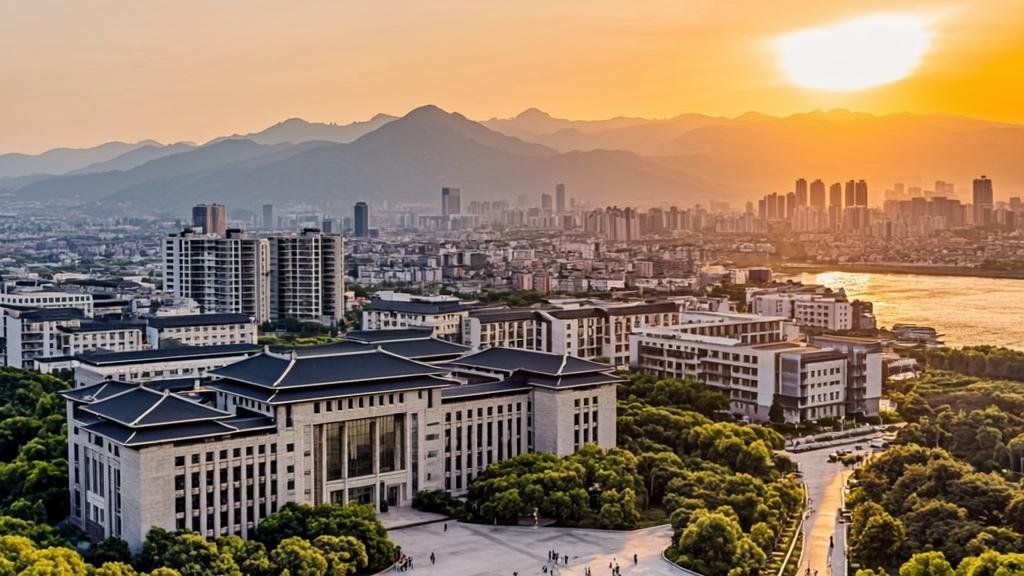
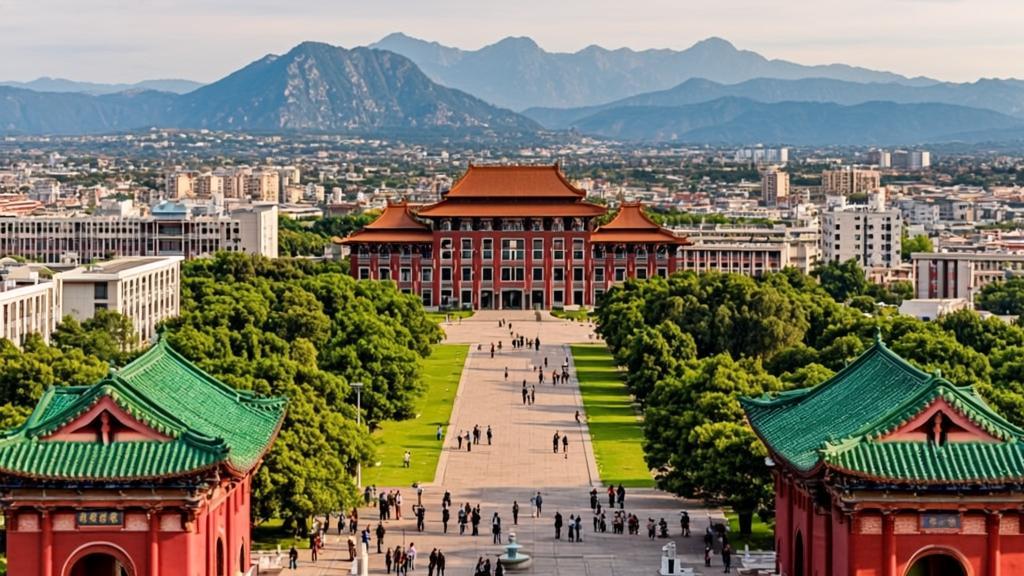
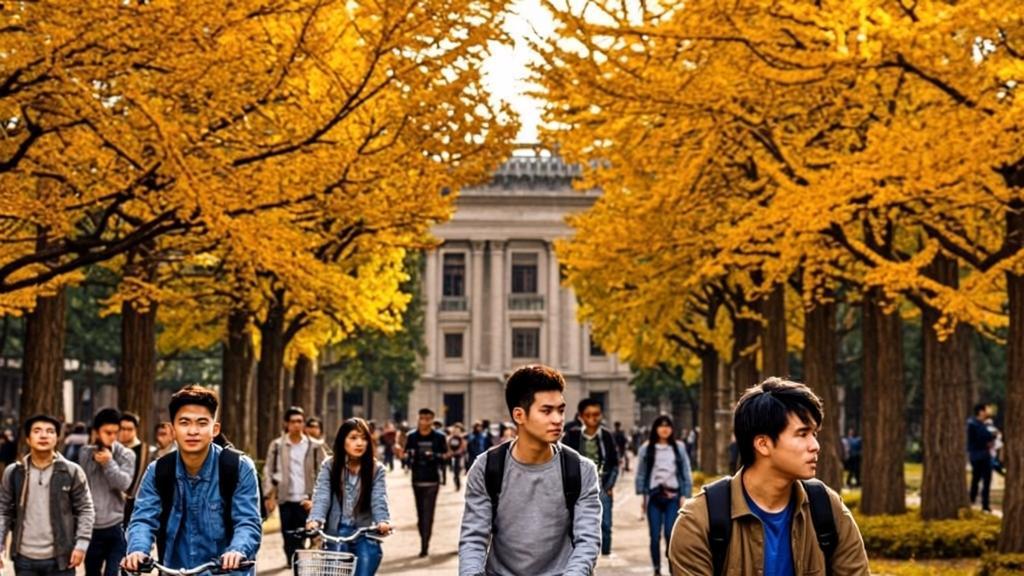
Gulou Campus: Located downtown, the architecture dates back to the Republic of China; a picturesque avenue lined with plane trees resembles a postcard. The downside is that the dormitories are old, but it only takes 15 minutes to walk to the Xinjiekou Business District.
Xianlin Campus: Accessible via Metro Line 2, covering 200 hectares, with a library open for 24 hours; here you can find the largest campus planetarium among universities in China. Undergraduates can photograph nebulae using the 18-inch RC telescope by appointment.
Suzhou Campus: Opened in 2022, focusing on AI and financial engineering; after only two years, the undergraduate programs can be considered limited for now. Most foreign students are housed in the Gulou campus because it has halal options in the canteen, and the school hospital offers English guidance. However, if you want to experience “living with domestic students in a four-person dorm,” you can also apply to Xianlin, which can save you 3,000 yuan in accommodation fees per year—the key is determining whether the night market or stargazing appeals to you more.
My 5 Personal Reasons
- High degree of academic freedom: students from the physics department have produced two SCI papers.
- The cost of living in Nanjing is about 60% of that in Beijing, with subway and shared bike commutes capped at 300 yuan per month.
- Abundance of urban attractions: Dr Sun Yat-sen’s Mausoleum, Confucius Temple, and Niushou Mountain are all within a 30-minute travel radius, and the annual card for international students is priced at 200 yuan.
- Great job opportunities: HUAWEI South Research Institute, Alibaba Jiangsu headquarters, and Taijidian Nanjing factory are all nearby, and internship buses go directly to Xianlin.
- Strong identity of “NANDA”: alumni associations are established across 56 countries. If you lose your passport in Nairobi, Kenya, you can borrow emergency funds from the local alumni group—don’t ask how I know.
Summary: Add “Nanjing University” to Your Application List
Ultimately, choosing a school is like choosing a city: some are captivated by the neon lights of the Magic City, while others are enchanted by the autumn winds of Jinling. If you want a solid foundation in one of the world’s top 150 universities while managing reasonable living expenses, Nanjing University is nearly a “low-risk, high-return” option. My suggestion is to first read the International Programs FAQ on the official website, outline the 2-3 colleges you are interested in, and then email Jason Zhang, the teacher in charge of international student enrollment, who usually replies within 48 hours. Don’t forget to include “Prospective International Student” in the email subject line—the system highlights this, boosting the response rate by 50%. The next time someone asks, “What else is there besides studying in northern China?” you can share this article and attach a photo of the ginkgo trees in front of the South Dabei building in autumn: golden, thick, and sunny, reflecting your soon-to-be degree and memories.
References
QS. (2024). QS World University Rankings 2024: Nanjing University. Ranking of Soft Subjects (2023). 2023 Ranking of China’s Best Disciplines https://www.shanghairanking.cn/rankings/bcsr/2023.
International Cooperation Office of Nanjing University (2024). Nanjing University International Student Enrollment Brochure https://study.nju.edu.cn/cn/.
China National Scholarship Council (2024). China Government Scholarship Program Guide https://www.campuschina.org/.
School History Museum of Nanjing University (2023). Nanjing University History Exhibition http://xiaoshi.nju.edu.cn/info/1213/1731.htm.
More universities: Universities