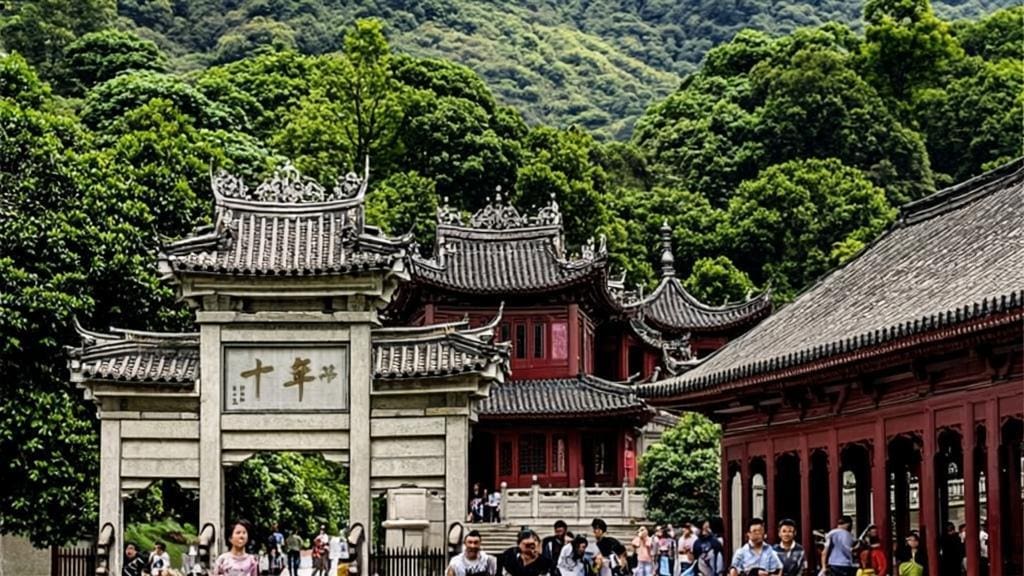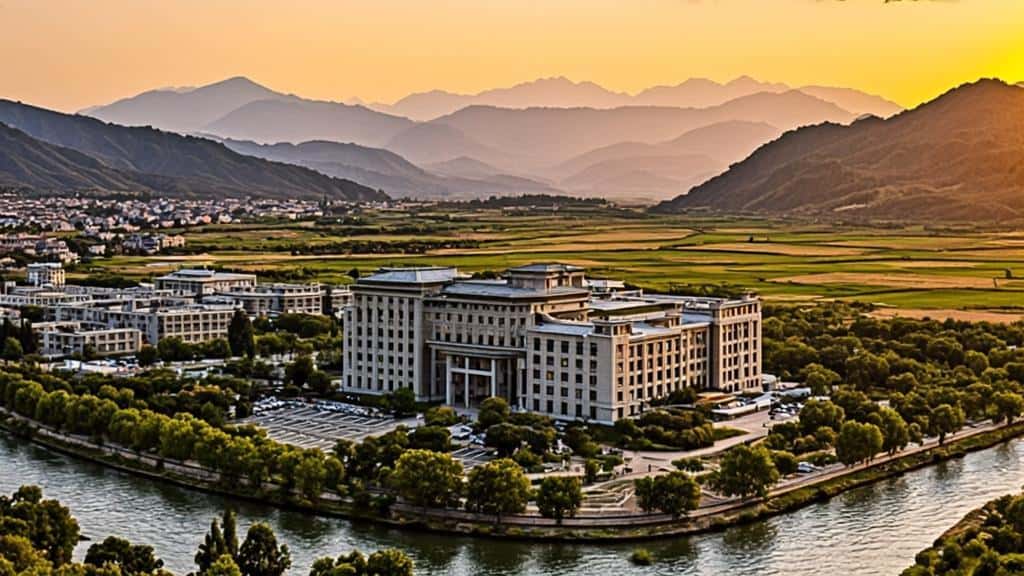
Northwest A&F University (西北农林科技大学, NWAFU) sits on a particular piece of land. Not a famous mountain or a scenic riverbank — but Yangling, Shaanxi. This is, according to Chinese legend, the exact place where Houji, the mythological Lord of Millet, first taught humans to grow grain. The ancient Chinese god of agriculture is said to have been buried between two rivers here. Plants and flowers grew around his grave. Thousands of years later, NWAFU was built on that same soil — and it now ranks 3rd globally in Agricultural Science according to the 2025 U.S. News & World Report Best Global University Rankings (Wikipedia, 2025).
That coincidence, if it is one, is hard to ignore.
What Makes Northwest A&F University Different From Other Universities in China
Most agricultural universities are, frankly, not exciting to explain. Northwest A&F University is an exception. Here’s why.
First, it’s the only university in China fully equipped with disciplines across agriculture, forestry, and water science together — a combination no other institution in the country can claim (NWAFU Official Overview). That matters because food systems don’t work in silos. Water, soil, and forests are all part of the same equation.
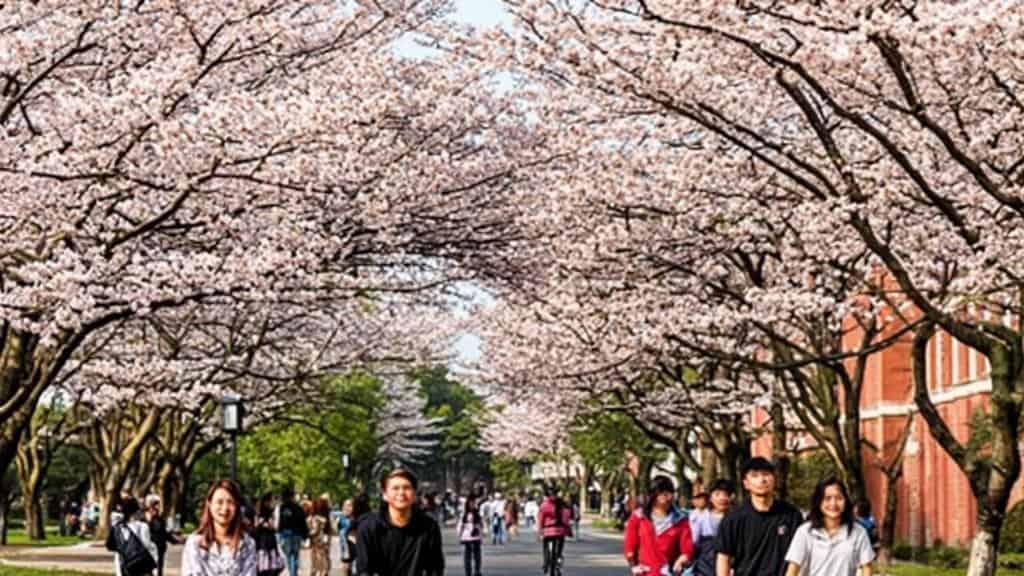
Second, the campus itself is a living laboratory. The university runs the largest agriculture museum in China. The on-campus Insect Museum holds the most extensive butterfly collection of any Chinese university (Times Higher Education, 2025). These aren’t dusty display cases. Researchers actively use these collections. Students interact with them daily.
Third, the location gives everything a different weight. Yangling isn’t just a town. It’s China’s only state-level Agricultural High-tech Industries Demonstration Zone — a live testing ground for the country’s most advanced farming technology. Students here don’t just study agriculture in theory. They study it surrounded by real experiments.
The Wine School That Northwest A&F University Built — Asia’s First
Here’s the detail most people don’t know. Northwest A&F University runs Asia’s first dedicated College of Enology — established in 1994, years before wine education became trendy anywhere else on the continent.
Founded under Professor Li Hua — the first Chinese person to earn a doctorate in viticulture and enology from Bordeaux, France — the college offers Bachelor’s, Master’s, and Doctoral programs entirely focused on grape and wine (NWAFU College of Enology). There’s also a joint program: one year studying French in France, then two years training as a sommelier in Bordeaux.
For Western students, this comparison is useful. France’s Bordeaux has centuries of wine education history. Napa Valley has UC Davis. China’s equivalent is this college — built from scratch in the mid-1990s on a campus in Shaanxi. Today it coordinates joint doctoral training with universities in Spain, France, the US, Australia, Japan, Denmark, Belgium, Germany, and Canada.
Not bad for a wine school most people outside Asia have never heard of.
Why does wine education matter in an agricultural university? In short, because viticulture is one of the most demanding intersections of soil science, climate biology, and food chemistry that exists. NWAFU understood that early. The result is a program that’s genuinely unusual and — for the right student — genuinely hard to find anywhere else in the world.
Rankings That Put Northwest A&F University on the World Map
Rankings don’t tell the full story. But they’re a useful starting point, especially for international students trying to explain their choice to employers or graduate schools back home.
Here’s where Northwest A&F University stands in 2025:
- Agricultural Science: ranked 3rd globally by both U.S. News & World Report and ARWU
- Plant and Animal Science: ranked 8th globally by ARWU
- Nature Index Research Leaders: ranked 230th worldwide among all academic institutions
- Overall global ranking: 288th by U.S. News & World Report
- China agricultural university ranking: Top 3 for research and teaching quality (Wikipedia, 2025)
For context, that 3rd-place ranking in Agricultural Science puts NWAFU ahead of most European and American agricultural faculties. The Wageningen University in the Netherlands and UC Davis in the US typically appear in these same rankings. NWAFU belongs in that conversation.
The university is also part of China’s Project 985, Project 211, and the Double First-Class Construction — the three national designations that together mark a university as both elite and strategically important to the country.
What Students Actually Do at Northwest A&F University
Beyond rankings, the practical question matters most: what does studying there actually look like?
The university runs 23 colleges and departments, covering agriculture, science, engineering, economics, law, history, philosophy, and medicine. Graduate students have access to over 71 doctoral programs and 105 master’s programs. Research is woven into coursework — not treated as a separate track.
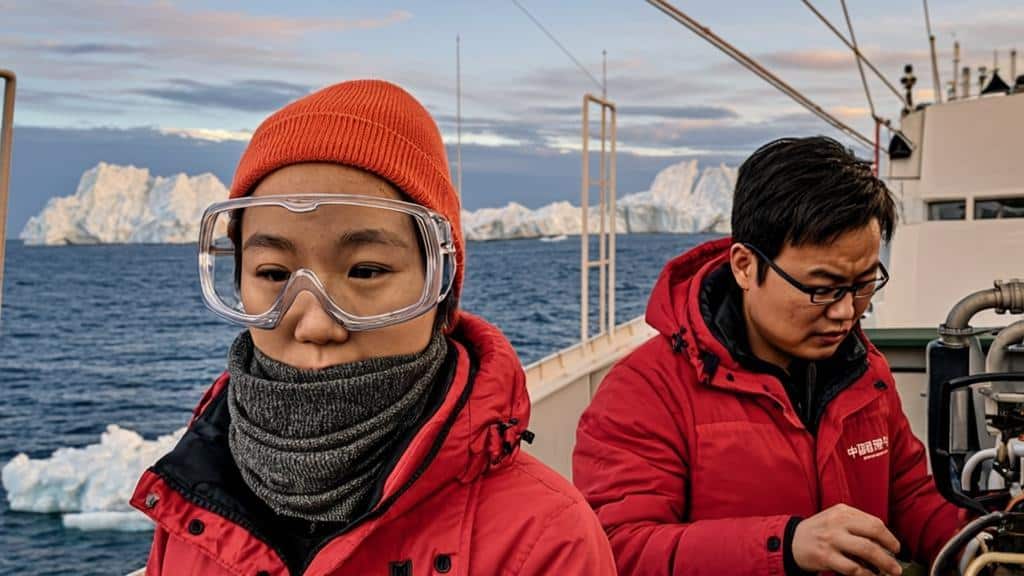
Notably, NWAFU leads the Silk Road Agricultural Education and Research Innovation Alliance. Through this initiative, it has built eight agricultural science and technology demonstration parks in countries along the Silk Road, plus four overseas talent training bases. Graduate students, particularly those in crop science, soil research, and animal genetics, often contribute directly to these projects.
For international students specifically, English-medium programs exist across multiple disciplines. The Silk Road Scholarship Scheme, for instance, offers English-taught programs in:
- Crop Genetics and Breeding
- Soil Science
- Plant Pathology
- Animal Genetics and Breeding
- Economics and Management of Agriculture
These are taught entirely in English. No Chinese proficiency required to start.
Campus facilities include 12 tennis courts, 48 basketball courts, three stadiums, and two outdoor pools. The Xiu-Shan Students Venue Centre hosts concerts, exhibitions, and cultural galas throughout the year (Times Higher Education, 2025).
Northwest A&F University Scholarships Worth Knowing About
The cost of studying at Northwest A&F University is considerably lower than equivalent programs in the US, UK, or Australia. Beyond tuition savings, several scholarship options reduce costs further — or eliminate them entirely.
Chinese Government Scholarship (CSC) — Fully Funded
This is the flagship option. It covers:
- Full tuition fees
- On-campus accommodation
- Monthly stipend: ¥3,000 for Master’s students, ¥3,500 for PhD students
Applications open annually. The agency number for NWAFU on the CSC platform is 10712 (CSC Guide Officials, 2025). Age limits apply: under 35 for Master’s, under 40 for PhD. English proficiency certificates are accepted in place of Chinese language requirements.
University Scholarship for Excellent International Students
NWAFU also runs its own internal scholarship for self-funded international students:
- Undergraduates: ¥3,200/year
- Master’s: ¥4,000/year
- Doctoral: ¥4,800/year
Both scholarships reward academic performance. They aren’t needs-based in the traditional Western sense — consistent grades and research output matter most.
How to Get Into Northwest A&F University as an International Student
The process is more straightforward than many expect.
Step 1. Complete the CSC online application form (agency number: 10712) and NWAFU’s own application portal simultaneously. Both are required.
Step 2. Prepare documents: passport copy, highest degree certificate, academic transcripts (notarized), two letters of recommendation, a study plan or research proposal, and an English language proficiency certificate.
Step 3. Pay the ¥400 application fee (approximately US$55). This is non-refundable.
Step 4. Wait 2–4 weeks for an admission result after the university receives documents.
No hard copies are required. Everything submits digitally. The application deadline for the CSC scholarship has typically been late March each year — check the official NWAFU international admissions page for the current cycle’s deadline.
One More Thing About Yangling
Before wrapping up, it’s worth sitting with the location a little longer. Yangling is 80 km west of Xi’an — the ancient capital of China, home to the Terracotta Warriors. Shaanxi Province as a whole is sometimes described as China’s “Natural History Museum.” The soil in this region has been farmed for longer than most civilizations have existed.
Studying agriculture here isn’t purely academic. It’s contextual. The land carries millennia of agricultural knowledge, embedded in its geology, its microbial communities, its traditional irrigation methods. That context shapes research questions in ways that a campus in a major modern city simply cannot replicate.
For the right student — someone drawn to food systems, sustainable farming, climate-adaptive agriculture, or China’s role in global food security — Northwest A&F University offers something genuinely hard to find elsewhere: serious global research rankings, fully funded scholarship options, and a campus built on the literal birthplace of Chinese agricultural civilization.
That combination is rarer than it sounds.
References
CSC Guide Officials. (2025). Northwest A&F University CSC Scholarship (updated). https://cscguideofficials.com/northwest-af-university-csc-scholarship-updated/
NWAFU College of Enology. (n.d.). Colleges and institutes: College of Enology. Northwest A&F University. https://en.nwsuaf.edu.cn/aboutnwafu/collegesandinstitutes/51815.htm
NWAFU Overview. (n.d.). About NWAFU: Overview. Northwest A&F University Official Website. https://en.nwsuaf.edu.cn/aboutnwafu/overview/index.htm
Times Higher Education. (2025). NorthWest A&F University profile. https://www.timeshighereducation.com/world-university-rankings/northwest-af-university
Wikipedia. (2025). Northwest A&F University. https://en.wikipedia.org/wiki/Northwest_A%26F_University