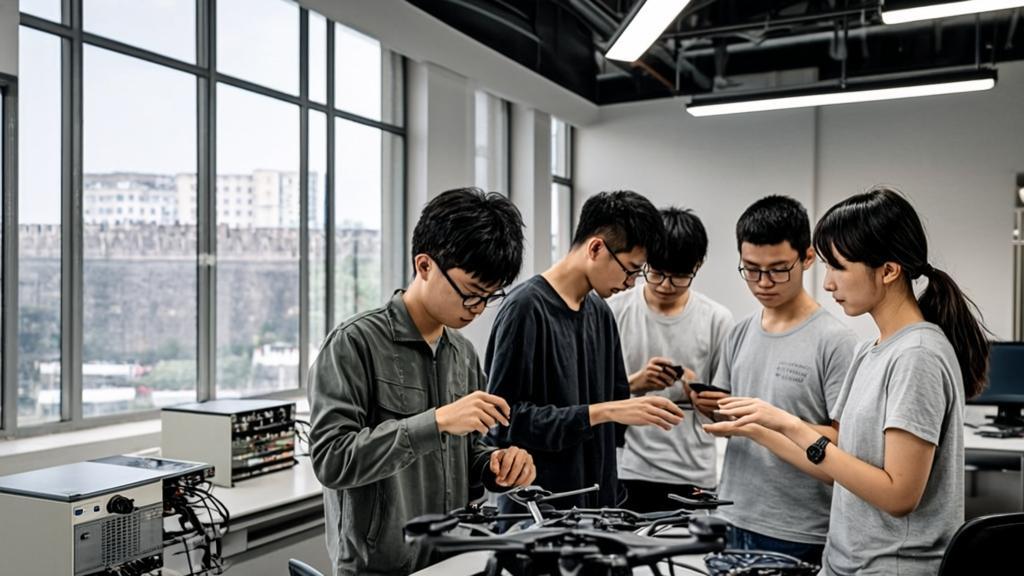
Northwestern Polytechnical University is not the kind of place most international students think of first. MIT, TU Munich, Imperial College — those names come up fast. But here is a question worth sitting with: what if you could study aerospace engineering at a university that built China’s first small unmanned aircraft, its first underwater autonomous vehicle, and its first onboard aviation computer — all within the same campus? That is not hypothetical. That is Xi’an.
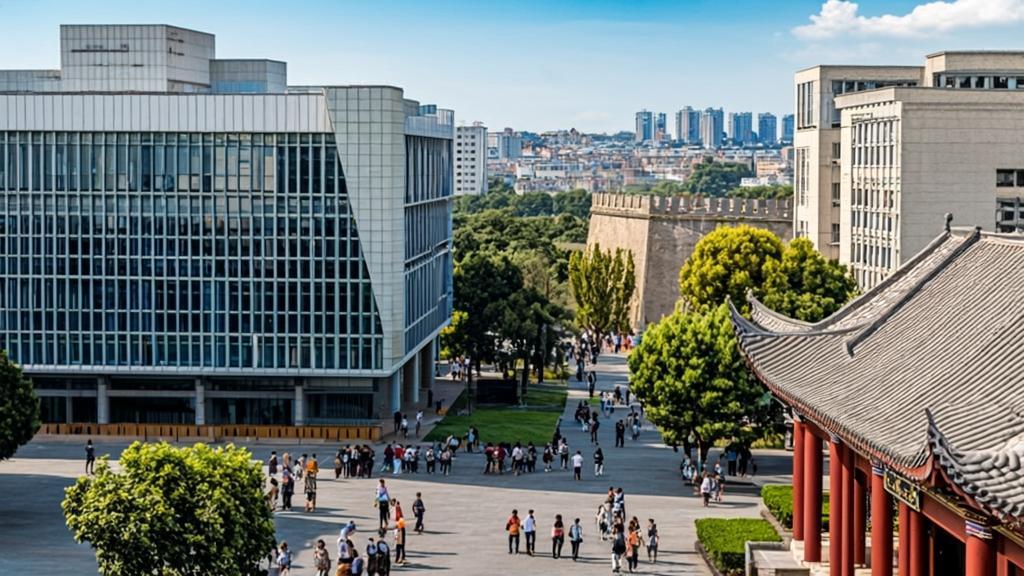
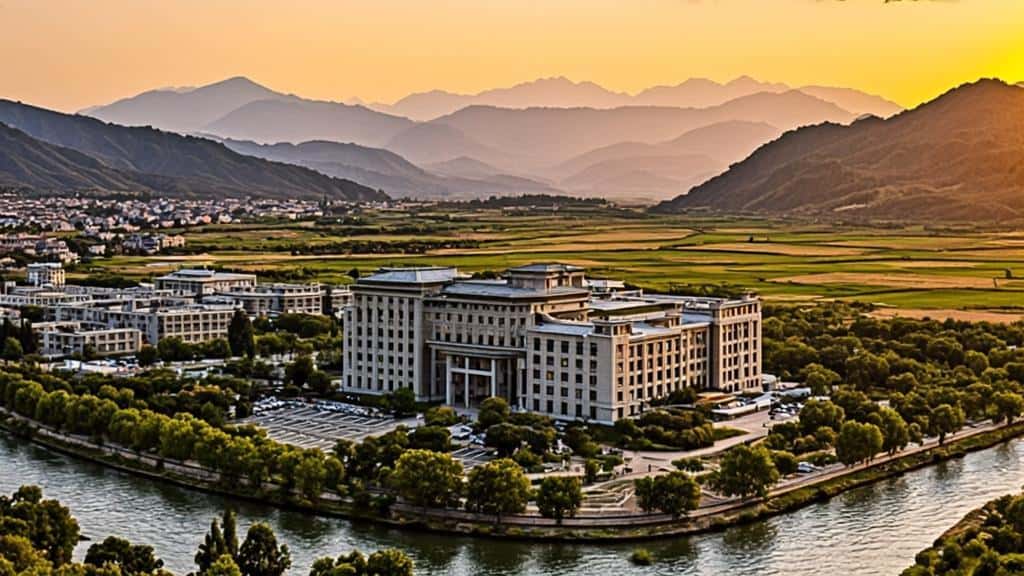
NPU (as students call it) sits in one of the world’s oldest cities. The Terracotta Warriors are 45 minutes away by bus. The campus itself opened its doors in 1938. And yet, inside those gates, students work on drone systems that appear at national military parades and research platforms that are, in several technical areas, among the most advanced in the world.
So what does a day actually look like there?
Morning: Not Just Theory — Northwestern Polytechnical University Puts You in the Lab
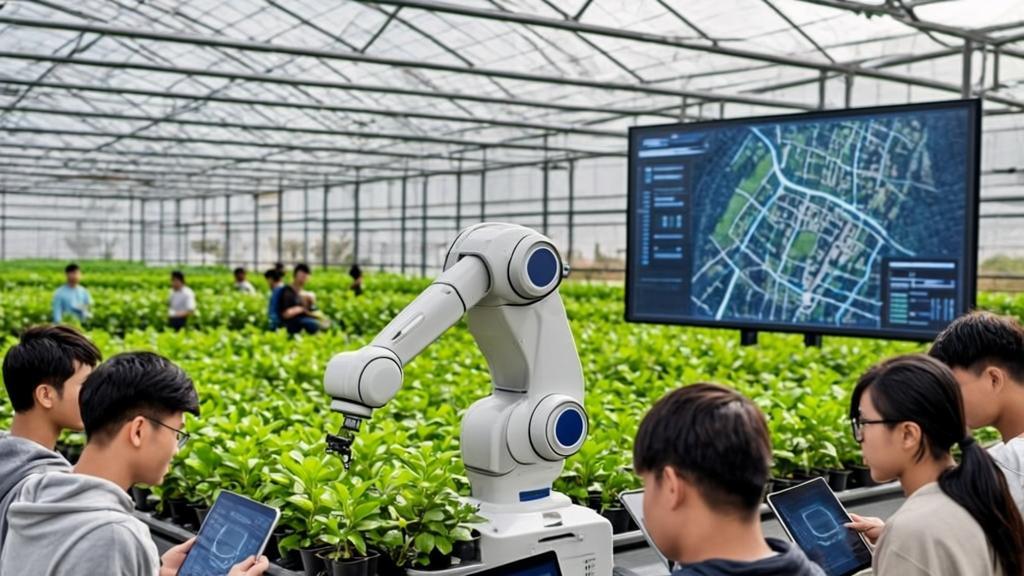
Classes at NPU do not feel like a typical lecture-and-exam cycle. The university maintains 25 open innovation practice bases for students, covering fields from aerospace technology and robotics to mathematical modelling and underwater vehicle design (Shanghai Ranking, 2024). These are not reserved for PhD candidates. Undergraduates participate too.
For international students, NPU offers 13 English-taught undergraduate programs and 77 English-taught postgraduate programs designed specifically for international students. That is a genuinely wide selection. Compare that to many European technical universities, where English programs at the undergraduate level are still limited in STEM fields.
The morning might look like this: a fluid dynamics seminar in the Aviation College, followed by lab time working on a flight simulation model. NPU’s aviation disciplines are rated A+ in China’s national subject evaluation — ranked second globally in the 2024 Shanghairanking world subject rankings for aeronautical and astronautical science. That context matters. The professors teaching those seminars are people who have worked on real aircraft programmes.
The Labs Themselves: Where the “Sci-Fi” Part Becomes Ordinary
Here is something that English-language coverage of NPU almost never mentions. The university’s drone research institute — formally established in 1984 as the “365 Institute” — has since grown into one of China’s leading unmanned systems research hubs, complete with China’s only university-level professional drone flight testing base (Zhihu, 2024).
Recent research outputs from these labs include brain-controlled UAV technology, bionic flapping-wing drones, and firefly-inspired communication systems. Not simulations. Working prototypes.
In Western terms, this might compare to MIT’s CSAIL or Caltech’s GALCIT — but with one difference. Most Western universities maintain a sharp boundary between research and student participation. At NPU, the institutional culture blurs that line more than outsiders expect. Students in the innovation centres do not just watch. They build.
Midday: A Chinese Hamburger, Then Back to Campus
Around noon, something shifts. And honestly, this is the part no official university brochure captures well.
Xi’an’s famous street food includes roujiamo (often called a Chinese hamburger) and liángpí (cold noodles). The Muslim Quarter is a bustling area filled with food stalls and restaurants, offering a wide variety of flavours and culinary delights. The Muslim Quarter is a 20-minute metro ride from campus. The food here has influences from both Central Asia and China’s northwest, reflecting the city’s long history as a hub on the Silk Road.
This is genuinely different from the student lunch experience in, say, Munich or Manchester. You are eating food shaped by 1,000 years of trade routes. The Great Mosque nearby — first built in 742 AD — is an architectural marriage of Chinese and Arabic design that exists nowhere else on earth. For international students, this is the part of the day that feels truly irreplaceable.
Campus accommodation at Northwestern Polytechnical University costs approximately RMB 15–25 per day — roughly \$2–3.50. That is, perhaps surprisingly, less than a single roujiamo and a cold noodle bowl at the market nearby.
Afternoon: Scholarship Options That Most Foreign Students Don’t Know About
Back on campus, the afternoon might involve applying for one of NPU’s scholarship programmes. This is an area where the information gap between Chinese and English sources is genuinely wide.
NPU offers multiple scholarship pathways for international students, including the NPU President Scholarship, the Xi’an City Belt and Road International Students Scholarship, the Belt and Road Aerospace Innovation Alliance Scholarship, and several Chinese Government Scholarship programmes at different degree levels.
The Chinese Government Scholarship (Type A) is the most comprehensive. It covers tuition, insurance, campus accommodation, and provides a stipend of 2,500 RMB per month. That is a full living package in Xi’an, where costs run considerably lower than in Beijing or Shanghai.
For context: a comparable full scholarship at ETH Zurich covers tuition but not living costs in one of Europe’s most expensive cities. The financial proposition here is, plainly, different.
Why Northwestern Polytechnical University Attracts Students from Over 100 Countries
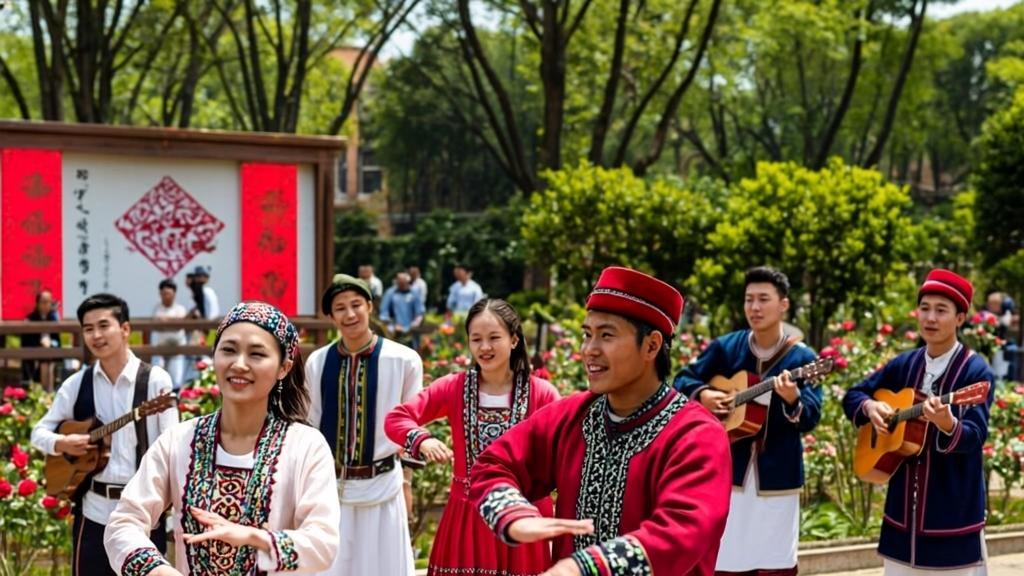
The numbers are not just marketing. NPU welcomes students from over 100 countries, and the university has developed a “Belt and Road” campus culture that feels meaningfully international rather than performatively so. Students from Central Asia, Africa, Southeast Asia, and Europe mix in lab groups and dorms. The 2026 fall admissions are currently open.
There is also the Xi’an effect. Xi’an served as the capital for over 1,000 years across 13 dynasties. This is where Emperor Qin unified China over 2,000 years ago and where the Silk Road began its legendary journey west to Rome. Living here is not just studying in a city — it is studying at the origin point of something enormous.
Compare that to studying engineering in a campus suburb of a mid-sized European city. Both are valid. But one of them offers a 14th-century city wall you can cycle along on a Sunday afternoon.
Evening: What Builds at NPU, Stays at NPU
By evening, things wind down — but perhaps not in the way you expect. Student club life at NPU includes over 100 registered clubs, from competitive robotics to a Model United Nations society. Sports teams compete at national university level; the men’s basketball team has won 16 provincial championships since 1990 (China Admissions, 2024).
But the more interesting evening story involves what graduates do next. NPU’s undergraduate employment rate has long held at approximately 97%, with a further 60% of graduates pursuing postgraduate study domestically or abroad. Those employment destinations are concentrated in China’s aerospace, defence, and technology industries — which, in practical terms, means graduates enter sectors that are actively expanding.
For foreign graduates, the question is increasingly not whether NPU credentials are recognised internationally. They are. In 2024, Northwestern Polytechnical University was listed among the world’s top 300 universities in both the Academic Ranking of World Universities and the U.S. News & World Report Best Global University Ranking. The question is whether the network and research experience built here translate. Based on what the aerospace industry looks like in 2026, they increasingly do.
Is This the Right Fit?
Northwestern Polytechnical University will not suit everyone. The city is not cosmopolitan in the way Shanghai is. Campus life requires some Mandarin beyond the English-taught programmes, particularly for social navigation. And the academic culture — rigorous, methodical, deeply practical — does not leave much room for the kind of exploratory “find yourself” approach that some Western universities quietly accommodate.
But for students who want to build things, work on real systems, live somewhere historically extraordinary, and do it without spending the equivalent of a down payment on a house — this is, somewhat quietly, one of the better-value propositions in global engineering education right now.
The Terracotta Warriors are right there. The aircraft lab is right there. The roujiamo costs about ¥12.
Sometimes the choice is less complicated than it seems.
References
Northwestern Polytechnical University International College. (2026). 2026 NPU Undergraduate Program Guide. https://studyat.nwpu.edu.cn/info/1089/2124.htm
TopUniversities. (2025). Northwestern Polytechnical University — Rankings, Fees & Courses Details. QS World University Rankings 2026. https://www.topuniversities.com/universities/northwestern-polytechnical-university
Shanghai Ranking. (2024). Northwestern Polytechnical University. Shanghai Ranking Consultancy. https://www.shanghairanking.cn/institution/northwestern-polytechnical-university
Wikipedia. (2025). Northwestern Polytechnical University. https://en.wikipedia.org/wiki/Northwestern_Polytechnical_University
NPU Aviation College. (2024). Overview of the School of Aeronautics. Northwestern Polytechnical University. https://hangkong.nwpu.edu.cn/xygk2.htm
China Admissions. (2024). PhD in Aircraft Structures and Airworthiness Technology at Northwestern Polytechnical University. https://apply.china-admissions.com/phd-aircraft-structures-and-airworthiness-techonology-at-northwestern-polytechnical-university-npu/d/pPNPUYA50/
CUCAS. (2025). Northwestern Polytechnical University. https://npu.cucas.cn/
StudyAbroad101. (2024). Study Abroad in Xi’an, China. https://www.studyabroad101.com/cities/china/xi-an