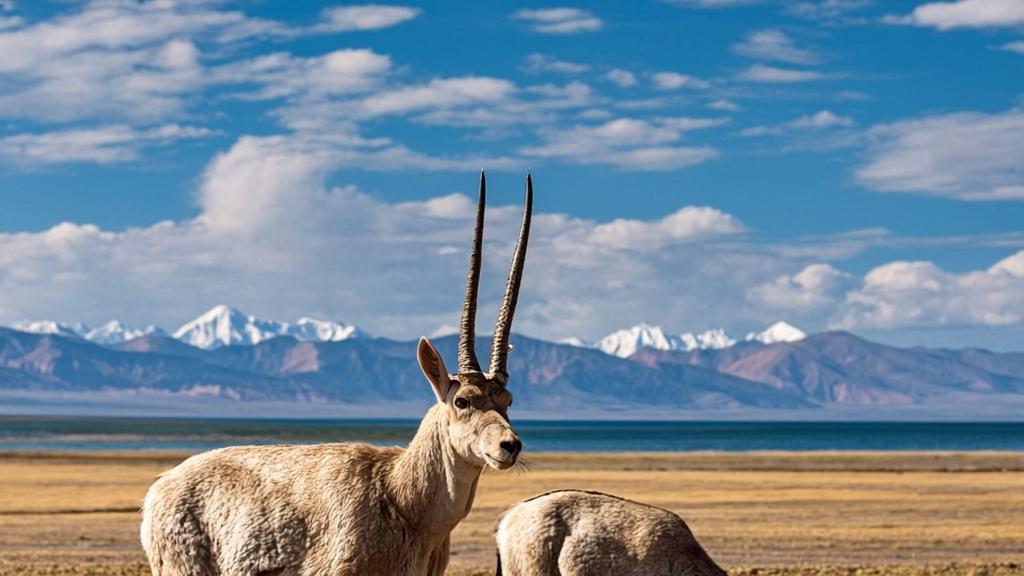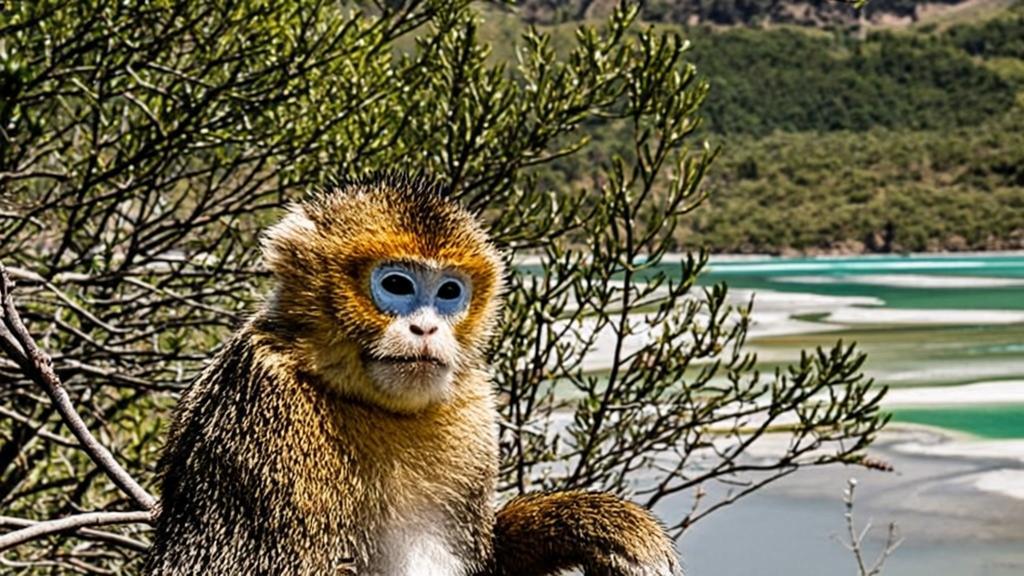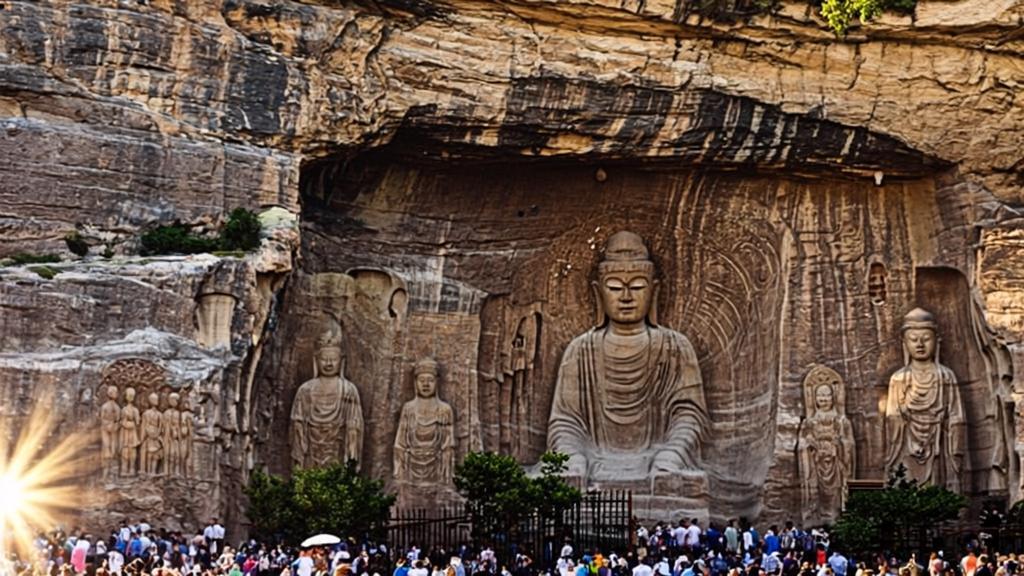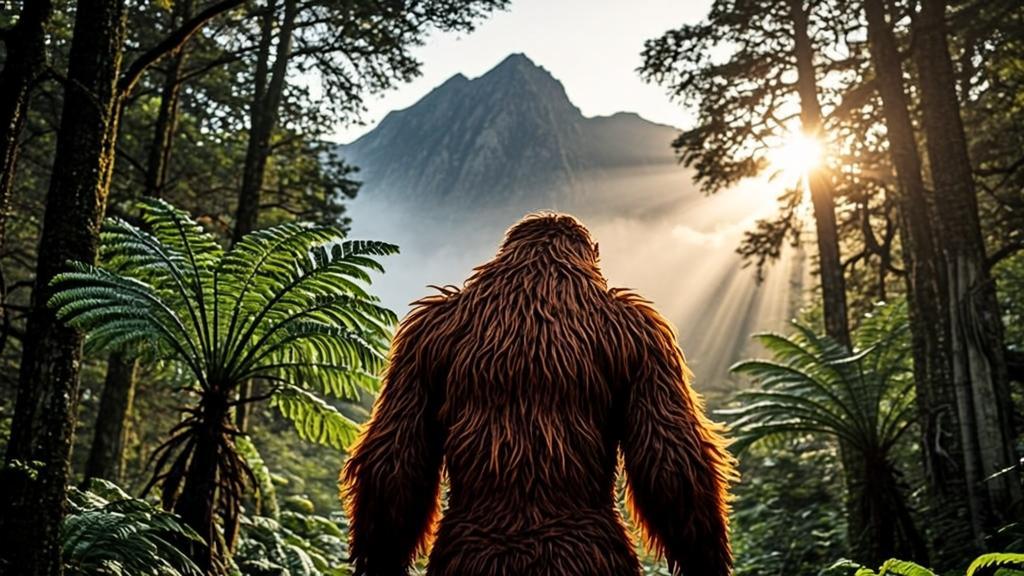
Shennongjia sits deep in the mountains of Hubei Province, central China. Most travelers know it as a UNESCO World Heritage Site — a place of dramatic peaks, ancient forests, and rare golden monkeys. Fewer know about the other reason this region keeps drawing researchers, explorers, and the genuinely curious from across the world. For centuries, something has reportedly walked these woods upright. The locals call it the Yeren.
Shennongjia’s Ancient Secret: Who Is the Yeren?
The name is direct. Ye (野) means wild. Ren (人) means person. Put them together: wild man.
Eyewitness descriptions, remarkably, stay consistent across decades and across witnesses who never met each other:
- Height: 1.8 to 2.3 meters — taller than most humans
- Hair: reddish-brown or tawny, covering the entire body
- Gait: bipedal, fully upright, not knuckle-walking like a typical ape
- Behavior: nocturnal, avoids contact, occasionally makes loud calls
Witnesses tend to agree on one more detail. The Yeren doesn’t look monstrous. It looks uncomfortably human.
A Legend With Unusually Deep Roots
This isn’t a recent campfire tale. Written records of man-like creatures in the forests surrounding Shennongjia trace back to the Warring States period, around 340 BCE. The poet Qu Yuan referenced a mountain spirit — possibly the Yeren — in his famous verse Mountain Spirit (Wikipedia, 2024). The first explicit local-gazette record appeared in 1555, in the Fangxianzhi of Fang County, a town about 90 kilometers north of Shennongjia (Sino-Platonic Papers, 2021).
By the Qing dynasty, local officials were documenting groups of Yeren living in mountain caves. These weren’t dismissed as folklore at the time. They were recorded in official administrative texts — the same documents used to report floods and harvests.
Since the early 20th century, Xinhua — China’s official state news agency — conservatively estimates over 400 recorded sightings in the Shennongjia region alone (The World of Chinese, 2019). Some independent researchers put the number considerably higher.
When Scientists Came to Shennongjia
Here is where the story becomes genuinely unusual. Between 1976 and 1981, the Chinese Academy of Sciences organized three large-scale expeditions into the Shennongjia forests (China Daily, 2021). These were not fringe operations. The 1977 expedition, led by Professor Zhou Guoxing of the Beijing Natural History Museum, sent roughly 100 members into the field — including military personnel, zoologists, botanists, and biologists.
The team collected:
- Hair samples from unknown sources
- Footprint casts, some measuring over 38 centimeters in length
- Eyewitness testimonies from park rangers and local residents
- Fecal samples suspected to belong to an unknown primate
Results were inconclusive. No specimen was captured. Zhou later concluded that most footprints probably belonged to bears (Ancient Origins, n.d.). However, one cast collected during the 1980 follow-up expedition didn’t match any known local animal — not a bear, not any known ape, not a human (Meldrum & Guoxing, 2012).
The expeditions had one well-documented side effect, though. During the 1977 mission, scientists discovered the golden snub-nosed monkey in Shennongjia — a real, endangered primate that was completely unknown to science in this region. A search for a legend produced a genuine zoological find.
In 2016, Hubei Province formally added the Yeren legend to its intangible cultural heritage list (China Daily, 2021). The government no longer claims the creature exists. Still, local authorities preserve the story as a cultural asset. That’s a carefully calibrated position — not quite belief, not quite dismissal.
Yeren, Bigfoot, Yeti: A Pattern Worth Examining
This is where the cross-cultural comparison becomes fascinating. The Yeren is not unique to China. Every major inhabited region of the world has produced a nearly identical legend:
| Name | Region | Shared Traits |
|---|---|---|
| Bigfoot / Sasquatch | North America | Bipedal, large, reclusive |
| Yeti | Himalayan mountains | Ape-like, cold-adapted |
| Almas | Central Asia / Caucasus | More human in appearance |
| Yeren | Central China | Reddish-brown hair, upright gait |
The consistency is striking. These cultures had no documented contact with each other when the legends first emerged. So what explains the pattern?
One hypothesis involves Gigantopithecus blacki — a massive prehistoric ape that lived in southern China and parts of Southeast Asia, likely going extinct around 300,000 years ago. Fossilized jaw bones and teeth have been found in the same region as Shennongjia. Some researchers, including members of China’s Committee for Strange and Rare Animals, have suggested that small relict populations might have survived into historical memory (SCMP, 1995; Ancient Origins, n.d.).
No one has confirmed this. But, notably, similar thinking once surrounded pandas. Yuan Zhenxin, an anthropologist at the Beijing Review, made the comparison directly in 2007: explorers who never entered Sichuan’s forests would have found no pandas either (Ancient Origins, n.d.). Discovery sometimes takes time.
Furthermore, the Shennongjia region sits at latitude 31°N — the same latitude as the Bermuda Triangle, the Egyptian pyramids, and the Bermuda Basin. Scientifically, this latitude preserves the world’s only remaining large tract of original mid-latitude virgin forest. Something about its geography made it a refuge during past ice ages. The argument for unusual species surviving here is not entirely without foundation.
Beyond the Legend: What Shennongjia Actually Contains
Even setting the Yeren aside entirely, this park is extraordinary. It holds four simultaneous international designations — a distinction no other site in China shares:
- UNESCO World Natural Heritage Site — inscribed July 17, 2016
- UNESCO Man and Biosphere Reserve — established 1990
- UNESCO Global Geopark — designated 2013
- Wetland of International Importance
According to UNESCO’s official listing, the park protects 3,767 species of vascular plants, more than 600 vertebrate species, and 4,365 species of insects (UNESCO, 2016). The highest peak, Shennongding, reaches 3,106 meters — the tallest point in central China. Forest coverage across the park’s 3,253 square kilometers sits above 91%.
The golden snub-nosed monkey population, once as low as 500, has recovered to over 1,300 individuals (China Daily, 2018). Clouded leopards, Chinese giant salamanders, and Asian black bears also live within the reserve boundaries.
For those drawn to the Yeren specifically, the park maintains Wild Man Cave — a documented sighting location — along with museum exhibits at Guanmen Mountain that treat the legend with academic seriousness rather than carnival showmanship.
Getting to Shennongjia: Practical Information
Access has improved substantially in the past decade. Options now include:
- By air: Shennongjia Hongping Airport (opened 2014), with direct flights from Wuhan, Shanghai, and Chongqing
- By high-speed rail: Bullet train from Wuhan to Xingshan Railway Station (approximately 3 hours), then around 1.5 hours by car to Muyu Town
- By bus: Direct coaches from Wuhan, Yichang, and Shiyan
Most travelers base themselves in Muyu Town, the main tourist hub near the park’s southern entrance. A two- to three-day itinerary covers the key sites comfortably.
Best times to visit:
- May–June: Rhododendron season; peak color across the ridgelines
- July–August: Average temperatures around 18–22°C — a genuine escape from China’s lowland summer heat
- September–October: Autumn foliage at its most dramatic
- December–February: Snow season; Shennongjia International Ski Resort opens
A combo ticket covering five scenic areas costs CNY 159 and remains valid for five days. The Shennongding scenic area caps daily visitors at 14,800 to protect the environment — booking ahead during holidays is worth doing (China Daily, 2018).
The Mystery Is Part of What Makes Shennongjia Worth Visiting
Shennongjia earned its UNESCO designation based entirely on what scientists can verify — biodiversity, preserved primary forest, and a critical refuge for endangered species. The case for going there doesn’t need anything else.
Yet the enduring draw, particularly for international travelers, rests partly on what remains unresolved. The question of the Yeren pulls people into these forests. They walk the same mountain roads where a park ranger, Yuan Yuhao, reported seeing a reddish-brown creature stand and walk away on two legs in 1994 — a man with over 15 years of experience who had no explanation for what he observed (Meldrum & Guoxing, 2012).
They stand at the edge of 3,000 square kilometers of forest that has barely changed since the Warring States period, looking at tracks in the soil that scientists collected and couldn’t fully explain.
Some places earn their mystery. Shennongjia is one of them.
References
Ancient Origins. (n.d.). Wildman, Chinese version of Bigfoot: Sightings, scientific tests, theories. https://www.ancient-origins.net/unexplained-phenomena/wildman-chinese-version-bigfoot-sightings-scientific-tests-theories-003410
China Daily. (2018, May 4). Shennongjia UNESCO site limits daily visitor number. https://www.chinadaily.com.cn/a/201805/04/WS5aec5480a3105cdcf651c0f5.html
China Daily. (2021, November 20). Shennongjia’s real beauty is more than just a myth. https://www.chinadaily.com.cn/a/202111/20/WS6198621da310cdd39bc767e2.html
Meldrum, J., & Guoxing, Z. (2012). Footprint evidence of Chinese Yeren. Idaho State University Brief Communications, 1, 57–66. https://www.isu.edu/media/libraries/rhi/brief-communications/Footprint-Evidence-of-Chinese-Yeren.pdf
Sino-Platonic Papers. (2021). The wildman of China: The search for the Yeren. https://sino-platonic.org/complete/spp309_chinese_wildman.pdf
South China Morning Post. (1995, September 1). In search of the wild man. https://www.scmp.com/article/129943/search-wild-man
The World of Chinese. (2019, February). Where the wild things are. https://www.theworldofchinese.com/2019/02/where-the-wild-things-are-2/
UNESCO World Heritage Centre. (2016). Hubei Shennongjia. https://whc.unesco.org/en/list/1509/
Wikipedia. (2024, January 18). Yeren. https://en.wikipedia.org/wiki/Yeren