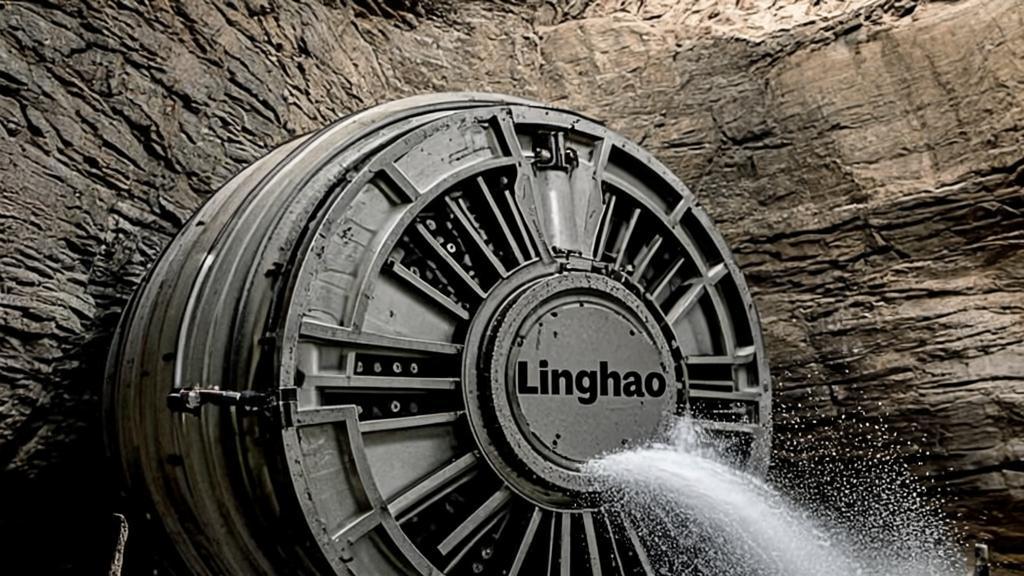
The Chongtai Yangtze River Tunnel just crossed a milestone that most engineering teams only dream about. On March 29, 2026, the world’s largest-diameter high-speed rail TBM — known as “Linghao” (领航号) — completed its 11.18-kilometer underwater crossing beneath the Yangtze River. That’s 23 months of drilling, 89 meters below the river surface, in one of the busiest shipping lanes on earth.
No slowdown. No bridge. Just a train passing silently under China’s most iconic river at 350 km/h.
If you’re doing business along China’s Yangtze corridor, or planning to study or travel here, this matters more than you might expect.
What Exactly Is the Chongtai Yangtze River Tunnel?
The tunnel connects Chongming Island (Shanghai) to Taicang (Jiangsu Province). It forms the critical bottleneck section of the Shanghai–Nanjing–Hefei High-Speed Railway — part of the broader Hu-Yu-Rong (沪渝蓉) along-the-Yangtze rail corridor stretching roughly 2,000 kilometers from Shanghai all the way to Chengdu (Xinhua, 2025).
Some fast numbers:
- Total tunnel length: 14.25 km
- Underwater boring distance: 11.325 km (world record for a single-bore high-speed rail tunnel)
- TBM cutter head diameter: 15.4 meters (also a world record)
- Maximum depth below the river: 89 meters
- Design speed: 350 km/h — the world’s fastest underwater rail tunnel once operational
- Expected opening: 2029
For comparison, the Channel Tunnel between England and France runs trains at 160 km/h underwater. The Chongtai Yangtze River Tunnel will do more than double that speed.
How Did They Actually Drill This Thing?
Fair question — and the answer is genuinely fascinating.
“Linghao” is a slurry pressure-balance TBM. Think of it as a five-story rotating steel cylinder grinding through rock and silt, sealing the void behind it with precast concrete segments as it goes. The machine is 148 meters long, weighs roughly 4,000 tonnes, and carries onboard systems that monitor pressure, ground conditions, and structural stability in real time (China Railway Tunnel Group, 2025).
The biggest challenge? Water pressure. At 89 meters below the river surface, the machine faced a soil-water pressure of 1.02 megapascals — equivalent to roughly 10 atmospheres. That’s like running a construction site at the bottom of a lake. A deep one.
The team solved it with what they call Intelligent Construction V2.0 — an AI-assisted system that manages autonomous boring and automated segment assembly. In the best months, “Linghao” averaged 600 meters of progress. Its single-month record hit 718 meters, setting a global benchmark for 15-meter-class TBMs (China Railway Tunnel Group, Kuaishou account, 2025).
Meanwhile, a second machine — the vertical shaft borer “Qimingxing” (启明号), with a 24-meter excavation diameter — was deployed to dig the retrieval shafts. On January 30, 2026, it completed its 56-meter shaft in the same month it was launched. Another record (Baidu Baike, 2026).
Why a Tunnel Instead of a Bridge?
Previous high-speed rail lines crossing the Yangtze used bridges. The Beijing–Shanghai line uses the Nanjing Dashengguan Bridge. The Beijing–Guangzhou line uses the Wuhan Tianxingzhou Bridge.
So why did engineers go underground for this crossing?
Three reasons stand out:
1. Shipping traffic. The Yangtze near Shanghai is one of the busiest inland waterways on earth. A bridge would require height clearance for cargo ships — and periodic closures for safety. A tunnel has zero impact on surface navigation.
2. Ecological protection. This stretch of the Yangtze sits within the National-Level Aquatic Germplasm Resource Conservation Zone for Yangtze Coilia — a protected habitat for the Yangtze river icefish. A bridge would fragment the corridor. The tunnel left no surface footprint (China News Service, 2026).
3. All-weather construction. Unlike bridge construction, underground boring isn’t stopped by rain, typhoons, or high winds. That matters in this climate zone.
The result is actually the harder engineering choice, chosen specifically because it was the more responsible one.
What It Means for Business in Central China
Here’s where things get interesting for anyone watching China’s economic geography.
The full Hu-Yu-Rong corridor will link three major city clusters in one continuous 350 km/h spine:
- Yangtze River Delta (Shanghai, Nanjing, Hefei)
- Middle Yangtze (Wuhan, Changsha)
- Chengdu-Chongqing (成渝)
When complete, Shanghai to Chengdu will take under 7 hours — down from around 14+ hours by current routes (Sina Finance, 2026).
That compression of distance reshapes supply chains. Specifically:
- Manufacturing clusters in Chongqing and Chengdu gain faster access to Shanghai’s port and financial infrastructure.
- Research institutions — the corridor will connect nearly 40% of China’s national key laboratories (China News Service, 2026).
- Talent mobility increases. A Wuhan-based engineer can realistically work from a Shanghai co-working space twice a week. The “1-hour commuter zone” between Chengdu and Chongqing becomes real.
For foreign businesses operating in the region, this is the kind of infrastructure shift that quietly re-prices everything from logistics costs to office location decisions. The Yangtze Economic Belt already accounts for roughly 46% of China’s GDP. Better connectivity means the interior cities — not just coastal ones — become viable options for regional headquarters.
A Western Parallel: The Channel Tunnel’s Effect on European Business
It’s worth drawing a comparison here. When the Channel Tunnel opened in 1994, skeptics questioned whether it would change much — after all, ferries already crossed the English Channel.
What actually happened was subtler. Business travel between London and Paris became casual in a way it hadn’t been before. Companies started treating the two cities as a single labor market for certain roles. Property prices in Kent, the English county closest to the tunnel, shifted. Small manufacturers in northern France gained logistics options they didn’t previously have.
The Chongtai Yangtze River Tunnel is likely to produce similar second-order effects — not immediately visible, but structurally transformative over the following decade. The difference is scale. The Channel Tunnel connects two countries with a combined population of around 130 million. The along-the-Yangtze corridor connects urban clusters with a combined population closer to 600 million.
What Comes Next for the Chongtai Yangtze River Tunnel
As of April 2026, the boring phase is done. Construction crews are now installing interior structures, including drainage channels and the track slab base. Full tunnel breakthrough — connecting both ends — is expected by the end of 2026. Track laying and systems integration follow. The line opens in 2029 (Tencent News, 2026).
Other sections of the along-the-Yangtze corridor are advancing in parallel:
- The Wuhan–Yichang segment opened in late 2025 — the first completed section of the full route.
- The Chengdu–Chongqing mid-line (成渝中线) is targeting a top speed of 400 km/h, which would make it the world’s fastest scheduled rail service.
- The Jialingjiang Grand Bridge on the Chengda-Wan high-speed railway completed its main arch in early 2026.
The total investment across the full Hu-Yu-Rong corridor exceeds 500 billion yuan (~$70 billion USD).
Practical Takeaway for Travelers and Business Visitors
If you’re visiting China before 2029, the Chongtai Yangtze River Tunnel won’t be open yet. However, several things are worth knowing now:
- Chongming Island — currently accessible only by road tunnel or ferry — will have its first high-speed rail connection in 2029. The island is already developing as an ecological tourism and high-tech zone.
- Taicang, on the Jiangsu side, is one of China’s largest German business communities. The tunnel will sharply reduce travel time between Taicang’s industrial parks and Shanghai’s city center.
- The along-the-Yangtze corridor as a whole is already partially operational. The Wuhan–Yichang section is running. Planning business trips along this corridor now, with 2029 in mind, is worth doing.
China’s high-speed rail network already covers over 45,000 kilometers — more than the rest of the world combined. The Chongtai Yangtze River Tunnel is the next chapter in that story, just written 89 meters below the waterline.
References
China News Service. (2026, April 1). 长江水下,将通高铁!中国”东西大动脉”要来了 [High-speed rail will pass under the Yangtze! China’s east-west artery is coming]. https://www.chinanews.com.cn/gsztc/2026/04-01/10596348.shtml
China Railway Tunnel Group / Sohu. (2025, December 17). “领航号”盾构机掘进崇太长江隧道突破万米 [Linghao TBM breaks 10,000-meter mark in Chongtai Yangtze Tunnel]. https://www.sohu.com/a/966195214_121613636
Sohu Tech. (2026). 如何评价崇太长江隧道建成后将实现高铁穿越长江不减速? [How to evaluate the Chongtai Yangtze Tunnel’s no-speed-reduction crossing?]. https://www.sohu.com/a/1003081921_122655735
Baidu Baike. (2026). 崇太长江隧道 [Chongtai Yangtze River Tunnel]. https://baike.baidu.com/item/%E5%B4%87%E5%A4%AA%E9%95%BF%E6%B1%9F%E9%9A%A7%E9%81%93/62086583
Guangming Daily / GMW. (2026, March 30). 成都⇋上海,这条从长江水下经过的高铁迎新进展 [Chengdu to Shanghai: New progress on the Yangtze underwater high-speed rail]. https://m.gmw.cn/2026-03/30/content_1304397502.htm
Sina Finance. (2026). 沿江高铁建设提速 [Along-the-Yangtze high-speed rail construction accelerates]. https://www.sina.cn/news/detail/5282273479361283.html
Tencent News. (2026, March 30). 上海崇明线预计年底通车,30分钟直达浦东 [Shanghai Chongming line expected to open by year-end, 30 minutes to Pudong]. https://news.qq.com/rain/a/20260330A04H4F00