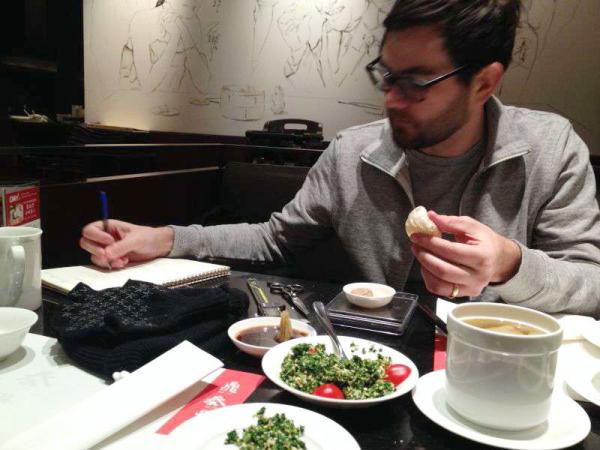
Chinese cultural customs are not museum exhibits. It is hidden in the fireworks of ordinary days. In the early morning, Lane Lane Lane, an early stand steamer with white fog. The white fog may be filled with the gentleness of southern people. They like to eat rice dumplings in the morning. During the Spring Festival, the doors and windows are pasted with red paper. On the red paper are engraved the wishes of ancestors. These customs are connected with the four seasons. They also maintain intergenerational emotions. Let every ordinary day have a sense of exclusive ceremony. I mean, it’s not a blunt rule. It is a life rhythm integrated into the blood. It is a unique way for Chinese people to get along with the world.
February 2: Spring prayer in Chinese cultural customs
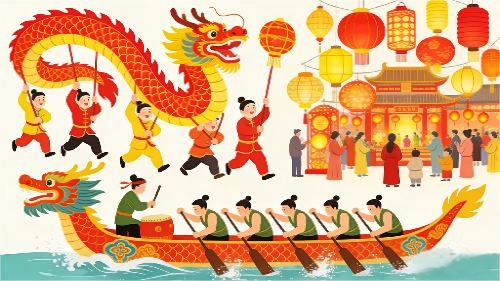
February 2 of the lunar calendar, commonly known as “dragon head”. The customs of this day can always make spring lively. In the Tulou in Nanjing, Fujian Province, the sound of gongs and drums was heard early. It was the sound of the dragon and lion dance. The Dragon follows the Dragon bead. The lion dancers rise and fall on the beat. The puppet raises the brush steadily. Write down the blessing of “dragon head, good color head”. It attracted adults and children to stop.
The customs of different regions have their own charm. There must be a bowl of stewed pork head on the dining table of the Changzhi people in Shanxi. Local people call it dragon food. I’m looking forward to the great fortune in the new year. Villagers in Longzhou, Guangxi, are busy making five-color glutinous rice. The natural pigment is extracted from ginger and Mimosa. Color the glutinous rice. There is the expectation of a good harvest.
The most interesting is the “shaving head” custom. There was always a long line in the barber shop on this day. Parents bring their children to have their hair cut. Looking forward to the spirit of a year. In fact, the specific forms of these customs may not matter. Let the beginning of spring ploughing have a warm sense of ceremony (China Youth Network, 2,025). Professor Xiao Fang said that traditional festivals such as the Spring Festival embody a sense of time renewal. It makes Chinese people feel happy when they leave the old and welcome the new. This emotion is interlinked (China Net, 2,025).
The symphony of the Spring Festival: the collision of tradition and Modernity
If February 2 is a prelude to spring. The Spring Festival is the annual celebration of Chinese cultural customs. From the beginning of Laba, customs began the year. First, marinate the eight garlic. Then drink Laba Congee. Then there was Xiaonian to sacrifice the kitchen stove and sweep the dust. Until New Year’s Eve, the reunion dinner reached a climax. After that, the lights of the Yuanxiao (Filled round balls made of glutinous rice flour for Lantern Festival) festival were dim. A whole set of customs are closely linked. It is often believed that the Spring Festival has drawn a picture of the spirit of Chinese civilization. It interprets the vision of harmony between man and nature. also nourishes the harmonious social atmosphere (China Net, 2,025).
But traditional customs are changing quietly. In the past, the Spring Festival couplets were written by hand. Nowadays, many people buy printed materials. Some people even decorate their doors with electronic Spring Festival couplets. In the past, we had to visit people from door to door. Now, WeChat New Year’s greetings and video blessings have become a new trend. The Ditan Temple Fair in Beijing blends tradition with modernity very well. The Temple Fair has been held 36 times. There are not only traditional social fire performances. It also joined new forms such as cultural and creative fairs and online live broadcasting (China Net, 2,025). Perhaps this is the vitality of customs. It will never stagnate. Always find a way to keep pace with the times.
The taste of overseas Spring Festival: the world resonance of Chinese cultural customs
With the deepening of cultural exchanges, Chinese cultural customs are spreading around the world. The Spring Festival is the most representative custom. It has been listed on the UNESCO intangible cultural heritage list. Nearly 20 countries in the world have designated the Spring Festival as a legal holiday. About 1/5 of the population will celebrate in different forms (China Net, 2,025). In overseas Chinatown, there are always activities during the Spring Festival. Dragon and lion dance and Spring Festival couplets. Attract local people to participate.
I saw it in a documentary. The Chinese community in New York will hold a spring festival parade. Red lanterns are hanging all over the subdistrict. Local people learn to write “Fu”. Taste dumplings and rice cakes. A foreign friend said, “The lively atmosphere of the Spring Festival is very infectious. The idea of reunion reminds me of the time I spent with my family.” This is probably the charm of Chinese cultural customs. It carries the concept of family harmony, life, and beauty. These are the common pursuits of humanity.
UNESCO has stressed that. Intangible cultural heritage is closely related to sustainable development. The spring festival customs provide valuable experience for the protection of intangible cultural heritage around the world (China Net, 2,025). The relevant international communication let the world see the image of China. It also promoted exchanges and mutual learning among different civilizations. Interested readers can click on the link. Learn more about the cultural connotation behind the customs. Links: http://www.cssn.cn/skgz/bwyc/202504/t20250430_5872028.shtml (the contemporary value and inheritance, and innovation path of Chinese excellent traditional culture of China Social Science Network).
The background of Customs: cultural genes hidden in details
In fact, the core of Chinese cultural customs is not a trivial ceremony. It’s the spiritual core behind it. Some scholars believe that the excellent traditional Chinese culture has a core connotation. Including the concepts of “benevolence”, “courtesy”, and “harmony” (China Social Sciences Network, 2,025). These ideas are hidden in the details of customs. Spring Festival greeting is a respect for the elders. It embodies “etiquette and justice”. Eating mooncakes in the Mid-Autumn Festival is a yearning for reunion. Highlight “harmony”. The tomb sweeping and ancestor worship in the Qing Dynasty are a memorial to our ancestors. It carries “benevolence”.
These customs make abstract cultural ideas concrete. When I was a kid, I learned how to make Zongzi with my elders. The elder will tell the story of Qu Yuan. Let’s understand patriotic feelings. During the Spring Festival, listen to the legend of the elder. In fact, it is conveying the truth of facing difficulties bravely. In other words, customs are the “living fossil” of culture. It delivers history, morality, and emotion from generation to generation. It shapes the spiritual characteristics of the Chinese nation.
Of course, the inheritance of Customs will encounter challenges. The pace of modern life is fast. Many young people think that traditional customs are complicated. Not willing to participate. But in fact, finding the right way can attract young people. For example, some people make traditional Paper Cuttings into cultural and creative products. Some people use short videos to record the process of custom production. These innovations rejuvenate customs.
The temperature of inheritance: let customs live in the moment
To protect Chinese cultural customs, there is no need to go back to the ancients. It should be integrated into the current life. The old people in the family always said, “The festival should have a festival-like appearance.” This “appearance” is the sense of ceremony brought by customs. Maybe we don’t have to follow all the old rules. But the details with the most temperature can be preserved. During the Spring Festival, I pasted Spring Festival couplets with my family. During the Mid-Autumn Festival, share mooncakes with friends. In the Dragon Boat Festival, I learned to pack several Zongzi.
Schools and society can provide more guidance. For example, primary and secondary schools set up folk arts and crafts courses. Let children make lanterns and Paper Cuttings by hand. The community held folk activities. Let the neighborhood feel the charm of Customs through participation. Professor Lu said that the success of applying for the world heritage is a new beginning for intangible cultural heritage inheritance. The key is to find the connection point between traditional culture and modern life (China Net, 2,025).
Chinese cultural customs are not static antiques. It’s a fluid life. It’s a link between us and the past. It is also a bridge to the future. It’s hidden in the fireworks. Hide in the details. Warm our daily life. I hope we can understand the code behind the customs. Continue to pass on the warmth and inheritance. Let every day be more profound and meaningful because of these cultural imprints.
reference:
China Youth Network (2,025, March 2). The strong sense of ceremony in the folk feast “Laman” traditional festival contains the people’s deep expectation for a happy life http://m.toutiao.com/group/7477064024611275274/?upstream_biz=doubao
China Net (2,025, January 26). Spring Festival: the symphony of traditional and modern (Cultural China trip · cultural dialogue) http://m.toutiao.com/group/7464044830197285395/?upstream_biz=doubao
China Social Sciences Network (2,025, April 1). Contemporary value and inheritance, and innovation path of Chinese excellent traditional culture http://www.cssn.cn/skgz/bwyc/202504/t20250430_5872028.shtml