The Old Town of Lijiang sits at 2,400 meters above sea level in China’s Yunnan Province. It has no city wall. That choice was deliberate — and it turns out to be one of the most fascinating stories in Chinese urban history. Over 800 years later, this UNESCO World Heritage Site is still standing, still inhabited, and still full of life. So the question is: what exactly makes it so enduring?
What Sets the Old Town of Lijiang Apart From Every Other Ancient City
Most ancient Chinese cities were built with defensive walls. Lijiang was not. According to local history, the ruling Mu family refused to build walls because adding a border to the Chinese character “木” (Mù, meaning “wood”) creates the character “困” (kùn) — meaning “trapped.” They refused to be trapped.
That philosophy extended to the town’s design. The Old Town of Lijiang adapted itself to the uneven topography of its site and has retained a historic townscape of high quality and authenticity. Its architecture is noteworthy for the blending of elements from several cultures that have come together over many centuries.
In Western terms, think of it like a medieval European market town — Bologna or Bruges — but layered with Tibetan, Han, Bai, and Naxi cultural influences all at once. No single dominant style. Instead, centuries of trade, migration, and exchange produced something genuinely hybrid.
Since the 12th century, the Old Town of Lijiang served as an important goods distribution center for trade between Sichuan, Yunnan and Tibet, becoming the point where the southern Silk Road meets the Ancient Tea and Horse Roads. That crossroads identity shaped everything — its architecture, food, music, and writing system.
The Ancient Water System That Still Works Today
Here is something that rarely gets mentioned in travel blogs: Lijiang also possesses an ancient water-supply system of great complexity and ingenuity that still functions effectively today.
The Naxi people engineered a “one well, three openings” system. The top tier of each well provided drinking water. The middle tier was for washing food. The bottom tier was reserved for washing clothes. This tiered hierarchy kept the water clean across an entire town — without modern plumbing.
Over 300 bridges cross the Yuhe River system in the town, with many constructed during the Ming and Qing dynasties. These bridges aren’t decorative. They form a functioning urban grid, connecting neighborhoods across a network of canals.
Compare this to Venice, which Western visitors often describe as the gold standard of canal cities. Lijiang actually earned the nickname “Venice of the East.” But unlike Venice — which is slowly sinking — Lijiang’s water system remains fully operational, fed naturally by the Black Dragon Pool to the north.
Dongba Script: The World’s Last Living Hieroglyphic Language
This is arguably the single most remarkable thing about the Old Town of Lijiang that most visitors don’t fully appreciate.
The language used by the Naxi people in compiling their scriptures is Dongba — the world’s only living language that still uses hieroglyphics. Literally meaning “knowledge,” it is the main vehicle of the traditional culture of the Naxi people.
Walk through the old town and you will spot Dongba symbols on shop signs, carved into doorways, and printed on handmade paper. This type of writing has been recognized as the oldest complete hieroglyphic writing in the world that is still in existence — the “living fossil” of the beginning of human writing and development.
To put this in perspective: Egyptian hieroglyphics died out around the 4th century AD. Dongba script is still used by Naxi priests today.
Why Dongba Matters to Visitors
Western visitors often encounter ancient scripts only in museums — behind glass, untranslatable, frozen in time. Dongba is different. It is still transmitted between living people. With fewer than 50 fluent Dongba scribes left, as noted by the Chinese Academy of Social Sciences, experiences with this craft are a rare glimpse into a fading art.
Several cultural centers in the old town offer Dongba calligraphy workshops. You can ask a Dongba priest — a Naxi spiritual leader — to write a blessing for you in pictographs. That is not a tourist performance. It is a genuine act within an unbroken cultural tradition.
Five Things to Do in the Old Town of Lijiang That Most Tourists Miss
Most visitors walk Sifang Street, photograph the water wheel, and move on. That is a shame. Here is what rewards slower, more curious travel:
1. Follow the canal system at dawn. Before the crowds arrive, trace the Yuhe River upstream from the town center. The water flows clear. Locals wash vegetables at the three-tiered wells. The cobblestones glow wet.
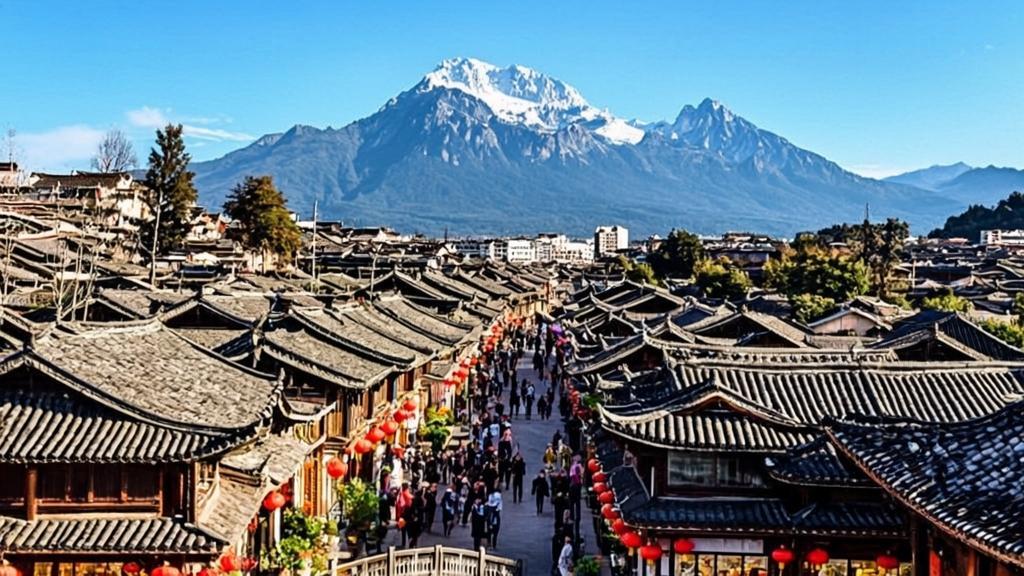
2. Climb Lion Hill at sunset. From Wangu Tower at the top of Lion Hill, you get a sweeping panorama of tiled rooftops stretching toward the dramatic backdrop of Jade Dragon Snow Mountain. Sunset here is especially magical — the whole old town glows.
3. Attend a Naxi Ancient Music concert. Naxi Ancient Music blends Taoist cave scripture music, Confucian classical music, and Naxi folk melodies. Some of the musicians are older men who learned these pieces as children. The instruments include instruments found nowhere else in China.
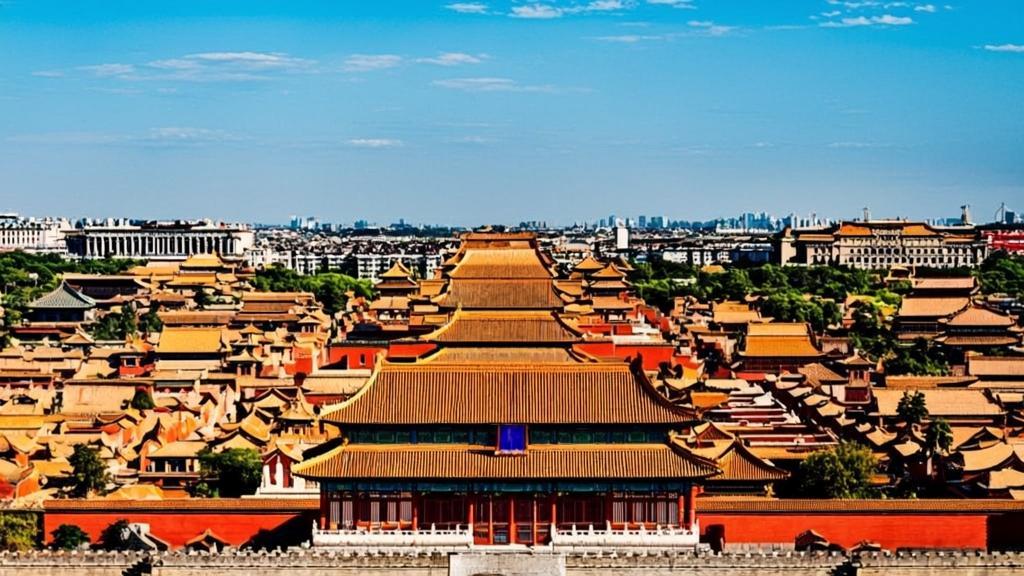
4. Visit Mu’s Residence (Mufu Palace). In the heyday of the Mu family rulers, the residence consisted of 100 buildings. There is a saying: “there is Forbidden City in the North, Mu’s Residence in the South.” That comparison is not hyperbole — it reflects the actual scale and ambition of what the Naxi rulers built.
5. Explore Shuhe Ancient Town nearby. Located about 4 km from the main old town, Shuhe is quieter and less commercial. It gives a clearer sense of what Lijiang felt like before mass tourism arrived.
The Old Town of Lijiang After Dark
Daytime Lijiang and nighttime Lijiang are almost two different places. In the evening, red lanterns light up every lane. Sifang Street fills with music and impromptu dancing — locals and visitors joining in together.
In contrast to its daytime tranquility, Lijiang Old Town becomes even more dazzling at night under the glow of lights, with various nighttime activities unfolding — including Naxi ethnic song and dance performances, bonfire parties, and evening tours of Mufu Palace.
But here is a practical note: Xinhua Street in the northeast is the nightlife zone — bars, neon lights, loud music. If you want the quieter, more atmospheric evening experience, stay west of Sifang Street and explore Zhenxing Lane or Fengling Street instead. The difference is significant.
When to Visit and Practical Travel Tips
Best seasons: Spring (late March–May) and autumn (mid-October–November). These seasons enjoy less rainfall, fewer crowds, and comfortable temperatures ranging from 15–25°C (59–77°F).
Summer: Warm days around 25°C, but rainy. Bring waterproof gear or plan café stops.
Winter: Mild days (10–15°C), cooler nights. Far fewer tourists. Many consider this the hidden best season.
Getting there:
- Fly to Lijiang Sanyi International Airport (LJG) from Beijing, Shanghai, Chengdu, or Kunming.
- Take the high-speed train from Kunming (approx. 3.5 hours).
Entry: Walking into the old town is free. A CNY 80 maintenance fee is required for access to certain heritage sites inside.
Visa: Starting December 2024, transit travelers from 54 countries can stay up to 10 days without a visa. Visitors from France, Germany, Italy, Spain, and several Asian countries enjoy 30-day visa-free stays through 2025. US, UK, and Canadian passport holders can visit for 6 days visa-free.
Accommodation tip: Stay inside the old town if budget allows. A Naxi-style courtyard inn — waking up to the sound of the canal, having tea in a wooden courtyard — is part of the experience. Book early during summer vacation, National Day Golden Week, and Spring Festival.
Final Thought
The Old Town of Lijiang endured earthquakes, floods, and centuries of political change. It did so, perhaps, precisely because it was never enclosed. No walls meant no siege. No single cultural identity meant no cultural extinction. Instead, it absorbed — Han, Tibetan, Bai, Naxi — and became something greater than any one tradition.
That is the real reason to visit. Not just to see ancient architecture, but to stand inside a place that figured out how to survive by staying open.
References
China Daily. (2018, December 10). Old Town of Lijiang. China Daily. http://www.chinadaily.com.cn/a/201812/10/WS5c0dfed4a310eff30329018c.html
UNESCO World Heritage Centre. (1997). Old Town of Lijiang (No. 811). https://whc.unesco.org/en/list/811/
China Today. (2021, December 17). Exploring the Charm of Naxi Ethnic Culture in Lijiang. China Today. http://www.chinatoday.com.cn/ctenglish/2018/cs/202112/t20211217_800270340.html
China Highlights. (2025, November 7). How to Visit Lijiang Old Town: Your Handy Tour Guide. https://www.chinahighlights.com/lijiang/attraction/lijiang-ancient-town.htm