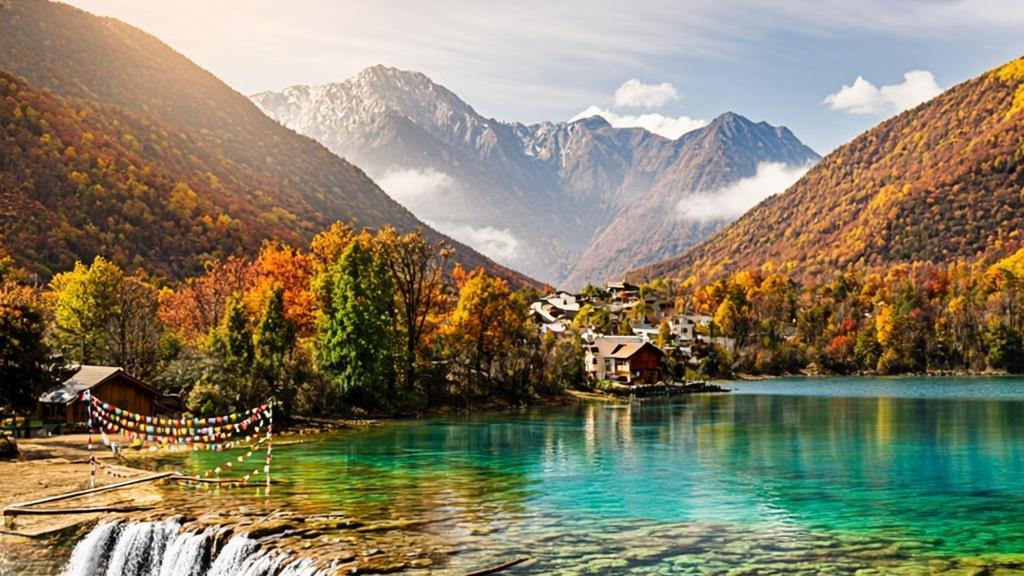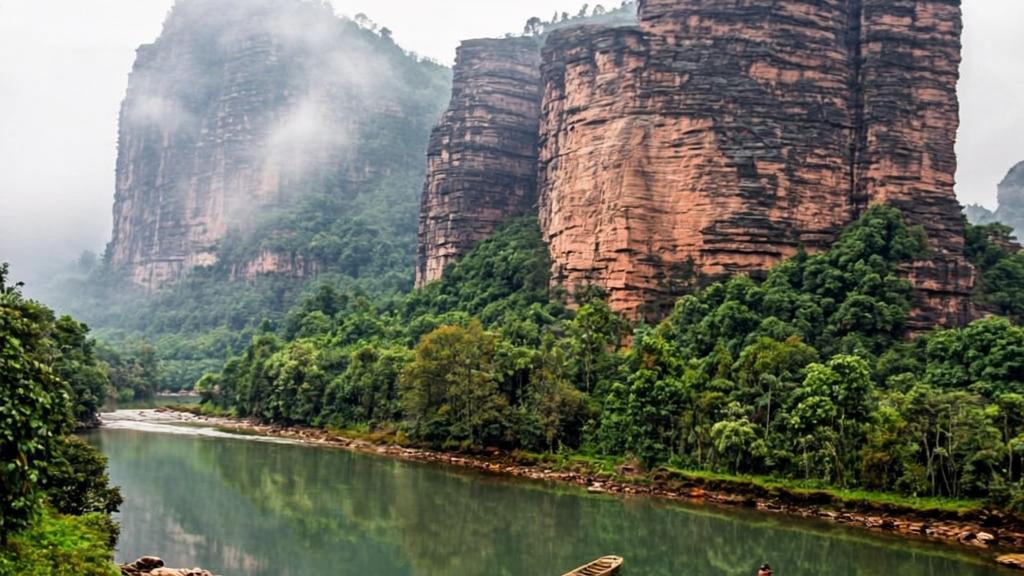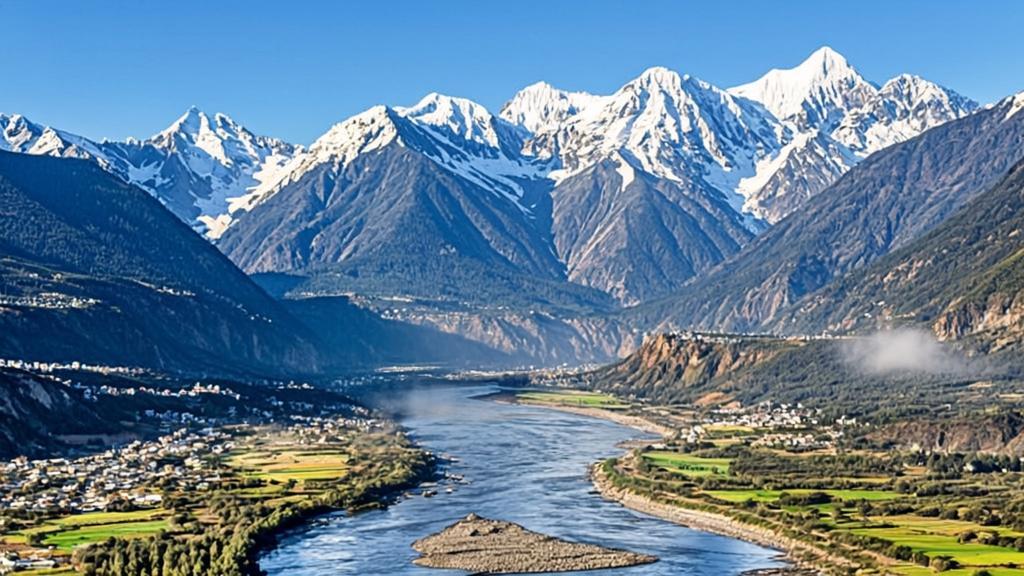
The Three Parallel Rivers of Yunnan may be the most geologically improbable place on the planet. Three of Asia’s greatest rivers — the Yangtze (Jinsha), the Mekong (Lancang), and the Salween (Nu) — flow southward in near-parallel lines for over 300 kilometers, separated only by mountain ranges rising above 6,000 meters. They never merge. Eventually they diverge dramatically: one reaches Shanghai, one empties into the South China Sea near Ho Chi Minh City, one flows into the Indian Ocean at Myanmar. But for a brief, extraordinary stretch of northwest Yunnan, they run side by side. UNESCO inscribed the area as a World Natural Heritage Site in 2003, describing it as potentially the most biologically diverse temperate region on Earth.
That’s not typical praise. That’s worth paying attention to.
Why the Three Parallel Rivers of Yunnan Defy Normal Logic
Most rivers converge. This one doesn’t — at least not here. The reason lies deep in geology. Northwest Yunnan sits at the collision point of multiple tectonic plates: the Indian Plate pushing into the Eurasian Plate, the Tibetan Plateau rising as a result, and the Hengduan Mountains forming like wrinkles in a compressed tablecloth. The rivers didn’t choose to run parallel; the mountains forced them into their channels.
The elevation difference across this zone is staggering — from 760 meters in the valley floors to 6,740 meters at Meili Snow Mountain’s Kawagebo peak. That’s nearly a 6,000-meter vertical range within a single protected area. For comparison, the vertical range across all of the Swiss Alps is roughly similar. But the Alps span a far larger geographic footprint. Here, that variation happens within a dramatically compressed corridor.
That compression creates something ecologically unique. Every climate zone — from subtropical forest to alpine glacier — stacks within kilometers of each other. The result is a biodiversity density that has few parallels anywhere in the temperate world (UNESCO World Heritage Centre, 2003).
The Biodiversity Numbers Are Genuinely Startling
Numbers can feel abstract. But these ones describe something real:
- 6,000 species of plants, a quarter of which were first scientifically recorded here
- 173 species of mammals, 81 of them endemic to the region
- 417 species of birds, 22 of them found nowhere else
- More than 200 varieties of rhododendron
- Over 100 species each of gentian and primula
- Rare mammals including snow leopard, red panda, black snub-nosed monkey, Gongshan muntjac, and hoolock gibbon
The site covers less than 0.2% of China’s land area. Yet it contains over 50% of China’s animal species (UNESCO World Heritage Committee, 2004). That ratio alone explains why scientists call it an epicenter of Chinese biodiversity.
In western terms, it’s roughly analogous to the Amazon Basin — a place where the concentration and uniqueness of life simply exceeds what exists almost anywhere else. The key difference is climate. This is temperate and alpine terrain, not tropical. The same density of life, but in conditions that feel familiar to visitors from Europe or North America. Strange forests, familiar temperatures.
What Actually Draws Travelers to the Three Parallel Rivers Region
Most visitors don’t arrive planning to count bird species. They arrive for the landscapes. And the landscapes are, frankly, astonishing.
Tiger Leaping Gorge: One of the Deepest Canyons in the World
Tiger Leaping Gorge sits within the Three Parallel Rivers protected zone, carved by the Jinsha River (upper Yangtze) between the 5,596-meter Jade Dragon Snow Mountain and the 5,396-meter Haba Snow Mountain. The canyon drops approximately 3,790 meters from peak to riverbed — making it one of the deepest river gorges on Earth (Wikipedia, 2025).
The name comes from a legend: a hunted tiger escaped hunters by leaping across the river at its narrowest point, still 25 meters wide. The rock it supposedly used still sits in the river. Whether or not the legend is true, standing at the edge and looking down gives a clear sense of why the story stuck.
The gorge offers two main experiences:
- Day tour (Upper Gorge): A quick scenic drive with viewpoints. Good for those with limited time.
- 2-day hike (High Road): The genuinely transformative option. The trail runs about 15 kilometers along the canyon rim, reaching heights far above the river. Most hikers overnight at a guesthouse midway. The second day descends to Tina’s Guesthouse, where buses depart to Shangri-La. Best done in October–November or May; avoid the rainy season (June–September) due to landslide risk (Yunnan Adventure Travel, 2025).
Meili Snow Mountain: Sacred and Unclimbed
Meili Snow Mountain lies on the border of Yunnan and Tibet. Its highest peak, Kawagebo, stands at 6,740 meters. It remains unclimbed. A joint Sino-Japanese expedition attempted the summit in 1991 — all 17 climbers died in an avalanche. The Chinese government subsequently closed the peak to climbing, partly out of respect for Tibetan Buddhist pilgrims who consider it among the most sacred mountains in the Tibetan world.
That unclimbed status adds something to the experience. Most famous peaks have been conquered, photographed from the summit, reduced somewhat by human achievement. Kawagebo hasn’t been. It holds a kind of remoteness that feels genuinely rare.
The mountain is best seen at dawn from Feilai Temple, where, on clear mornings between October and May, the snow peaks glow in the first light. Winter and spring offer the best visibility (Yunnan Adventure Travel, 2025).
Shangri-La: The Name Itself Tells the Story
The city of Shangri-La — called Zhongdian until 2001, when it was officially renamed — takes its name from James Hilton’s 1937 novel Lost Horizon, which described a mythical hidden valley in the Himalayas where people live peacefully, surrounded by extraordinary beauty. Whether or not northwest Yunnan inspired Hilton directly is debated. But the region was already described by American botanists in the 1930s as the most beautiful mountain area in the world.
Shangri-La serves as the main gateway city for exploring the Three Parallel Rivers area. Key attractions nearby include Songzanlin Monastery — the largest Tibetan Buddhist complex in Yunnan — and Pudacuo National Park. The city sits at 3,160 meters elevation. Altitude acclimatization matters; arriving via Lijiang (2,400 meters) first allows the body to adjust gradually (China Highlights, 2025).
A Cultural Landscape as Rich as the Natural One
The Three Parallel Rivers region contains parts of three prefectures and more than 20 ethnic minority groups, including Tibetan, Naxi, Lisu, Dulong, and Nu peoples. Each group developed distinct languages, customs, and architectural styles — often in the same valley, separated by mountain ridges.
This cultural density resembles, in some ways, the patchwork of languages and traditions across the Alpine regions of Europe — Swiss German, French, Italian, and Romansh communities living within close proximity, each maintaining distinct identities shaped by geography. The mountains that isolated these Yunnan communities from each other also protected their uniqueness.
The Dulong people, living in the remote Dulong River valley west of the Gaoligong Mountains, represent one of China’s smallest ethnic groups. Until a road was opened in the 1990s, the valley was cut off completely by snow for several months each year. That isolation preserved a way of life remarkably unchanged by outside influence.
Visiting villages in the Nujiang area — particularly Laomudeng and Bingzhongluo — allows real encounters with this cultural complexity. The Nujiang Canyon is also home to an unexpected detail: Catholic communities established by French missionaries in the 19th century, who crossed these same mountains to reach the valley. Churches in traditional Tibetan-style architecture sit alongside Buddhist temples and animist shrines. It’s a strange and genuinely fascinating combination.
Planning a Visit to the Three Parallel Rivers of Yunnan
Best Time to Go
- April–June: Mild temperatures, lush green valleys, wildflowers. Good for photography.
- October–November: Clear skies, ideal mountain visibility, comfortable hiking temperatures.
- December–March: Cold at altitude, but winter light is exceptional for mountain photography. Best months for seeing Meili’s sunrise (Yunnan Exploration, 2025).
- Avoid July–September: Heavy monsoon rains cause trail closures, landslides, and poor visibility.
How to Get There
The main entry points are:
- Lijiang — The most accessible hub. Good high-speed rail connections from Kunming (about 3 hours). From Lijiang, Tiger Leaping Gorge is 60 km north.
- Shangri-La (Diqing Airport) — Flights from Kunming, Chengdu, and other cities. Gateway for Meili Snow Mountain.
- Nujiang (Liuku) — For the more remote Nujiang Canyon area. Accessible by bus from Kunming (~13–16 hours) or by domestic flight.
A classic route runs: Kunming → Lijiang → Tiger Leaping Gorge → Shangri-La → Meili Snow Mountain → Deqin, spending roughly 8–12 days. Those wanting the full Three Parallel Rivers experience should add 3–4 days in the Nujiang Canyon.
Practical Notes
- Altitude in Shangri-La (3,160m) and Deqin (3,319m) can cause symptoms in unacclimatized visitors. Ascend gradually and avoid strenuous activity on the first day.
- Pack layers. Temperature swings between valley and mountain elevations are extreme.
- Roads to Meili Snow Mountain are rough. Chartered vehicles with local drivers are the practical option (Yunnan Adventure Travel, 2025).
- Mobile data coverage in the Nujiang valley and remote areas is limited. Download offline maps before departing.
- The Tiger Leaping Gorge area falls within Shangri-La County and is not covered by the 240-hour visa-free transit policy applicable to Lijiang.
What Makes This Place Different From Any Other Wilderness
Part of what sets the Three Parallel Rivers of Yunnan apart isn’t just scale. It’s the combination. Somewhere like Yosemite offers extraordinary geology and landscape. The Amazon offers extraordinary biodiversity. The Alps offer extraordinary cultural complexity layered over mountain terrain. This region, somehow, offers all three simultaneously — and at intensities that individually match the best examples elsewhere.
In truth, that shouldn’t be possible in one place. The tectonic accident that created these parallel gorges also created conditions for explosive biodiversity, cultural isolation, and landscape drama at a scale that remains — even now — only partially explored. There are valleys in the Nujiang area that see fewer than a few hundred foreign visitors per year.
That won’t last forever. The time to visit, before the crowds arrive, is now.
References
China Highlights. (2025). Three Parallel Rivers of Yunnan Protected Areas. https://www.chinahighlights.com/lijiang/attraction/three-parallel-rivers-area.htm
UNESCO World Heritage Centre. (2003). Three Parallel Rivers of Yunnan Protected Areas (No. 1083). United Nations Educational, Scientific and Cultural Organization. https://whc.unesco.org/en/list/1083/
UNESCO World Heritage Committee. (2004). State of conservation: Three Parallel Rivers of Yunnan Protected Areas (China). https://whc.unesco.org/en/soc/1401/
Wikipedia. (2025, January 18). Tiger Leaping Gorge. https://en.wikipedia.org/wiki/Tiger_Leaping_Gorge
Yunnan Adventure Travel. (2025). How to get to Meili Snow Mountain from Shangri-La. https://www.yunnanadventure.com/show/How-to-Get-to-Meili-Snow-Mountain-from-Shangri-la_39897.html
Yunnan Exploration. (2025). Travel routes and tips for Three Parallel Rivers adventure in Yunnan. https://www.yunnanexploration.com/travel-routes-and-tips-for-three-parallel-rivers-adventure-in-yunnan.html