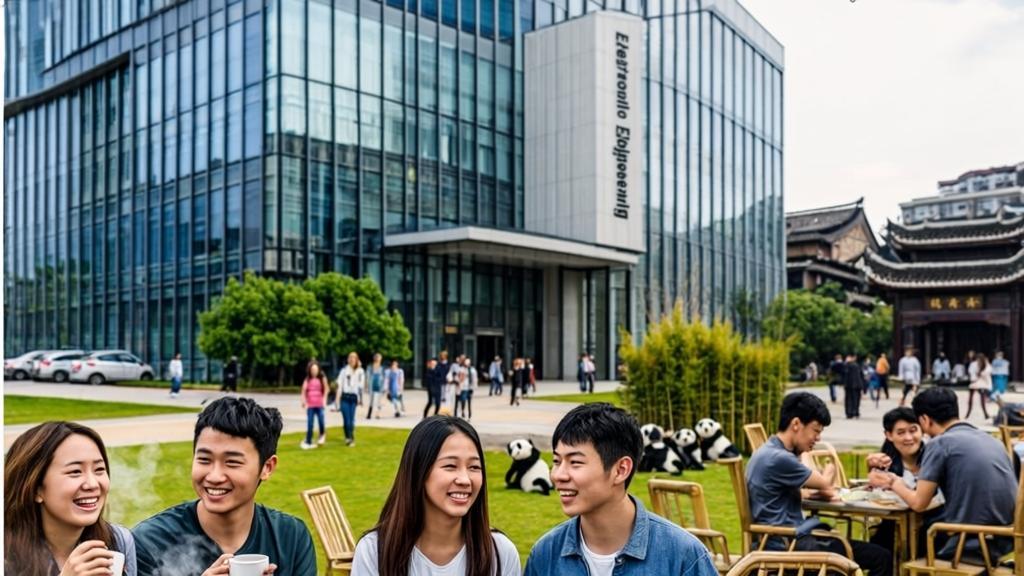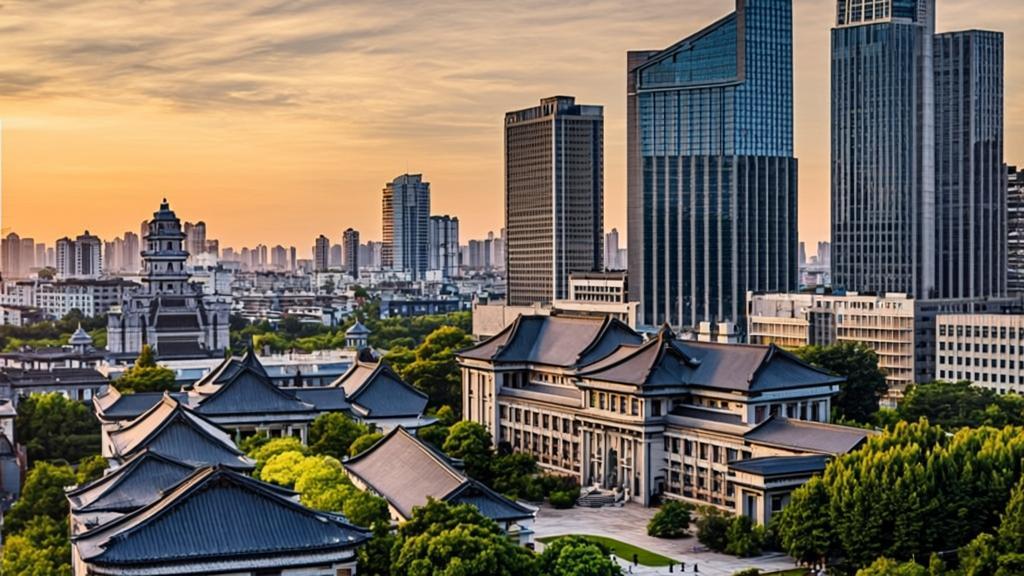
Tianjin University might not be the first school you think of when researching world-class architecture programs. But consider the evidence. The Bird’s Nest. The Water Cube. The Speed Skating Oval for the 2022 Winter Olympics. The Dunhuang City Museum. The G20 Summit Conference Hall in Hangzhou. All of these landmark buildings were designed by graduates of the Tianjin University School of Architecture. That pattern is not a coincidence. It is a curriculum.
A Foundation Built on Urgency — The Origin of Tianjin University
The story starts in 1895. China had just lost the First Sino-Japanese War. The country needed a different kind of institution — one focused on practical knowledge and modern engineering. In October of that year, Peiyang University was founded in Tianjin under a royal charter from the Guangxu Emperor. It became China’s first modern university. In 1951, it was renamed Tianjin University.
The founding mission was clear: build people who can do things. Not just theorize. That philosophy still runs through the institution today.
Interestingly, the university modeled itself on American research universities from the start. In its early years, undergraduates could pursue graduate study at Harvard and Yale without entrance exams (Wikipedia, n.d.). That ambition for global standards shaped everything that followed.
What Makes the Tianjin University Architecture Program Stand Out
In March 2025, QS released its World University Rankings by Subject. Tianjin University ranked 30th globally in Architecture and Built Environment (Tianjin University School of Architecture, 2025). That figure places it ahead of many well-known European schools.
Moreover, the evaluation criteria are demanding. QS assesses academic reputation, employer reputation, and research output — not just enrollment numbers. A top-30 ranking in architecture is, by any measure, a serious credential.
The School of Architecture currently has over 140 faculty members. It maintains long-term academic partnerships with:
- University of Michigan (USA)
- University College London (UK)
- Technische Universität Berlin (Germany)
- University of Tokyo (Japan)
- National University of Singapore
These are not token partnerships. Students regularly attend exchange programs at these institutions. International scholars also come to Tianjin for research collaboration (Global Times, 2020).
What Students Actually Learn at Tianjin University’s School of Architecture
The curriculum combines technical rigor with deep exposure to Chinese spatial philosophy. For international students, this is genuinely hard to find elsewhere. Here is a rough outline of what the program covers:
- Structural and construction engineering — the fundamentals of how buildings actually stand up
- Chinese architectural heritage — classical gardens, courtyard principles, traditional timber construction
- Urban planning — contextual design within China’s rapidly evolving cities
- Sustainable architecture — green building standards, energy efficiency, low-carbon design
- International studio collaborations — joint workshops with partner universities worldwide
Furthermore, the school has shown international recognition beyond rankings. In 2024, a postgraduate project called Vertical Neighborhood — supervised by Professor Wu Jingzi — was selected for the 62nd Milan International Furniture Fair and won first prize at Milan Design Week’s China University Design competition (Tianjin University School of Architecture, 2025). That is not a regional award. That is Milan.
East Meets West: How Tianjin University Thinks About Space Differently
This is worth pausing on. Western architecture education — at schools like Harvard GSD, the Bartlett, or ETH Zurich — tends to foreground formal experimentation, theoretical discourse, and the tradition of the architect as an individual visionary.
Tianjin University’s approach draws on a different inheritance. Chinese architectural tradition emphasizes the relationship between structure and environment. It prioritizes harmony over provocation. It favors the experience of the person moving through a space over the appearance of a building viewed from outside.
Consider the contrast directly. At Versailles, the French garden announces control — symmetry, geometry, dominance over nature. At Suzhou’s classical gardens, the goal is the opposite: walking through and never quite seeing the whole picture at once. Both traditions are valid. But they produce different instincts in designers.
Graduates of Tianjin University’s program tend to excel at large-scale, function-driven projects. Civic buildings. Transportation hubs. Cultural centers. These require a different mindset than designing a private art gallery in Basel. Neither is superior. They are simply different disciplines.
Studying at Tianjin University as an International Student
Tianjin University has trained students from over 150 countries and regions. As of 2024, it offers 710 fully English-taught courses (Wikipedia, n.d.).
For architecture specifically, strong candidates tend to include:
- Students with interest in large-scale civic and urban design
- Those seeking firsthand exposure to the world’s most active construction market
- International students looking for a globally ranked program at significantly lower tuition than US or UK equivalents
- Researchers in sustainable construction and green building standards in Asia
Scholarships are available through the Chinese Government Scholarship (CSC) program, administered by the Ministry of Education. Additionally, Tianjin University offers its own funding pathways for international applicants. Details are on the official admissions page.
The City: Why Tianjin Itself Is Part of the Education
One thing that rarely comes up in discussions about studying at Tianjin University is the city itself. Tianjin sits 30 minutes from Beijing by high-speed rail. It is, in many ways, a living architecture textbook.
Along the Five Great Avenues (Wudadao), more than 2,000 European-style villas from the early 20th century stand alongside traditional Chinese residential architecture. The city was home to nine foreign concessions between the 1860s and 1940s. According to CGTN, Tianjin blends “the architectural essence of both Eastern and Western traditions” in ways few cities in the world can match (CGTN, 2025).
For architecture students, that urban complexity is genuinely educational. Tianjin is not a preserved museum city. It is a working metropolis where historical layering collides with contemporary development. Studying in Tianjin means reading that collision directly from the streets.
Is Tianjin University Worth Considering for Architecture Study?
The short answer: yes, with a clear-eyed understanding of what the program offers.
It is not the school for students whose primary goal is breaking into the Western gallery architecture circuit. But for students interested in large-scale public design, urban infrastructure, or building practice at a global scale, it offers something genuinely competitive.
The alumni record speaks directly. Li Xinggang co-designed the Bird’s Nest. Zhao Xiaojun co-designed the Water Cube. The G20 Summit Conference Hall in Hangzhou and the Dunhuang City Museum are further examples in the same lineage (Global Times, 2020). These are not consolation prizes. These are the most watched buildings in the world.
Tianjin University is, in short, the kind of school whose graduates shape skylines. That record is worth taking seriously.
Final Thoughts
Architecture school is a long commitment. The choice of program shapes not just what you learn, but how you see and think about space for the rest of your career.
Tianjin University offers a rigorous, internationally connected program rooted in a spatial tradition that most Western students have never encountered. Sometimes the most interesting education is the one that challenges your defaults.
If China’s built environment interests you — and it should, given its scale and ambition — then this school deserves a serious look.
References
Global Times. (2020). School of Architecture of Tianjin University: the pioneer in China’s architectural education. Global Times. https://www.globaltimes.cn/content/1202188.shtml
Tianjin University School of Architecture. (2025). QS World University Rankings by Subject 2025 — Architecture/Built Environment. Tianjin University. https://t-arch.tju.edu.cn/
Wikipedia. (n.d.). Tianjin University. Wikipedia: The Free Encyclopedia. Retrieved March 2026, from https://en.wikipedia.org/wiki/Tianjin_University
CGTN. (2025, August 8). Tianjin: A fusion of classical and modern, Eastern and Western. CGTN. https://news.cgtn.com/news/2025-08-08/Tianjin-A-fusion-of-classical-and-modern-Eastern-and-Western-1FFAxkTEYJW/p.html
Exploring Tianjin. (2019, October 12). Tianjin researchers help build framework of Beijing Daxing International Airport. Tianjin Municipal Government. http://www.exploringtianjin.com/2019-10/12/c_415403.htm