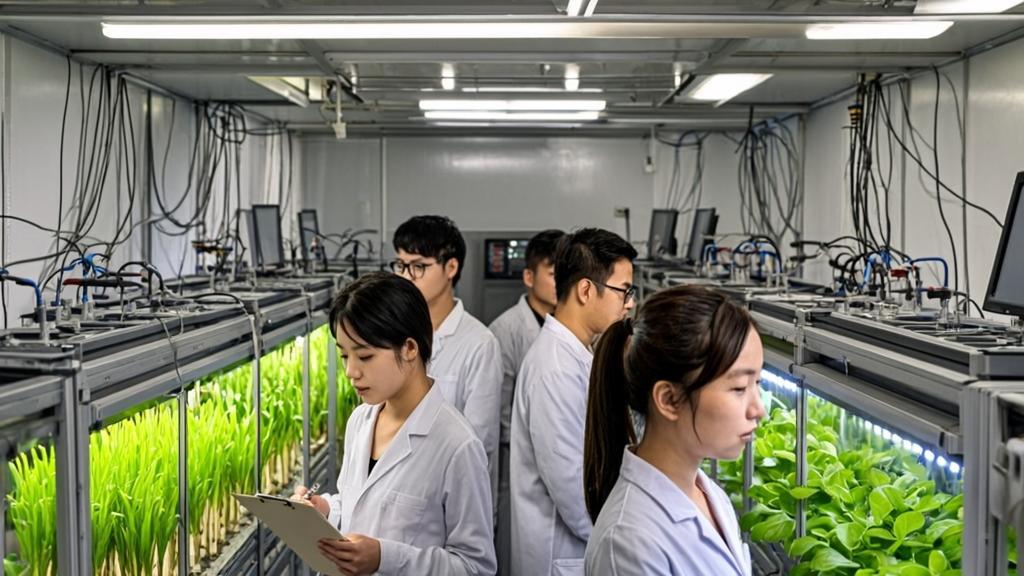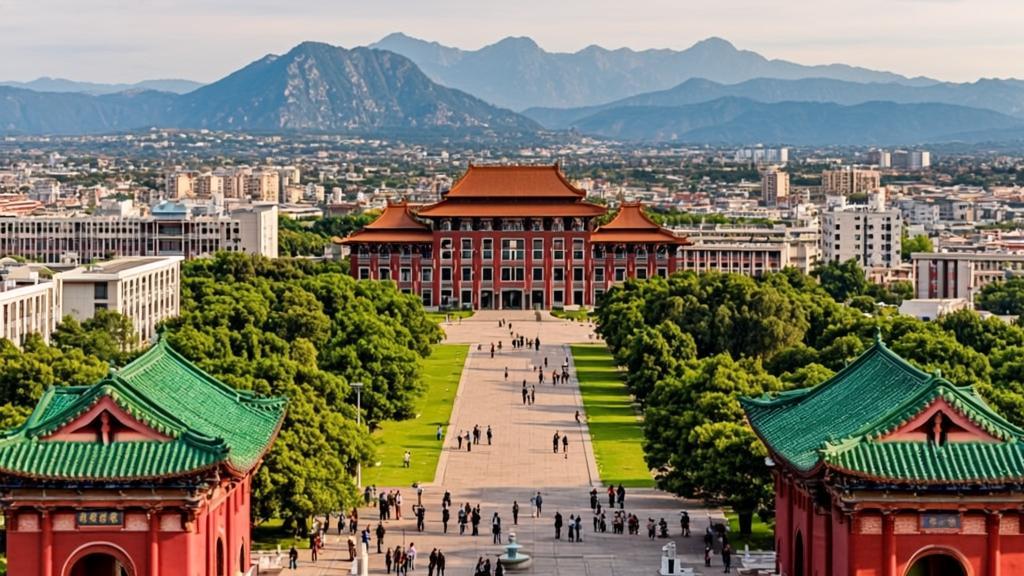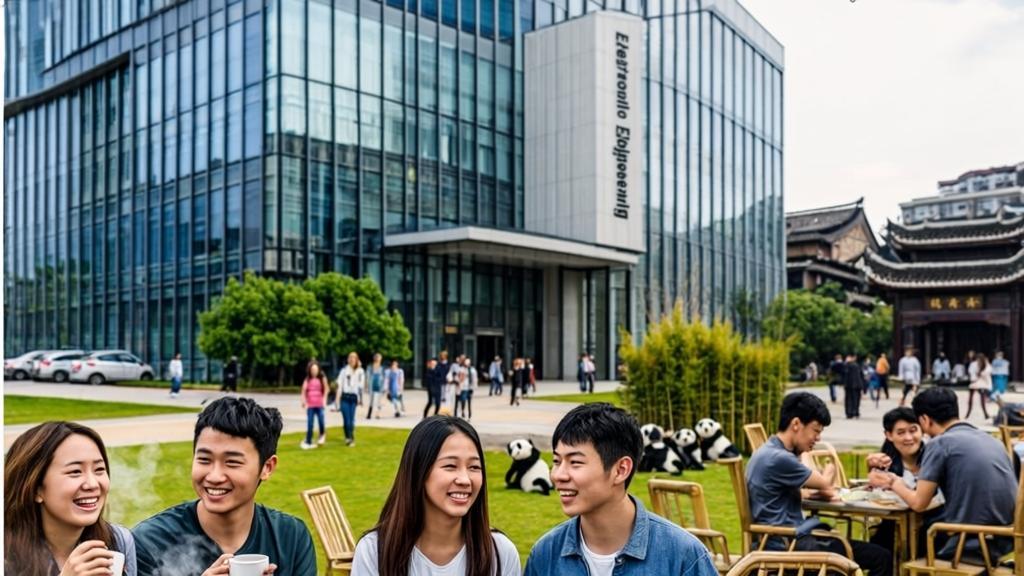
The University of Electronic Science and Technology of China sits in one of the most contradictory cities on the planet. Chengdu is famous for slow mornings in teahouses, afternoon mahjong games in the park, and a food culture so rich that UNESCO recognized it as a City of Gastronomy back in 2010. Yet this same slow-tempo city hosts a university ranked among the world’s best for communications engineering. That tension — between radical relaxation and radical ambition — is exactly what makes studying here so unusual.
Chengdu: The City That Refuses to Rush
First, consider the city itself. Chengdu is genuinely unlike any other major Chinese metropolis.
According to Wikipedia’s entry on Chengdu, the city has more teahouses and bars than Shanghai, despite having less than half the population. In 2023, the city counted over 30,000 teahouses. A 2006 Los Angeles Times report famously called it “China’s party city” for its carefree lifestyle.
Locals have a term for this attitude: tianfu (天府), meaning “heavenly abundance.” It’s not laziness. It’s a deliberate cultural philosophy — the idea that good living, good food, and unrushed time are not luxuries but necessities.
This stands in sharp contrast to Beijing or Shenzhen, where productivity culture runs at a much faster pace. Chengdu slows things down. Yet, somehow, it still hosts giants of China’s tech and research sector.
Why the University of Electronic Science and Technology of China Ended Up Here
The placement wasn’t accidental. In the summer of 1956, Premier Zhou Enlai personally ordered the creation of a specialized radio engineering institution in Chengdu. The strategic logic was clear: build China’s first dedicated electronics university in a geographically secure, interior city — far from coastal vulnerability.
Three top engineering schools merged their electronics departments to form it: Shanghai Jiao Tong University, Southeast University (then Nanjing Institute of Technology), and South China University of Technology (Wikipedia, UESTC).
The university arrived first. The city’s reputation for slowness came later. In a sense, UESTC predates modern Chengdu’s identity as China’s most livable city. The two simply grew up together.
By 1960, the institution had earned national key university status. By 2017, it entered China’s elite Double First-Class construction plan — the country’s top-tier category for research universities.
What the Rankings Actually Say About UESTC
The global numbers are worth knowing, but the subject-specific rankings tell the sharper story.
- QS World University Rankings 2026: #519 overall (TopUniversities, 2026)
- ARWU (Shanghai Ranking) 2025: 151–200 globally (ShanghaiRanking, 2025)
- China Discipline Evaluation (4th round): Two subjects rated A+ — Electronic Science and Technology, and Information and Communication Engineering (top 2% in China)
That last point matters most. In the specific fields UESTC specializes in, it competes with the best in the world. Furthermore, nine of its disciplines rank in the ESI global top 1%, including Engineering and Computer Science (UESTC official website).
For students choosing between a generalist elite university and a specialist powerhouse, that distinction is real.
Campus Life: More Than Textbooks and Circuits
The main Qingshuihe Campus opened in 2007. It spans over 4,000 acres. In many ways, it functions like a self-contained city.
Students have access to:
- 110+ registered student clubs and associations, from robotics to traditional Sichuan opera appreciation
- A student activity centre of 12,200 m²
- Outdoor sports grounds covering 205,000 m²
- An on-campus swimming pool (5,000 m²) and indoor gym (11,400 m²)
- A library holding over 6 million volumes (including digital)
- On-campus hospital facilities
Importantly, the University of Electronic Science and Technology of China has actively built an international community. As of 2025, over 1,000 long-term international students from more than 100 countries study here (UESTC International Admissions). There are also three student organizations specifically for international students: the International Students Union (ISU), Country League, and the Chinese and Overseas Students Association (COSA).
English-taught programs are available at undergraduate, master’s, and PhD levels. This makes the university genuinely accessible to non-Chinese speakers.
The Chengdu Effect: Does the City Shape the Learning?
Here’s the genuinely interesting question. Does studying in a city that prioritizes balance and leisure actually change how technical students develop?
There’s no controlled study specifically on UESTC. However, the contrast with Western engineering culture is worth examining.
At schools like MIT, Stanford, or ETH Zurich, the surrounding ecosystem rewards relentless productivity. Startup culture, venture capital proximity, and extreme networking pressure define the environment. The culture says: never stop grinding.
Chengdu pushes back. Tea ceremonies, communal hotpot dinners, and weekend hikes up nearby mountains are not optional social extras — they’re woven into daily life. Research in cognitive psychology suggests that unstructured time and mental rest genuinely support creative problem-solving and consolidation of complex learning (Sio & Ormerod, 2009). Whether Chengdu’s culture delivers that effect for engineering students is hard to measure. Still, the hypothesis is at least plausible.
What’s observable is this: UESTC graduates go on to competitive postgraduate programs worldwide, including MIT, Columbia, UCLA, and Imperial College London, according to Glasgow College UESTC’s own graduate outcomes data. That doesn’t suggest a university producing underperformers.
UESTC’s International Connections: Far Wider Than You’d Expect
A common worry about studying in western China is isolation. The data tells a different story.
The University of Electronic Science and Technology of China has established ties with over 200 universities and research institutions across 67 countries (UESTC official website). Moreover, over 40% of undergraduate students gain some form of overseas study experience during their degree.
The most distinctive example is the Glasgow College UESTC — a joint educational institute with the University of Glasgow. Students can graduate with dual degrees from both institutions without ever leaving Chengdu. Alternatively, they can complete their final two years in Scotland. In 2021, this partnership won the Scotland-China Business Awards’ Educational Partnership of the Year award.
Additionally, the university runs joint programs with McGill University in Canada and holds long-term research partnerships with Oxford, UC Santa Barbara, and others.
Practical Details for International Students
Thinking about applying, visiting, or simply understanding what’s available? Here’s the core information.
Campus address:
No. 2006, Xiyuan Ave, West Hi-Tech Zone, Chengdu, Sichuan, 611731
Scholarships available for international students:
- Chinese Government Scholarship (fully funded option)
- Chengdu Sister City Scholarship (for students from Chengdu’s sister cities)
- Belt and Road Initiative Scholarship
- UESTC University Scholarship (full and partial)
Full details on eligibility and current deadlines are available at the UESTC Admissions portal.
Getting there:
Chengdu Tianfu International Airport connects directly to hubs in Europe, the Middle East, Southeast Asia, and beyond. From the airport, the metro system makes reaching the campus straightforward.
Cost of living:
Chengdu is substantially more affordable than Beijing or Shanghai. Meals, accommodation, and transport all run lower, which extends the practical value of any scholarship or personal budget.
So, Should You Study at UESTC?
The University of Electronic Science and Technology of China is not the obvious choice. It lacks the coastal visibility of Fudan or Tsinghua. It doesn’t have Beijing’s political prestige or Shanghai’s financial energy.
Instead, it offers something rarer: deep subject-matter strength in electronic and information science, inside a city that actively resists the anxiety of constant competition.
If the target is rigorous technical training, a genuinely livable environment, accessible costs, and a cultural experience unlike anything most international students have encountered — then UESTC is worth serious attention. The pandas and hotpot are, genuinely, a bonus. But the engineering is the real story.
References
UNESCO Creative Cities Network. (2010). Chengdu: City of Gastronomy. https://www.unesco.org/en/creative-cities/chengdu
Wikipedia. (2025). Chengdu. https://en.wikipedia.org/wiki/Chengdu
Wikipedia. (2025). University of Electronic Science and Technology of China. https://en.wikipedia.org/wiki/University_of_Electronic_Science_and_Technology_of_China
QS Top Universities. (2026). University of Electronic Science and Technology of China — Rankings, Fees & Courses. https://www.topuniversities.com/universities/university-electronic-science-technology-china
ShanghaiRanking Consultancy. (2025). Academic Ranking of World Universities: UESTC profile. https://www.shanghairanking.com/institution/university-of-electronic-science-and-technology-of-china
University of Electronic Science and Technology of China. (2025). International students overview. https://en.uestc.edu.cn/
University of Glasgow. (2021). Global Glasgow: International Strategy — UESTC partnership. https://www.gla.ac.uk/explore/globalglasgow/globalrecruitment/
University of Glasgow. (2026). Electronics & Electrical Engineering with Information Engineering (dual degree with UESTC). https://www.gla.ac.uk/undergraduate/degrees/electronicselectricaluestc/
Sio, U. N., & Ormerod, T. C. (2009). Does incubation enhance problem solving? A meta-analytic review. Psychological Bulletin, 135(1), 94–120. https://doi.org/10.1037/a0014212