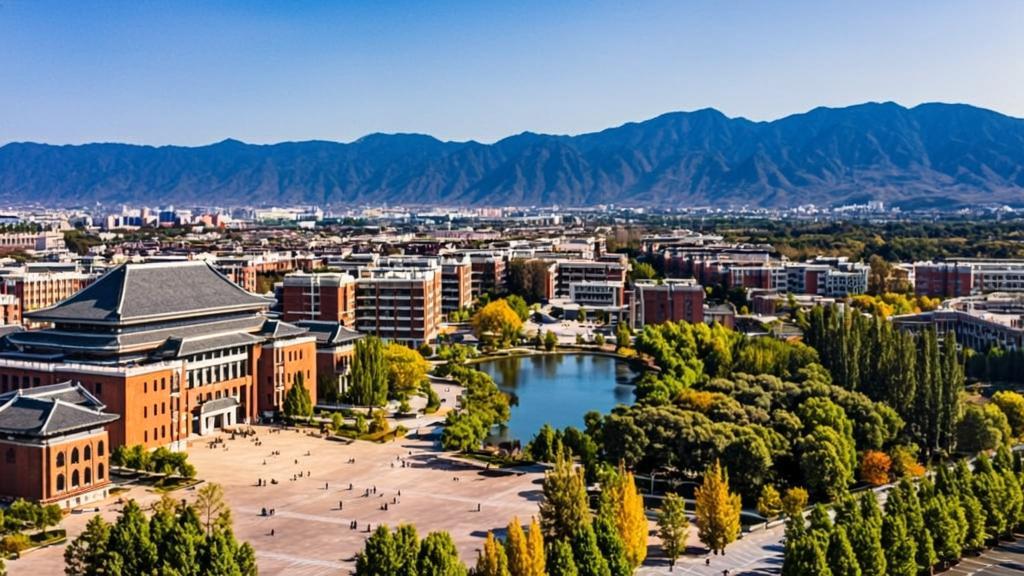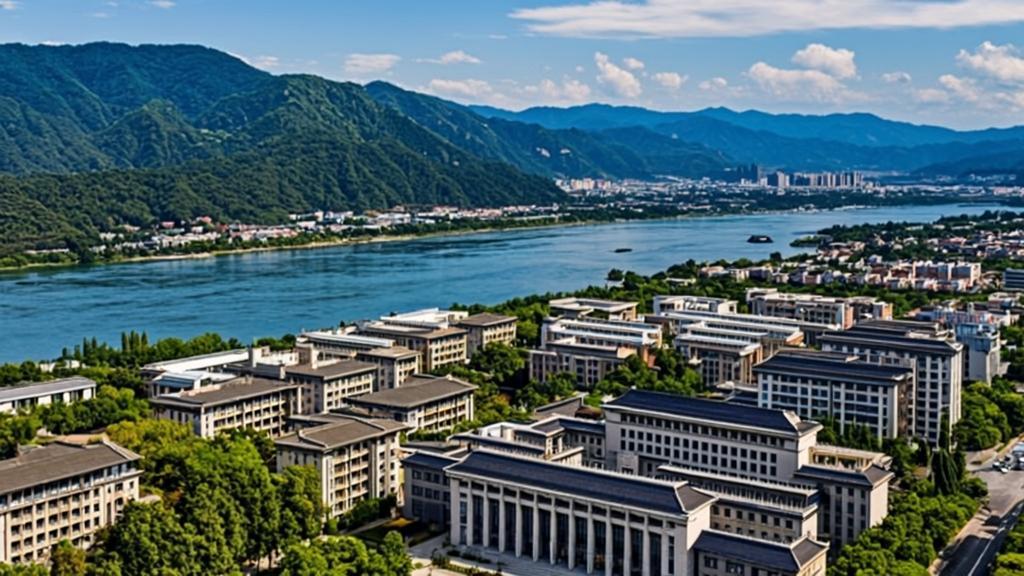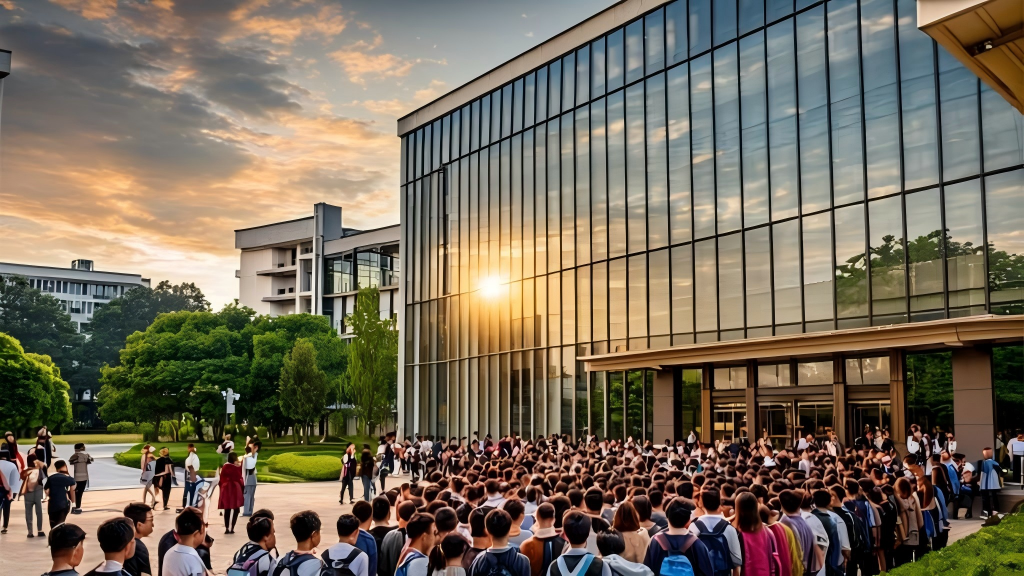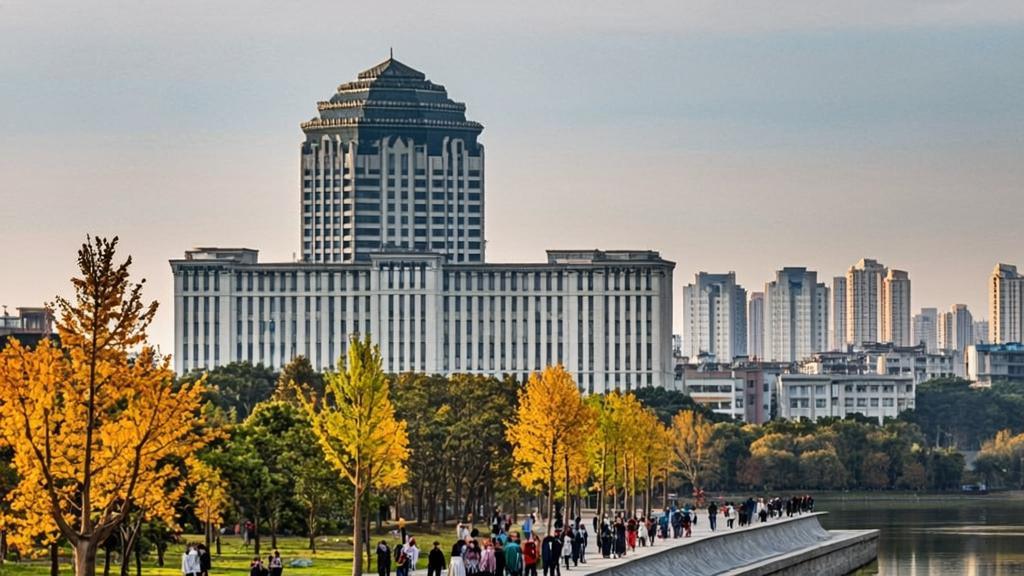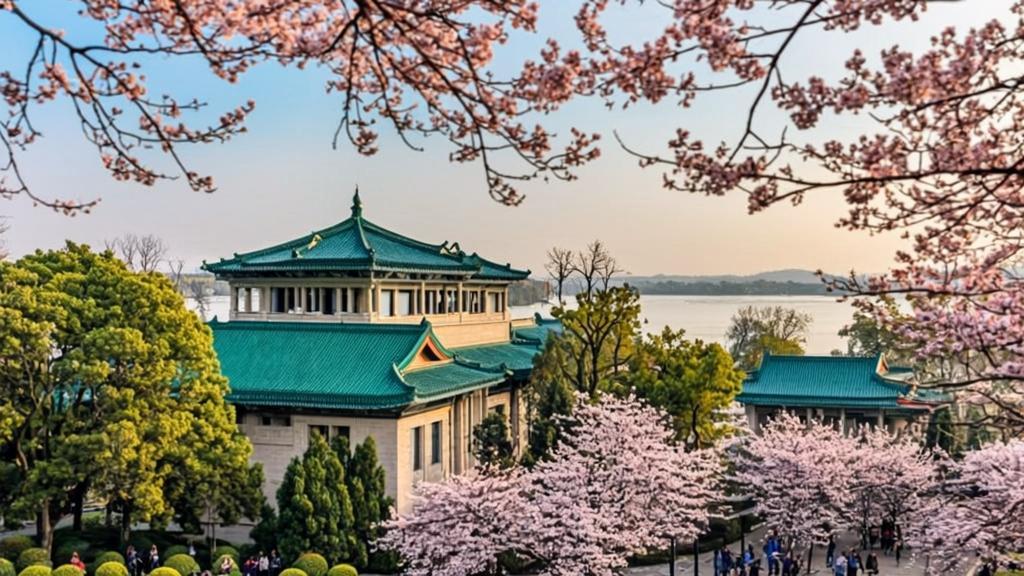
Wuhan University isn’t just another top-ranked school in China — it might be the most visually stunning campus on Earth. Nestled at the foot of Luojia Mountain, overlooking the legendary East Lake, this 130-year-old institution blends elite academic achievement with breathtaking natural scenery. For foreigners exploring China, it offers something rare: a place where history, architecture, cherry blossoms, and cutting-edge research all exist in one extraordinary space. In other words, it’s far more than a university — it’s a destination.
A Brief History of Wuhan University: Over 130 Years of Legacy
Founded in 1893 by Zhang Zhidong, the then-governor of Hubei and Hunan provinces, Wuhan University began as the Ziqiang Institute (Self-Strengthening Institute). The goal was clear: modernize China through education.
Over the decades, it survived wars, merged with other institutions, and emerged stronger. In 2000, it absorbed three additional universities — the Wuhan University of Hydraulic and Electric Engineering, the Wuhan Technical University of Surveying and Mapping, and Hubei Medical University — forming the comprehensive research powerhouse it is today (Top Universities, 2026).
Think of it like a Chinese version of Oxford or the University of Edinburgh. It carries that same weight of history, only it’s wrapped in a uniquely Sino-Gothic architectural style that stops visitors in their tracks.
Key historical milestones:
- 1893 – Founded as Ziqiang Institute
- 1926 – Reorganized as a national university
- 1931 – Iconic campus buildings constructed in Chinese-Western fusion style
- 2000 – Major institutional merger, expanding into six academic colleges
- 2023 – Celebrated its 130th anniversary
Wuhan University’s Global Rankings in 2025–2026
The numbers speak for themselves. Wuhan University has climbed steadily across every major international ranking system. Here’s where it stands as of 2025–2026:
| Ranking System | Position |
|---|---|
| U.S. News Best Global Universities | #90 globally, #10 in China |
| Times Higher Education (THE) | #122 globally, #8 in China |
| QS World University Rankings 2026 | #186 globally, #9 in China |
| ARWU (Shanghai Ranking) 2025 | #81 globally, #11 in Greater China |
| Nature Index 2025 (Asia-Pacific) | #17 in the region |
(U.S. News & World Report, 2025–2026; QS World University Rankings, 2026; Times Higher Education, 2025)
That’s impressive by any standard. For context, ranking in the global top 100 puts a university in roughly the top 0.5% of all universities worldwide. It also ranks among the top 25 universities in Asia according to the Times Higher Education Asia Rankings (THE, 2025).
The university is part of China’s elite Project 985, Project 211, and Double First-Class Construction programs — the Chinese equivalents of the U.S. Ivy League or the UK’s Russell Group.
What Makes Wuhan University’s Campus Truly Unique
Here’s something that surprises many first-time visitors: the campus of Wuhan University is a national tourist attraction in its own right.
The buildings, designed in the early 1930s under the guidance of American architect Francis Henry Kales from MIT, blend Chinese palace-style roofing with Western neoclassical stonework. The result is a visual style you simply don’t see anywhere else. Tiffany-blue tiled rooftops rise above carved stone archways. Wide stone staircases climb the hillside toward an Old Library that surveys the entire campus like a watchtower.
The campus covers an area of 5,195 mu and is situated within the Wuhan East Lake Scenic Area, a national-level scenic spot, giving it clear waters, green mountains, and a group of elegant historical buildings.
The campus includes:
- Luojia Mountain – a forested hill running through the heart of campus
- East Lake views – surrounded on multiple sides by China’s largest urban lake
- Historic Old Library – perched dramatically at the mountain’s peak
- Wanlin Art Museum – a modern cultural hub within the campus grounds
- Old Dormitory Buildings (Yingyuan) – some of the most photographed architecture in Wuhan
It may actually be more comparable to the University of Edinburgh or Trinity College Dublin in terms of “walking through history while attending class.” The key difference is scale — Wuhan University’s campus is enormous, and the natural landscape is woven directly into it.
Cherry Blossoms at Wuhan University: A Spring Spectacle
If there’s one thing that draws international visitors to Wuhan University more than anything else, it’s the cherry blossoms.
Every March, more than 3,000 cherry blossom trees transform iconic campus sites — including the library, Kunpeng Plaza, and the administration building — into a landscape blanketed in white and pink petals.
The 600-meter Cherry Blossom Avenue is the most photogenic spot on campus and draws visitors from both China and abroad. Reservations are required and fill up within seconds of opening. On weekdays, the campus caps daily visitors at 20,000; on weekends, that number rises to 40,000.
Practical tips for visiting during cherry blossom season:
- Best dates: Mid-to-late March (peak bloom typically falls March 15–25)
- Arrive early: Gates open at 8:00 AM on weekdays; arriving before 8:30 AM helps avoid queues
- Book ahead: Reservations open online via the official WHU platform — slots go fast
- What to wear: March in Wuhan tends to be cool and rainy; bring a light jacket and consider a compact umbrella
- Getting there: Metro Line 2 to Jiedaokou Station, then approximately 15 minutes on foot
The cherry trees have a curious backstory. According to historical records, Japanese soldiers first planted cherry trees on campus during the Second Sino-Japanese War in 1939 to ease homesickness. After the war, the trees were preserved. Later, in 1972, Premier Zhou Enlai gifted additional trees to the university to mark the normalization of China-Japan relations (Wikipedia, 2025). Today, the blossoms carry a layered story of conflict, reconciliation, and natural beauty.
This is something cherry blossom fans in Japan or South Korea might find surprisingly familiar — yet distinctly Chinese in context.
Academic Excellence: Programs, Research, and International Collaboration at Wuhan University
Beyond the aesthetics, Wuhan University is a serious research institution. The university now has 37 schools and departments and offers over 120 undergraduate programs, over 300 graduate programs, and over 200 doctoral programs — some of which are taught in English.
Its strongest subject areas include:
- Remote Sensing and Surveying – globally recognized; WHU leads much of China’s satellite mapping research
- Law and Political Science – consistently ranked #1 in Wuhan
- Chinese Language and Linguistics – a natural draw for international students learning Mandarin
- Medical and Life Sciences – boosted after its 2000 merger with Hubei Medical University
- Environmental Science – built around its unique location near East Lake
For international students considering studying in China, Wuhan University may deserve more attention than it typically gets. It collaborated with Duke University and the city of Kunshan to co-found Duke Kunshan University, which signals a genuine commitment to global academic partnerships (Wikipedia, 2025).
The university has established research ties and exchange programs with hundreds of universities across the world.
Visiting Wuhan University as a Tourist: What to Expect
Even if you have no academic plans, Wuhan University is genuinely worth adding to any Wuhan itinerary.
Outside of cherry blossom season, the campus remains open to visitors with a valid ID. The atmosphere shifts — it becomes quieter, more contemplative. Students share paths with tourists, and the campus feels like a living, breathing cultural site rather than a theme park.
Beyond the campus itself, the surrounding area offers:
- East Lake Greenway – a 100+ km scenic cycling and walking trail around China’s largest urban lake
- Hubei Provincial Museum – home to stunning artifacts from the ancient Chu Kingdom, just 15 minutes away
- Yellow Crane Tower – one of China’s most iconic historical towers, a short ride from campus
- Hot Dry Noodles (热干面) – Wuhan’s signature street food; try it at any stall near the campus gates
It might be worth spending at least half a day on campus and pairing it with an afternoon at East Lake. The combination gives a full picture of why Wuhan — often underrated by international travelers — has been quietly becoming one of China’s most compelling city destinations.
Why Wuhan University Matters for China’s Future
Some people believe Chinese universities are primarily known for rote learning and rigid academic structures. Wuhan University challenges that assumption directly. Its investment in research output, international partnerships, and interdisciplinary programs reflects a broader shift in how China approaches higher education.
The Nature Index 2025 placed Wuhan University at #23 globally for research output quality — ahead of many well-known Western institutions. That’s a metric worth paying attention to.
For foreign visitors, students, and researchers alike, Wuhan University offers a compelling portrait of modern China: ambitious, rooted in history, and increasingly open to the world.
References
Top Universities. (2026). Wuhan University profile. QS World University Rankings. https://www.topuniversities.com/universities/wuhan-university
U.S. News & World Report. (2025–2026). Wuhan University: Best Global Universities ranking. https://www.usnews.com/education/best-global-universities/wuhan-university-503252
Times Higher Education. (2025). Wuhan University world ranking. THE World University Rankings. https://www.timeshighereducation.com/world-university-rankings/wuhan-university
Wikipedia Contributors. (2025). Wuhan University. Wikipedia. https://en.wikipedia.org/wiki/Wuhan_University
Ministry of Education of the People’s Republic of China. (2023). Double First-Class University Construction Project. http://www.moe.gov.cn
Global Times. (2025, March). Cherry blossoms boost Wuhan tourism. https://www.globaltimes.cn/page/202503/1330512.shtml
China Educational Tours. (2025). Wuhan University campus guide. https://www.chinaeducationaltours.com/guide/wuhan-university.htm