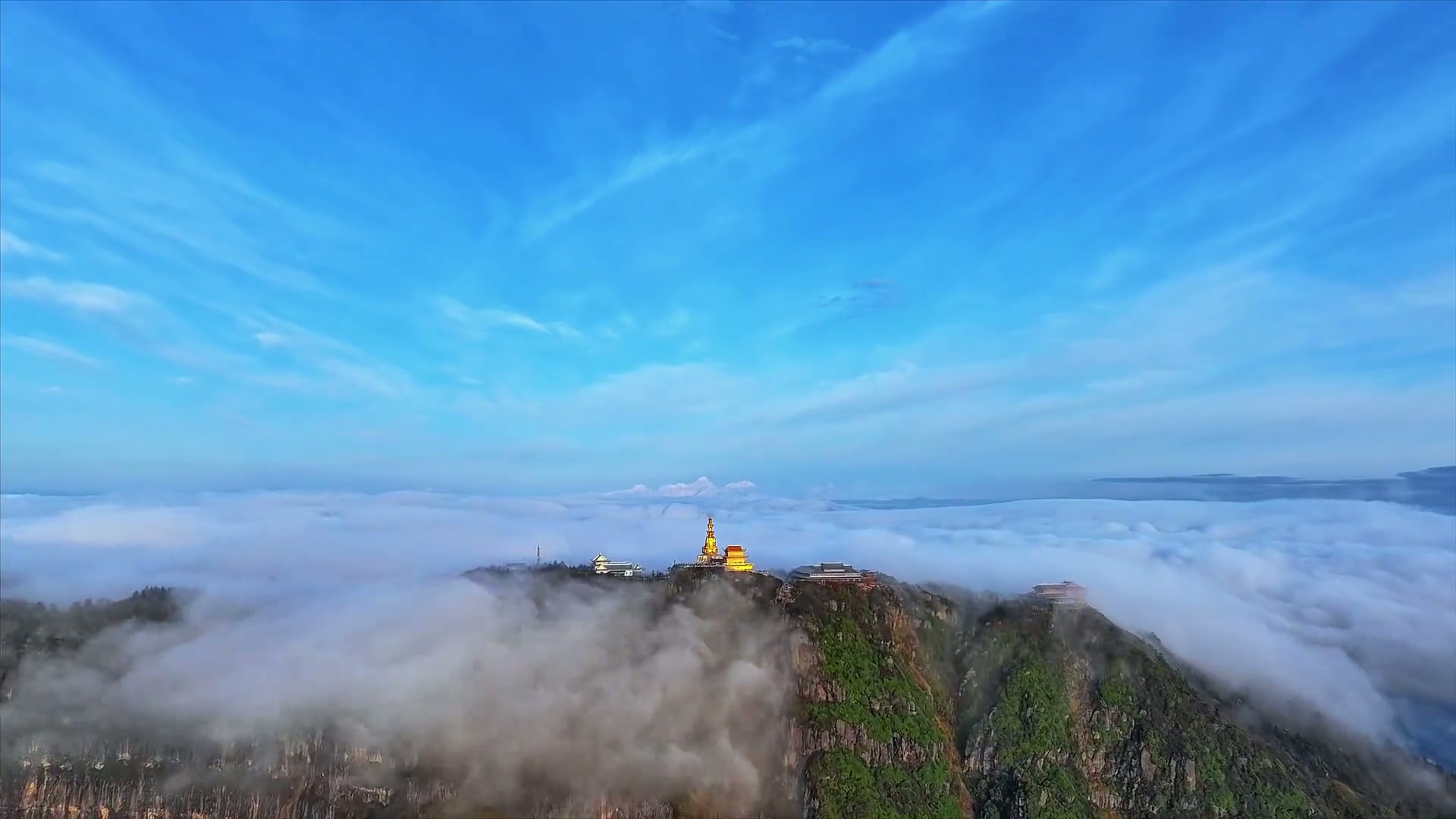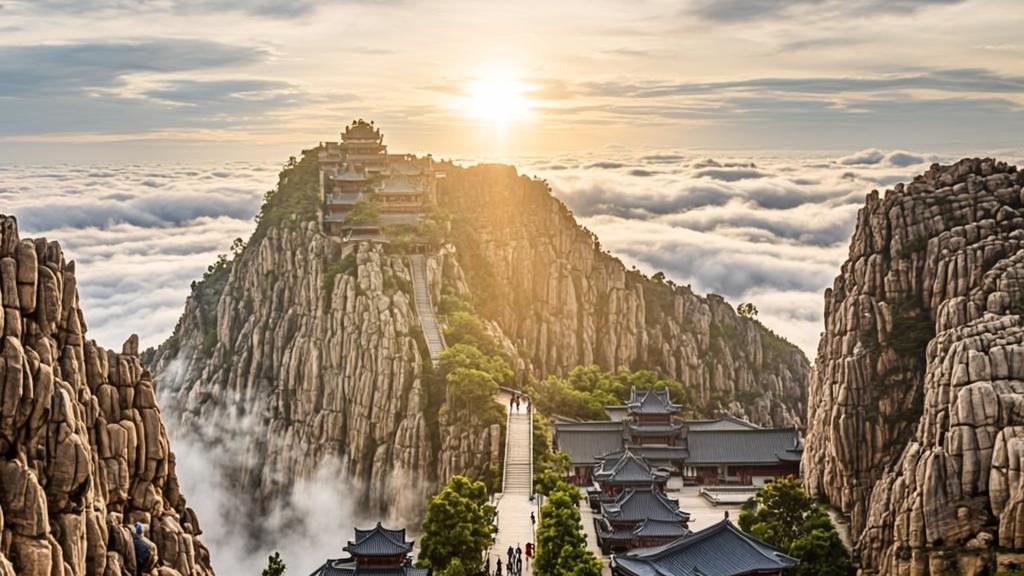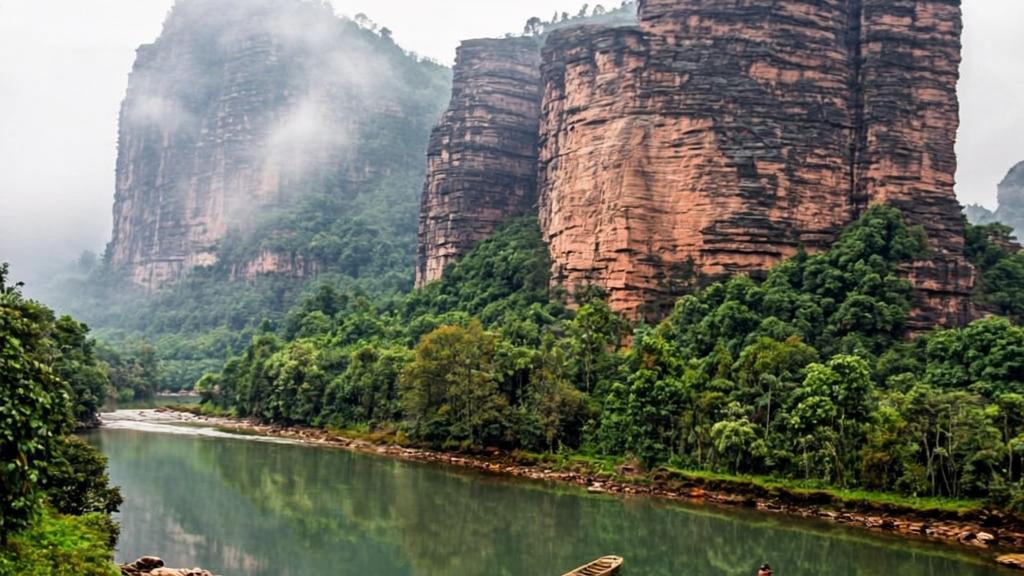
Wuyi Mountain sits in the northwestern corner of Fujian Province, where the land tilts sharply upward into red sandstone peaks, dense subtropical forest, and one of China’s most storied tea-growing regions. It is, in short, the kind of place that rewards slow travel. Not rushing. Not ticking boxes.
A UNESCO World Heritage Site, Wuyishan is renowned for its stunning natural beauty, diverse flora and fauna, and its historical importance as the birthplace of Chinese tea culture, particularly Wuyi rock tea. But describing it only as a “scenic mountain” undersells it considerably.
Why Wuyi Mountain Earns Its UNESCO Status
Mount Wuyi is the most outstanding area for biodiversity conservation in south-east China and a refuge for a large number of ancient, relict species, many of them endemic to China.
That dual recognition — both natural and cultural — was granted in 1999. And it is one of only a handful of sites in China to receive both designations simultaneously.
On the natural side:
- About 5,000 species of wildlife
- 2,527 types of plants
- The largest intact Chinese subtropical forest in the country
On the cultural side:
- The serene beauty of the dramatic gorges of the Nine Bend River, with its numerous temples and monasteries, many now in ruins, provided the setting for the development and spread of neo-Confucianism, which has been influential in the cultures of East Asia since the 11th century.
- Over 2,000 years of archaeological sites
- The cradle of China’s most celebrated oolong teas
In Western terms, think of it this way: imagine if the Scottish Highlands produced both the philosophy of Descartes and the finest single-malt whisky — and you still wouldn’t quite be there. Wuyi Mountain’s combination of intellectual history and sensory landscape is genuinely unusual.
The Nine Bend Stream — The Heart of Wuyi Mountain
Nine-Bend Creek is the centerpiece of Mt. Wuyi. This river abruptly changes course nine times over its 8.5 square-kilometer region of the park.
Each bend is different. Each bend has a name.
The standard experience is a bamboo raft ride — approximately 100 minutes, drifting past red cliff faces, ancient hanging coffins, and peaks that look like they were painted first and then built.
Taking a bamboo raft and floating down the stream, visitors can not only feast their eyes with the natural scenery of mahogany mountains and emerald rivers, meet mysterious hanging boat coffins along the banks of the river, but also admire the over 2,000-year-old Han Dynasty ancient ruins.
The hanging coffins deserve special mention. They are Bronze Age burials placed in cliff niches hundreds of meters above the river. How they got there — with the technology available at the time — is still not fully agreed upon. That kind of mystery adds a layer to the bamboo raft ride that most river experiences simply don’t have.
Practical tip: Book bamboo rafting tickets at least 7 days in advance through the “China Wuyi Mountain” WeChat mini-program. Spots fill up fast, especially in peak season.
Da Hong Pao: The Most Famous Tea in the World You’ve Probably Never Heard Of
This is arguably where Wuyi Mountain punches above its weight globally. The mountain is not just a tea region — it is the origin point of Wuyi rock tea, known as yancha (岩茶).
Under the Yuan Dynasty (1271–1368), the imperial tea gardens were moved to this magical place, and after 1300 the imperial family drank only tea from this protected area.
The most legendary variety is Da Hong Pao (大红袍), or “Great Red Robe.” Only 6 mother plants remain to this day (only 4 still produce tea): only the best tea masters are allowed to harvest in spring from the original trees, yielding up to a maximum of 400 grams of tea per year.
For context: the most expensive Da Hong Pao from the original mother trees has sold at auction for over $1 million per kilogram. Yet the tea grown from cuttings of those same trees — sold in shops throughout the mountain — remains accessible and genuinely extraordinary.
The word petrichor, coined from the Greek terms “petra” and “ichor” (the fluid flowing in the veins of the gods), denotes the flavor of wet rock — an unmistakable note of these oolongs that faithfully brings back to the taste the type of soil on which the plants grew.
For tea lovers visiting from Europe or North America, this is roughly equivalent to visiting Burgundy for wine. The terroir matters enormously. The soil composition, the morning mist, the mineral-rich rock — all of it ends up in the cup. The craftsmanship of Wuyi Rock Tea (Da Hong Pao) is among China’s first national intangible cultural heritage items.
Heavenly Tour Peak and the Views That Earned Its Name
With ever-changing cloud reflections in the water and the sun shining through the fog, Tianyou Peak is the number one must-see spot in the Mt. Wuyi area. After rainfall or when dawn breaks, the shrouding clouds allow only the tip of the mountain to be visible, hence its name Tianyou, which literally means “roaming in heaven.”
The peak stands at 410 meters above sea level. It is not the tallest point on the mountain. But it offers the most complete panoramic view of the Nine Bend Stream winding through the valley below.
The climb is manageable for most travelers. And the vista from the top changes with the seasons:
- Spring: Blooming azaleas and wildflowers along the trail
- Summer: Dense green canopy; mist clinging to the peaks
- Autumn: Best weather; the most vivid foliage colors
- Winter: Quieter crowds; dramatic cloud formations
Neo-Confucianism Was Born Here — And That Actually Matters
This might sound like a niche history footnote. But it isn’t.
The renowned Southern Song Dynasty philosopher Zhu Xi taught here for fifty years. The Ziyang Academy, with its black tiles and white walls hidden behind sweetgum trees, embodies the profound Confucian cultural heritage.
Neo-Confucianism, developed here in the 11th–12th centuries, shaped the ethics, governance, and social structure of China, Japan, Korea, and Vietnam for the next 800 years. It influenced everything from how families organized themselves to how emperors justified their authority.
If you’re familiar with how Thomism shaped medieval European thought — the way Aquinas synthesized Christian theology with Aristotelian philosophy — Neo-Confucianism played a comparable role in East Asia. Wuyi Mountain is where much of that synthesis happened.
Wuyi Mountain is also a famous mountain of three religions — Confucianism, Buddhism, and Taoism — in China. Walking through the mountain, you encounter temples and academies from all three traditions, sometimes within walking distance of each other. That kind of philosophical coexistence, undisturbed for centuries, is genuinely rare.
How to Visit Wuyi Mountain: Getting There and Getting Around
Getting there:
The Wuyi Mountains are located around a 3.5-hour train ride from Shanghai or Xiamen. High-speed rail connects the mountain to most major Fujian cities.
Getting around inside the park:
The scenic area covers nearly 1,000 square kilometers. A sightseeing bus pass is essential:
- 1-day pass: ¥70
- 2-day pass: ¥85
- 3-day pass: ¥95
Combo tickets (bus + bamboo rafting) start from ¥200 per person and represent the best value for most visitors.
Visa situation in 2025:
Starting December 2024, transit travelers from 54 countries can stay for up to 10 days without a visa. Visitors from France, Germany, Italy, Spain, and several Asian countries enjoy 30-day visa-free stays through 2025. US, UK, and Canadian passport holders can visit for 6 days visa-free.
Combine with:
Wuyi Mountain pairs naturally with nearby Xiamen (a coastal city with distinct colonial architecture) and the Fujian Tulou earthen roundhouses — both within a few hours by high-speed rail. One trip can cover three completely different facets of Chinese culture.
A Final Note on What Makes Wuyi Mountain Unusual
Most famous mountains in China are known for one thing — a particular landscape, a religious tradition, a specific view. Wuyi Mountain is known for several things at once, and they are all genuinely excellent.
The red cliffs and river are world-class scenery. The tea is world-class tea. The philosophical heritage is world-class intellectual history. And somehow, it all occupies the same valley in Fujian Province.
That is rare. Perhaps it is worth the trip just to understand why it all happened here.
References
UNESCO World Heritage Centre. (1999). Mount Wuyi. UNESCO. https://whc.unesco.org/en/list/911/
Asia Odyssey Travel. (2025). Wuyi Mountain (Wuyishan): Attractions, itineraries & best time. Asia Odyssey Travel. https://www.asiaodysseytravel.com/fujian/wuyishan.html
China Highlights. (2024). Wuyi Mountains travel guide. China Highlights. https://www.chinahighlights.com/xiamen/attraction/mount-wuyi.htm
China Discovery. (2025). Wuyi Mountain travel guide 2025/2026. China Discovery. https://www.chinadiscovery.com/fujian/wuyi-mountain.html
Tea Soul. (2024). Wuyi Mountains: A production of excellence. Tea Soul Blog. https://teasoul.store/en/wuyi-mountains-the-incredible-teas-of-this-region/
Rong Apartment. (2025). Wuyi Mountain: The perfect fusion of Danxia wonders and tea culture. https://rongapartment.com/wuyi-mountain-the-perfect-fusion-of-danxia-wonders-and-tea-culture/
Top China Travel. (2025). Wuyi Mountain. Top China Travel. https://www.topchinatravel.com/china-attractions/mt-wuyishan.htm