Xinjiang Tianshan just changed — twice. In December 2025, the world’s longest expressway tunnel opened beneath the mountains, cutting the Urumqi-to-Korla drive from seven hours to three and a half (Xinhua, 2025). Prefer something slower? The New Orient Express has been threading these same valleys since 2021 — a luxury sleeper train that moves at night and stops for scenery by day (chinaadventure.org, 2024). Two very different ways in, one remarkable destination.
This guide is for first-time and independent travelers planning a Xinjiang Tianshan trip in 2026.
Why Xinjiang Tianshan Is Worth Visiting
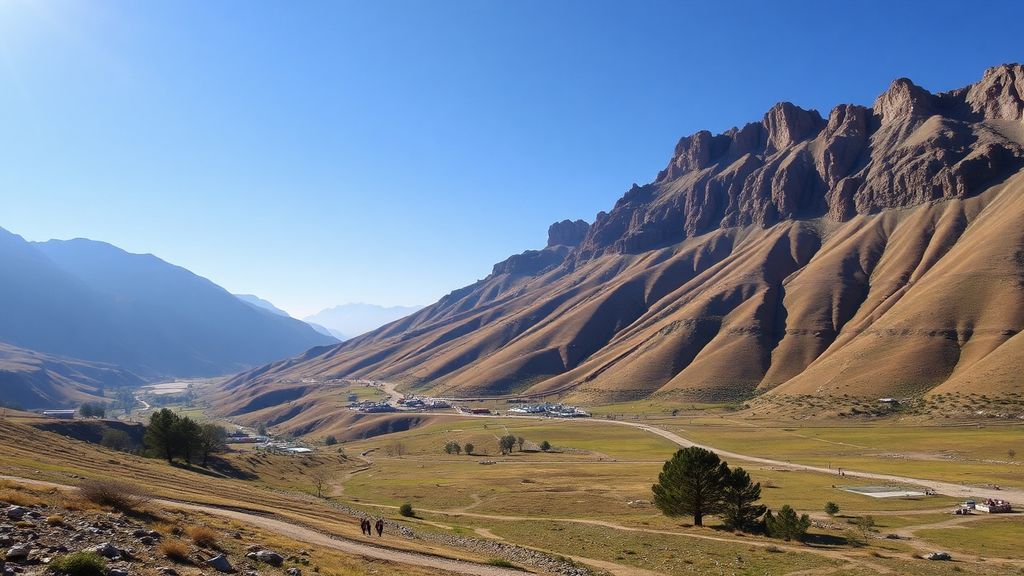
The Tianshan range stretches roughly 2,500 kilometers across central Xinjiang, dividing the region into two geographically distinct halves (Xinhua, 2025). To the north: alpine lakes, dense spruce forests, and Kazakh nomadic grasslands. To the south: ancient Silk Road cities, ochre desert canyons, and Uyghur old towns.
That contrast is the whole point. In a single trip, travelers can hike around a UNESCO-listed mountain lake in the morning, ride horses through a working nomadic pasture in the afternoon, and eat Central Asian street food by evening. Few mountain regions anywhere offer this range of landscape and culture within the same journey.
Best Time to Visit
The honest answer: June to October is the main window.
- June–August: Peak season for alpine scenery. Heavenly Lake, Kanas, and Naraty Grassland are at their most vivid. Expect crowds at popular spots.
- September–October: The most photogenic period. Kanas turns gold and amber in autumn. Temperatures drop sharply at elevation — layer up.
- Spring (March–May): Worth considering for the Ili Valley apricot blossom season. Most mountain roads open from May onward. Fewer crowds, but some sites remain closed early in the season.
- Winter: Altay ski resorts attract domestic visitors. However, many high-altitude roads close, and travel logistics become more demanding.
According to practical travel guides, the Heavenly Lake of Tianshan is best visited between June and October, when surrounding forests are lush and outdoor conditions are manageable (chinaxiantour.com, 2026).
Getting Xinjiang Tianshan and Getting Around
By air: Urumqi Diwopu International Airport (URC) is the main entry point. Direct flights serve Beijing, Shanghai, Chengdu, and other major Chinese hubs. Most international travelers connect through a Chinese gateway city first.
By high-speed rail: The Lanzhou–Xinjiang high-speed line connects Urumqi to Xi’an in roughly 12 hours and to major eastern cities beyond. It’s a scenic option in its own right.
Within Xinjiang: The new Urumqi–Yuli Expressway significantly improves north–south road travel. Car rental with a driver or a guided tour gives the most flexibility. Long-distance buses and conventional trains link major towns, but journey times are long given the scale of the region.
Must-See Spots Along the Tianshan Range
Heavenly Lake (Tianchi): About 80 km northeast of Urumqi, this alpine lake sits at 1,980 meters above sea level and holds UNESCO World Natural Heritage status. The half-moon-shaped lake, surrounded by old spruce forests and backed by snowcapped Bogda Peak, is the single most visited site in northern Xinjiang. Cruises, cable cars, and walking paths are all available on-site (chinadiscovery.com, n.d.).
Kanas Lake: Located in the far north near the Altai Mountains, Kanas is known for dramatically color-shifting water and exceptional autumn foliage. Access involves a four-hour road journey from Burqin. Less crowded than Heavenly Lake, and arguably more rewarding for longer stays.
Naraty and Karajun Grasslands: These are working nomadic landscapes, not scenic parks. Kazakh herder families still migrate seasonally here. Staying overnight in a yurt is worth arranging in advance — the experience is genuinely different from anything elsewhere in China.
Tianshan Grand Canyon (near Kuqa): Red sandstone cliffs carved by centuries of erosion, rising dramatically from the canyon floor. Far less visited than Heavenly Lake, and considerably more dramatic. Worth combining with a visit to the nearby Kizil Thousand Buddha Caves, a UNESCO World Cultural Heritage site.
Local Food Highlights
Xinjiang’s food culture is Central Asian in flavor — closer to Uzbek or Kazakh cuisine than to what most visitors expect from China. Key dishes worth knowing:
- Polo (Uyghur pilaf): Slow-cooked rice with lamb, carrots, and onion. Found everywhere, done differently in every town.
- Lamb skewers (kawap): Grilled over charcoal. The smell tends to announce the vendor before they come into view.
- Naan (馕): Flatbread baked in clay ovens, with dozens of regional varieties.
- Samsa: Baked lamb pastries with flaky crusts, common at markets throughout the region.
Generally speaking, the further from Urumqi, the more distinctly local the food becomes. Street markets in Kashgar and Yining are worth an hour of wandering for food alone.
Practical Tips
Visa: A standard Chinese tourist visa (L visa) applies to most nationalities. No special permit is needed for mainstream Xinjiang destinations. Border areas near Pakistan and Tajikistan may require additional documentation, typically arranged 45 days before departure.
Payment: Alipay and WeChat Pay are dominant throughout the region. Cash (RMB) remains useful in rural and smaller towns. Foreign credit cards work unreliably outside major hotels — set up a mobile payment method before arriving.
Language: Mandarin is widely spoken in urban areas. Uyghur is the primary language in southern Xinjiang. English is limited; a translation app is essential.
Time: Xinjiang officially operates on Beijing time (UTC+8), but locals often follow unofficial “Xinjiang time” (UTC+6). This affects meal times, shop hours, and transport schedules. Confirm which system applies when booking anything.
Mobile and internet: A Chinese SIM card is recommended. Set up a VPN before entering China if access to foreign apps is needed.
Common Mistakes to Avoid
Underestimating distances. Even with the new Shengli Tunnel, traveling from Urumqi to Kashgar involves a substantial journey. Trying to cover both northern and southern Xinjiang in under 10 days tends to result in exhausting transitions rather than actual experiences.
Stopping at northern Xinjiang only. Many itineraries default to Kanas and Urumqi and skip the south entirely. Southern Xinjiang — Kashgar’s old city, the Silk Road ruins of Hotan, the Kuqa canyon area — offers a completely different character and history.
Ignoring seasonal road closures. Arriving in early May means some mountain roads are still closed. October means short days and genuinely cold nights above 2,000 meters.
Overpacking the schedule. Eight to ten days covers one half of Xinjiang at a reasonable pace. Attempting the full loop in less than twelve days tends to feel rushed, and the region rewards slower travel (chinaxiantour.com, 2026).
References
Wikipedia. (2026). Tianshan Shengli Tunnel. https://en.wikipedia.org/wiki/Tianshan_Shengli_Tunnel
Xinhua. (2025, December 26). China focus: World’s longest expressway tunnel opens to traffic in Xinjiang. http://english.news.cn/20251226/46d4db24da254c559dd3e2e9890935b5/c.html
chinaadventure.org. (2024). New Orient Express China 2025 China travel. https://www.chinaadventure.org/xinjiang-travel-advice/new-orient-express-china-2025-china-travel.html
chinadiscovery.com. (n.d.). Top Xinjiang tourist attractions and things to do 2026. https://www.chinadiscovery.com/xinjiang-tours/things-to-do-in-xinjiang.html
chinaxiantour.com. (2026, March 2). Xinjiang travel FAQs and practical tips 2026. https://www.chinaxiantour.com/xinjiang-travel-guide/travel-tips.html